I'm a dedicated researcher, journalist, and editor at The Watchers. With over 20 years of experience in the media industry, I specialize in hard science news, focusing on extreme weather, seismic and volcanic activity, space weather, and astronomy, including near-Earth objects and planetary defense strategies. You can reach me at teo /at/ watchers.news.

  • Large asteroid 1997 NC1 makes its closest Earth pass in over four centuries – live watch

    Asteroid (152637) 1997 NC1 will pass Earth at 6.67 lunar distances (about 0.017 AU), or 2.5 million km (1.6 million miles) above Earth’s surface, at 11:16 UTC on June 27, 2026. The object has an estimated diameter between 750–1 650 m (2 460–5 410 feet), making this an unusually close encounter for an object of this size. The Virtual Telescope Project will stream the flyby live at 23:00 UTC on June 26 and 27, offering real-time views as the asteroid reaches peak brightness.

  • High concentrations of Saharan dust affect Puerto Rico and U.S. Virgin Islands, moving west toward Florida and Texas

    High concentrations of Saharan dust are affecting Puerto Rico and the U.S. Virgin Islands on June 26, 2026, reducing visibility and air quality as the Saharan Air Layer (SAL) moves west. Drier Saharan air is forecast to reach South Florida from late Saturday, June 27, followed by a dust plume over Southeast Texas late Sunday, June 28, where hazy skies and reduced air quality are possible.

  • Strong M6.5 earthquake hits Mindanao, Philippines

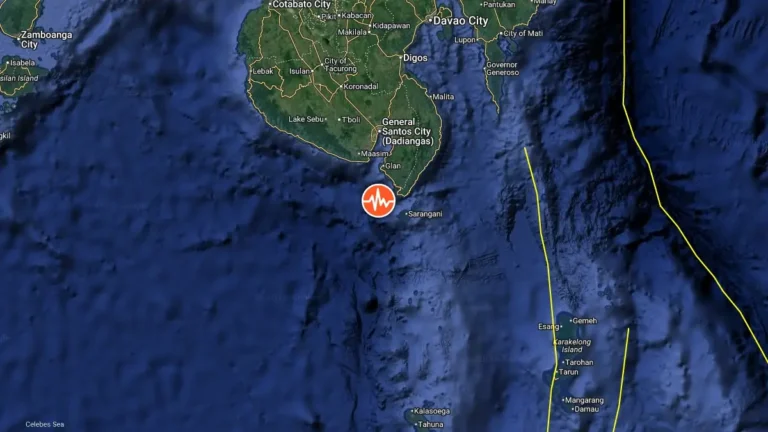
    A strong earthquake registered by the USGS as M6.5 hit Mindanao, Philippines at 11:34 UTC (19:34 LT) on June 26, 2026. The agency is reporting a depth of 52.4 km (32.6 miles). EMSC is reporting the same magnitude and depth. According to PTWC, there is no tsunami threat from this earthquake.

  • Spain estimates 212 heat-related deaths in 4 days

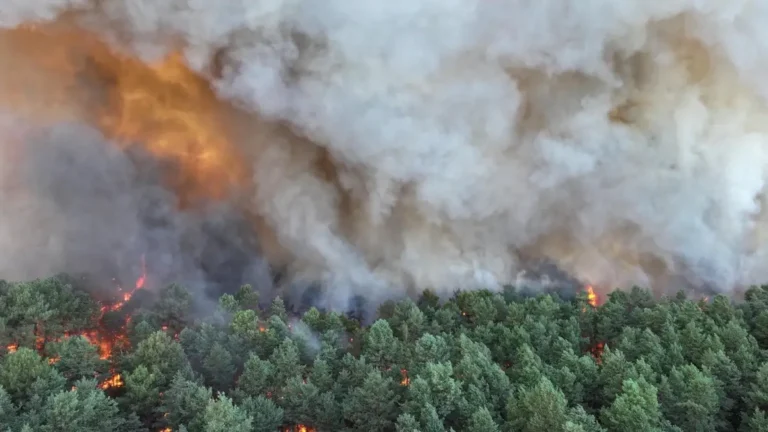
    Spain’s public mortality-monitoring system (MoMo) estimated that high temperatures were linked to 212 deaths between June 21 and 24, as the country’s first official heat wave of 2026 brought temperatures near 40°C (104°F) and higher across large areas.

  • Two major earthquakes M7.2 and M7.5 strike Venezuela within 39 seconds – death toll exceeds 1 700

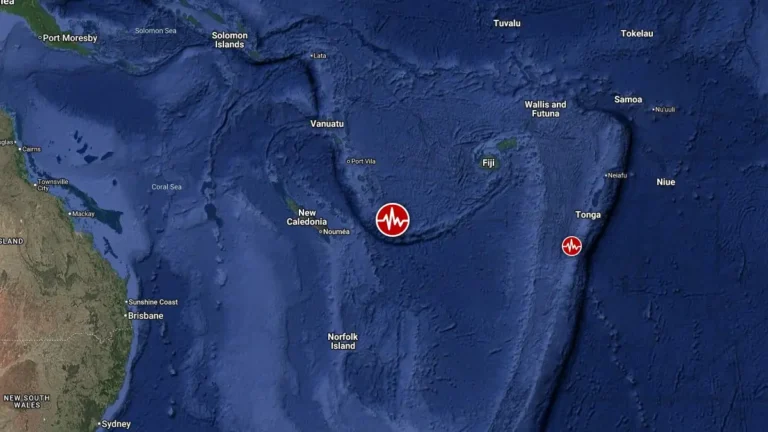
    A rare earthquake doublet struck northern Venezuela on June 24, 2026, beginning with an M7.2 foreshock at 22:04 UTC (18:04 LT) and followed just 39 seconds later by a larger M7.5 mainshock at 22:05 UTC. The USGS reported depths of 20.3 km (12.6 miles) for the foreshock and 10 km (6.2 miles) for the mainshock. EMSC reported the foreshock as M7.1 at a depth of 10 km (6.2 miles) and the mainshock as M7.5 at a depth of 35 km (21.7 miles). The Pacific Tsunami Warning Center (PTWC) said evaluation of all available data indicates that a destructive tsunami was not generated. Reports received by 06:40 UTC on June 30 mention at least 1 700 deaths and over 5 000 people injured. The death toll is expected to continue rising.

  • M6.8 solar flare erupts from Active Region 4473

    A strong M6.8 solar flare erupted from Active Region 4473 on June 21, 2026, becoming the strongest flare produced by the region so far and the strongest since X1.0 on June 3. The event began at 19:17 UTC, reached maximum intensity at 19:29 UTC, and ended at 19:35 UTC.