Maui under High Wind Warning and Flood Watch, Hawai’i
A High Wind Warning and a Flood Watch have been issued for Maui County as a powerful winter storm brings heavy rainfall, high winds, and flood risks through Friday, January 30, 2025.


Rishika holds a Master’s in International Studies from Stella Maris College, Chennai, India, where she earned a gold medal, and an MCA from the University of Mysore, Karnataka, India. Previously, she served as a Research Assistant at the National Institute of Advanced Studies, Indian Institute of Science, Bengaluru, India. During her tenure, she contributed as a Junior Writer for Europe Monitor on the Global Politics website and as an Assistant Editor for The World This Week. Her work has also been published in The Hindu newspaper, showing her expertise in global affairs. Rishika is also a recipient of the Women Empowerment Award at the district level in Haryana, India, in 2022.

A High Wind Warning and a Flood Watch have been issued for Maui County as a powerful winter storm brings heavy rainfall, high winds, and flood risks through Friday, January 30, 2025.

New research has found magma reservoirs beneath dormant volcanoes in the Cascade Range remain intact for thousands of years, challenging the long-standing belief that magma bodies dissipate over time after eruptions and reshaping understanding of volcanic activity. Previously, large magma bodies were thought to indicate an increased likelihood of eruption, but the study suggests they are a persistent feature of volcanic systems rather than a sign of imminent activity.

Volcanologists reporting in Oxford’s Academic Journal of Petrology have confirmed that the Kīlauea and Mauna Loa volcanoes share a deep magma source within the Hawaiian plume.
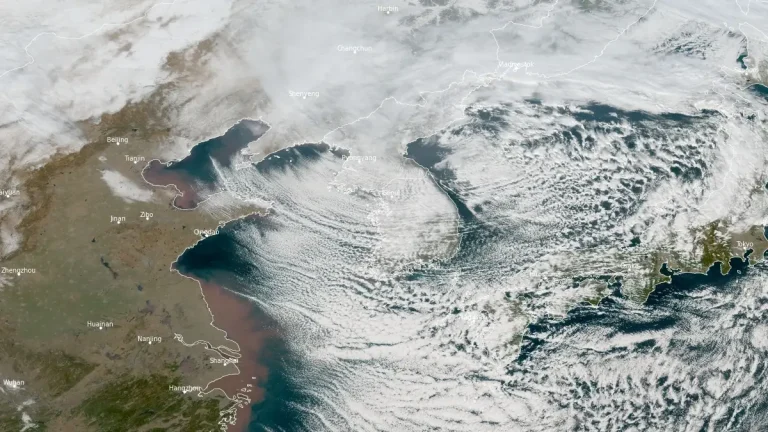
Heavy snowfall has blanketed South Korea for 2 consecutive days on January 27 and 28, 2025, disrupting transportation during the Lunar New Year holiday travels. At least 111 flights were canceled, including 68 flights from Incheon International Airport.
Magma continues accumulating beneath Svartsengi at a rate nearing the levels observed before the previous eruption. Deformation measurements confirm ongoing ground uplift, with geophysical models estimating that the subsurface magma volume is approaching the threshold associated with past magma intrusions.

A long-term statistical study has confirmed a direct correlation between rainfall variability in India and solar activity features such as sunspots, solar flares, and solar prominences. Researchers analyzed 5 consecutive solar cycles (1964 – 2019) and found that rainfall levels shift predictably with solar fluctuations, impacting seasonal and annual precipitation patterns across India.

Scientists from the University of Oregon have discovered a vast underground aquifer beneath Oregon’s Cascade Range, storing at least 81 km3 (19.4 mi3) of water — almost three times the maximum capacity of Lake Mead. The research detailing the findings was published on January 13, 2025, reshaping the understanding of the region’s water resources and volcanic hazards.

The world’s largest iceberg, A23a, is steadily approaching South Georgia, a British overseas territory. The iceberg is currently about 280 km (173 miles) from the island and could make contact within 2 to 4 weeks.

Reports from Quintrell Downs near Newquay in Cornwall, U.K., mention a possible tornado struck the area between 09:30 and 09:45 UTC on January 23, 2025, tearing through the village and damaging homes and cars.
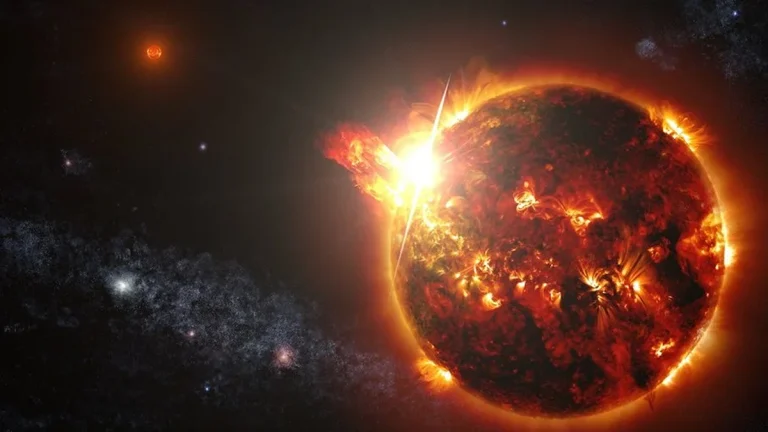
A study analyzing 56 450 Sun-like stars has found that superflares which are immense bursts of electromagnetic radiation, occur roughly once every 100 years.
