
Bright daylight fireball produces sonic boom over Puerto Rico
A very bright daylight fireball was observed over Puerto Rico and the Virgin Islands on November 23, 2025, streaking across the skies as it disintegrated, producing a sonic boom.
Impresionante Meteoro diurno a las 6:15pm
— SocAstronomíaCaribe (@Soc_AstroCaribe) November 23, 2025
Un brillante meteoro se apreció este domingo desde toda la Isla mirando en dirección al Este, indicó la Sociedad de Astronomía del Caribe (SAC).
Varios de los testigos aseguran que percibieron un sonido o estruendo varios segundos después pic.twitter.com/hXK6kuGXVz
A bright daytime fireball was seen over Puerto Rico at around 22:10 UTC on November 23. The event was captured by the Caribbean Astronomy Society (CAS).
According to Eddie Irizarry, vice president of the SAC, the fireball was a 1–3 m (3–10 feet) wide meteor that produced a sonic boom as it streaked through the island’s sky.
Meanwhile, the American Meteor Society (AMS) received 7 reports of the fireball from Aguadilla, Puerto Rico, along with St. Croix, St. John, and St. Thomas from the Virgin Islands.
The fireball was travelling southwestward, with most observers reporting a greenish hue around the fireball, indicating the presence of magnesium, which generates a green glow as it burns in the atmosphere.
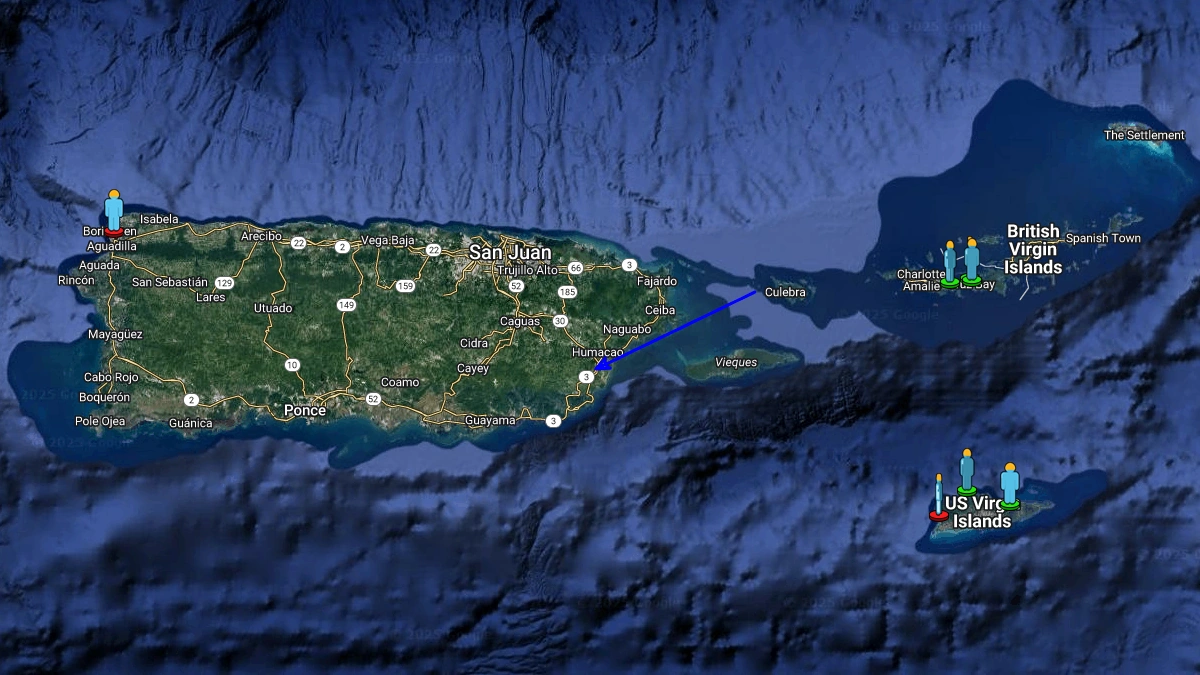
Feature image credit: SAC

Rishav Kothari is Editor-in-Chief of The Watchers, where he runs the newsroom and covers earthquakes, volcanoes, severe weather and space weather.
Published in the last 24 hours
- Second nationwide US flight halt since 9/11: how the November 13 FAA ground stop compares with September 2001 and January 2023 Epicenter
- FAA grounds all departing flights across the US after communications outage hits air traffic control centers nationwide
- In September 1859, a solar storm lit up the night sky so brightly that gold miners in the Rocky Mountains woke up after midnight and started cooking breakfast, convinced the aurora glowing over their camp was the sunrise Epicenter
- A patch of warm Pacific water that could become the strongest El Niño in more than 70 years sits thousands of miles from any American town, yet it is already the main reason NOAA expects a wetter winter across the South and a milder one across the North
