I'm a dedicated researcher, journalist, and editor at The Watchers. With over 20 years of experience in the media industry, I specialize in hard science news, focusing on extreme weather, seismic and volcanic activity, space weather, and astronomy, including near-Earth objects and planetary defense strategies. You can reach me at teo /at/ watchers.news.

  • New eruptive phase started at Pacaya volcano, Guatemala

    A new phase of increased volcanic activity began today at Guatemalan Pacaya volcano. Authorities have issued an amber alert, the third highest – people must remain alert and be prepared to leave the area at short notice.

    The volcano shot plumes of ash and

  • Night sky guide for March 2014

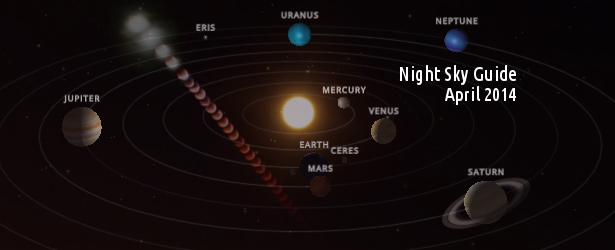
    Comet C/2012 X1 LINEAR will reach its brightest this month and will be well placed for observation on March 4. An extremely rare event will take place on the morning of March 20 when asteroid 163 Erigone passes in front of the bright star Regulus in the

  • New era of global weather observing and climate science

    International, next-generation, unifying satellite observatory for global snow and rain measurements – Global Precipitation Measurement (GPM) Core Observatory – was successfully launched yesterday from Tanegashima Space Center in Japan marking the beginning of a

  • Swarm of deep earthquakes recorded at Kilauea volcano, Hawaii

    A swarm of very deep earthquakes was recorded in last 24 hours in the area of Punalu`u on the south-west flank of Kilauea volcano, Hawaii.

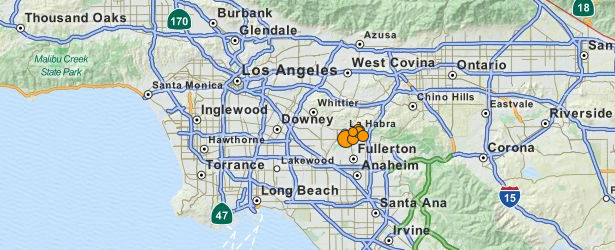
    The following map shows earthquakes registered in last 7 days (February 20 – 27, 2014). Orange markers show

  • Increased volcanic activity observed at Popocatepetl, Mexico

    Mexican CENAPRED counted 544 small to moderate emissions at Popocatepetl volcano during 24 hours between February 25 – 26, 2014. 

    An overflight made yesterday afternoon showed that the dome number 48 was destroyed by this activity leaving a funnel-shaped cavity

  • Astronomers find solar storms behave like supernovae

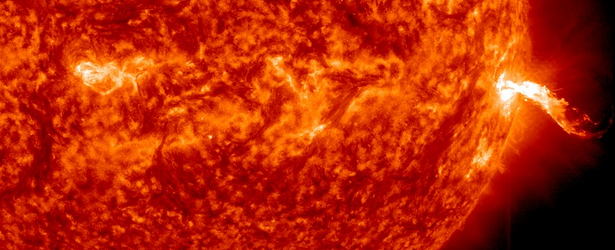
    Researchers at the UCL studying details of Coronal Mass Ejections (CMEs) have noticed that those eruptions have a surprising twin in the depths of space: the tendrils of gas in the Crab Nebula, which lie 6500 light-years away and are millions of