
Saharan dust cloud engulfs central Europe, impacts air quality in Italy, Slovenia and Croatia
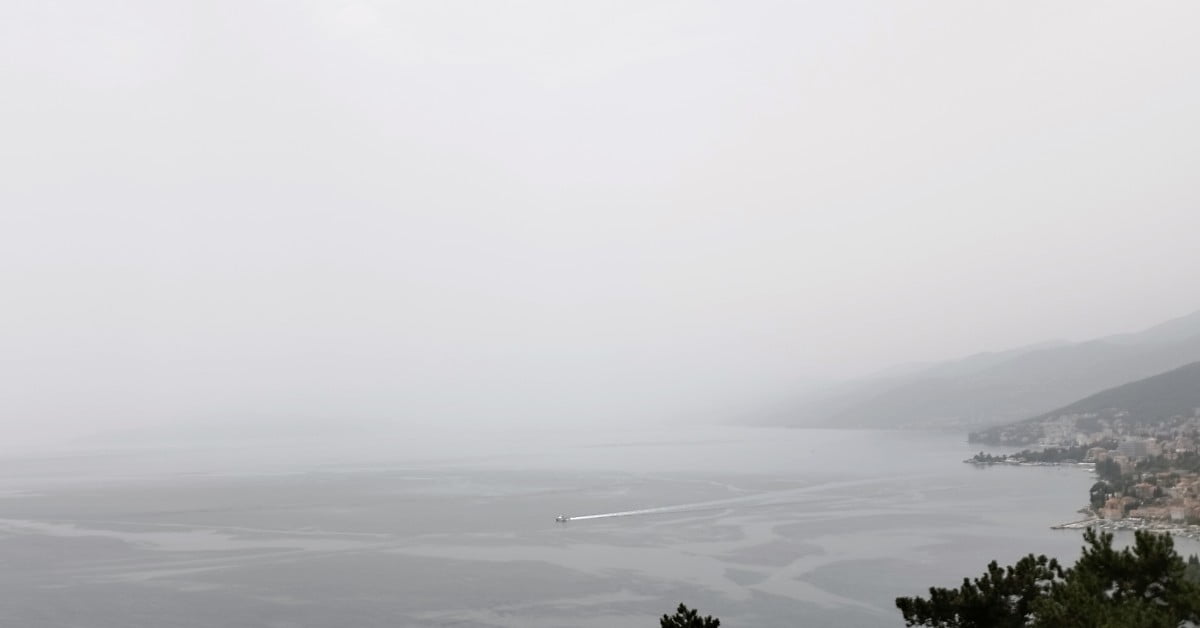
Image credit: The Watchers
A large Saharan dust cloud engulfed parts of central Europe, most notably Italy, Slovenia, and Croatia, on Friday, June 21, 2024, significantly affecting air quality in the region. The intensity and relatively high number of Saharan dust intrusions in recent months have raised questions about the possibility that these events are related to changes in atmospheric circulation patterns.
The dense dust particles in the air from the Saharan dust cloud have made breathing notably difficult in worst affected regions, with residents reporting a gritty sensation and discomfort.
According to health authorities, high levels of dust can aggravate respiratory conditions, leading to increased cases of asthma attacks, bronchitis, and other respiratory illnesses. The World Health Organization (WHO) and other health experts advise individuals, particularly those with preexisting conditions, to minimize outdoor activities, reduce indoor dust exposure by closing windows, and utilize air purifiers to mitigate health risks during intense dust transport episodes like this one.
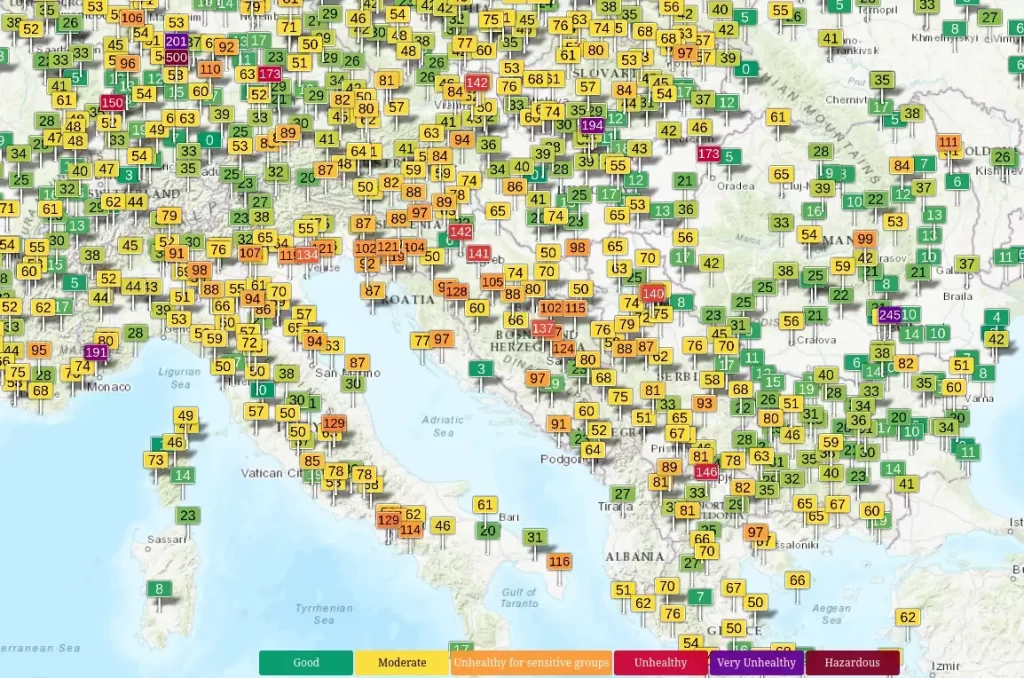
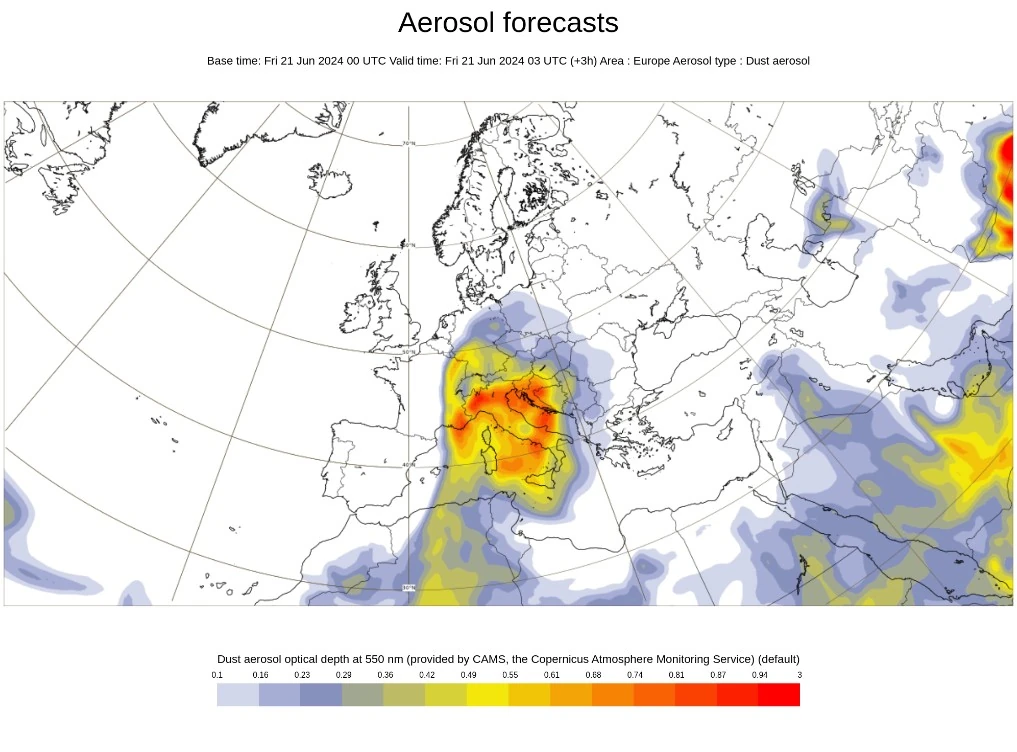
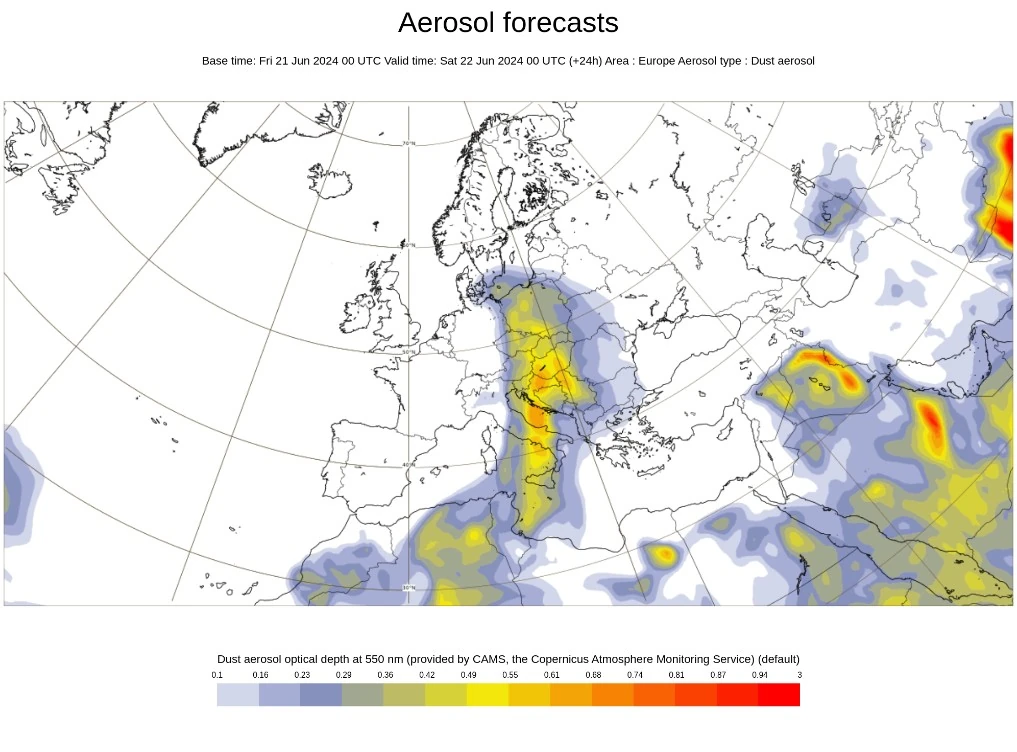
The cloud is spreading NE and is expected to reach Poland, Belarus, and Ukraine by Saturday, June 22, and remain present over the Balkans, including Croatia, Bosnia and Herzegovina, Serbia, and southern Italy throughout Saturday.
Another episode of Saharan dust transport is forecast over southern Italy and Greece on June 26.
This is just the latest in a number of intense dust episodes affecting Europe over the past months.
Despite its potential health risks when inhaled, Saharan dust can have multiple beneficial effects, one of the primary being its role in fertilizing soils.
The dust is rich in nutrients such as iron, phosphorus, and other minerals essential for plant growth. When deposited in regions like the Amazon rainforest, it acts as a natural fertilizer, replenishing nutrient-depleted soils and supporting vegetation growth. Additionally, Saharan dust contributes to ocean health by providing essential nutrients that promote phytoplankton growth. These microscopic organisms are foundational to the marine food web and play a crucial role in carbon sequestration, helping regulate the Earth’s climate.

While the transport of Saharan dust across the Mediterranean to Europe is not unusual, observations are showing an increase in the intensity and frequency of these events for some parts of Europe in recent years, said Mark Parrington, Copernicus Atmosphere Monitoring Service (CAMS) Senior Scientist.
The intensity and relatively high number of Saharan dust intrusions in recent months has raised questions about the possibility that these are related to changes in atmospheric circulation patterns.
The transport of Saharan dust into Europe has a clear seasonality, being more frequent from February to
June, and from late autumn to early winter, although dust events can be distributed throughout the year.
References:
1 New, exceptionally intense, Saharan dust episode through western Europe – CAMS – April 8, 2024
2 Health effects from Sahara dust particles – ETC/ACM Technical Paper 2011/4 – January 2012

I'm a dedicated researcher, journalist, and editor at The Watchers. With over 20 years of experience in the media industry, I specialize in hard science news, focusing on extreme weather, seismic and volcanic activity, space weather, and astronomy, including near-Earth objects and planetary defense strategies. You can reach me at teo /at/ watchers.news.

Commenting rules and guidelines
We value the thoughts and opinions of our readers and welcome healthy discussions on our website. In order to maintain a respectful and positive community, we ask that all commenters follow these rules.