
Long-lasting daylight fireball over southern California

Image credit: Bob Caron
A long-lasting daylight fireball was recorded over southern California at 13:38 UTC (06:38 LT) on February 22, 2023.
The American Meteor Society (AMS) received 27 reports from California, Arizona, and Nevada.

The video shows 13 seconds of the event as the object exited the frame of the video. However, one witness from Arizona said the fireball was seen for about 20 seconds.

When a fireball enters the Earth’s atmosphere at a shallow angle it experiences a longer flight path and encounters more atmospheric resistance.
The increased air resistance leads to a reduction in the fireball’s velocity, which causes it to travel at a slower speed than it would at a steeper angle of entry. As a result of the slower speed, the fireball can remain visible for a longer period of time before it disintegrates in the atmosphere.
Conversely, a fireball that enters the atmosphere at a steeper angle experiences a shorter flight path, encounters less atmospheric resistance, and maintains a higher velocity, making it less likely to remain visible for an extended period.
This is one great example of long-lasting fireball events, recorded over Pilbara, Australia on June 14, 2020:
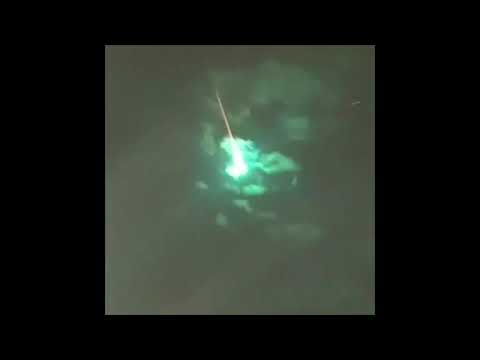
You can read more about it here:
References:
1 Event #1179-2023 – AMS – February 22, 2023

Teo Blašković founded The Watchers in 2011 and edited it until 2026, covering seismic and volcanic activity, extreme weather, space weather and near-Earth objects. Articles on this page are his archive.
Published in the last 24 hours
- High Risk of excessive rainfall covers Florida’s Space Coast as St. Johns River near Cocoa reaches 5.67 m
- Male toads abandoned a pond in Italy five days before a deadly 2009 earthquake, while a scientist was counting them Epicenter
- An asteroid was spotted 19 hours before it exploded over Sudan in 2008, and students picked its pieces off the desert Epicenter
- A wave up to 3 m (10 feet) high rose out of Lake Michigan on a sunny June morning in 1954 and swept fishermen off Chicago’s piers, and when a second came 10 days later, warnings had cleared the shore Epicenter
