
Extremely heavy rainfall floods Washington, D.C., nearly a month’s worth of rain in 1 hour
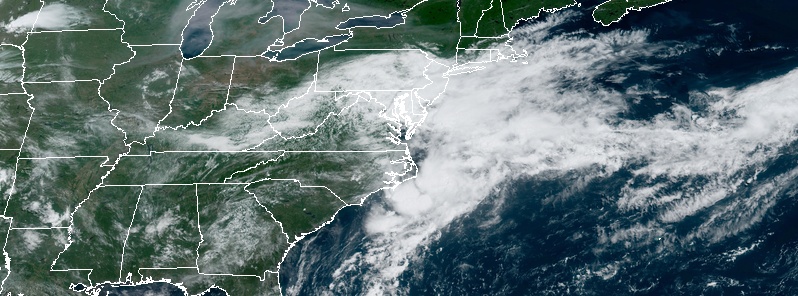
Image credit: NOAA/GOES-East. Acquired 15:40 UTC, July 8, 2019
Extremely heavy rainfall hit Washinton, D.C. metro area, on July 8, 2019, turning roads into rivers and forcing authorities to issue Flash Flood Emergencies.
In just one hour, some areas just west of capital saw over 76.2 mm (3 inches) of rain, especially along the Potomac River. Areas of concern include the Great Falls, Virginia, area and southeastern Montgomery County, Maryland.
Reagan National Airport, an official observing site, saw 70.8 mm (2.79 inches) of rain in just one hour, beating a 1945 record of 52 mm (2.05 inches), The Washington Post reported. More rain fell in that hour in the capital than in the past 38 days combined.
More than a dozen water rescues were performed after raging floodwaters turned numerous roads into rivers.
This morning #WashingtonDC was hit by extreme rainfall which caused devastating #flashflooding. #NASA's GPM Core Observatory flew over the storm system at 8:51am detecting rainfall rates over 100 mm/hr in some regions. Learn more: https://t.co/y9eKmsgRGz #dcflood #DCwx pic.twitter.com/1tccDfeNeF
— NASA Precipitation (@NASARain) July 8, 2019
Our top weather story this AM comes out of Washington DC where a Flash Flood Emergency was issued earlier. Reagan National Airport reported 3.3" of rain IN AN HOUR! Always turn around, don't drown when you encounter flooded roadways! pic.twitter.com/tYw5JtfZPo
— National Weather Service (@NWS) July 8, 2019
PHOTOS: Roads flood across DC region https://t.co/fUjc6DVWGx pic.twitter.com/hrCxMzZURu
— Washington Informer (@DC_Informer) July 8, 2019
Much of D.C., Arlington, Montgomery, Frederick, and Carroll counties received 51 – 102 mm (2 to 4 inches) of rain, with many areas picking up those amounts in only 1 or 2 hours, AccuWeather reports. Radar estimates close to Frederick, Maryland, indicate rainfall totals over 102 mm (4 inches).
The heavy rain also flooded the runway at Frederick Municipal Airport, covering the wheels of some aircraft. At the White House, the rain started to flood the basement. Meanwhile, the second flood entrance of the Pentagon "leaks" on Monday morning, CNN Pentagon Correspondent Barbara Starr reports.
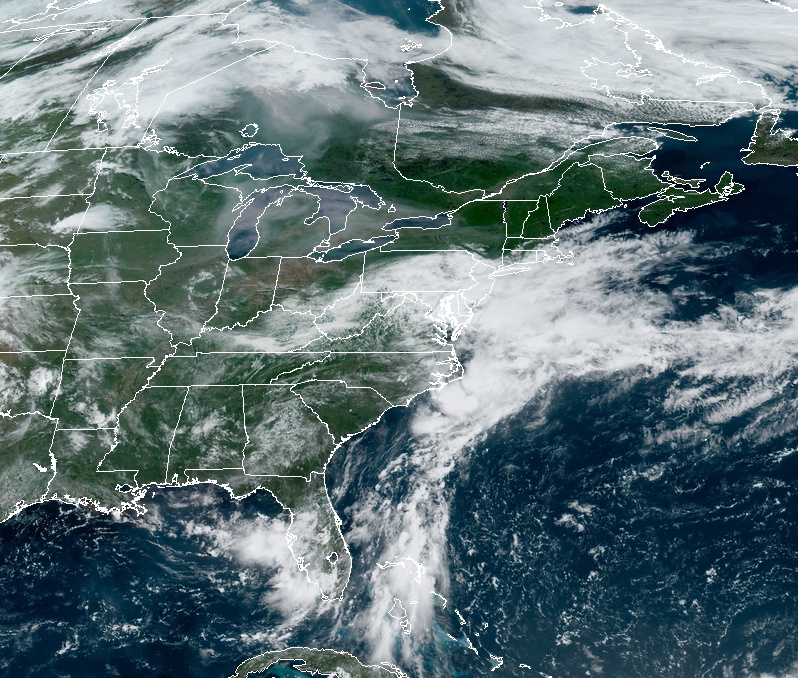
Featured image credit: NOAA/GOES-East. Acquired 15:40 UTC, July 8, 2019
Amtrak Spokesman Jason Abrams told CNN that, around 10:20 LT Monday morning, 6 trains, including the Carolinian and Northeast Regional, were stopped "due to flooding/washout conditions" on tracks south of Alexandria, Virginia.
Arlington, Virginia, recorded 83.8 mm (3.3 inches) of rain over the course of an hour at Reagan National Airport early Monday, according to AccuWeather Senior Meteorologist Alex Sosnowski. Its normal monthly total is 93.9 mm (3.7 inches).
Areas of heavy rain continue across portions of northern VA and northern/central MD. This is expected to continue over the next couple of hours. Flash Flood Watch continues until 10:00 AM. If you encounter a flooded road, turn around, don't drown. pic.twitter.com/ebPc84iEMN
— NWS DC/Baltimore (@NWS_BaltWash) July 8, 2019
Showers & thunderstorms will continue progressing southeastward through the region over the next couple of hours. The most widespread coverage & highest risk of any severe thunderstorms or isolated flooding will be from the Washington/Baltimore Metro areas into southern Maryland. pic.twitter.com/tNb11wwbte
— NWS DC/Baltimore (@NWS_BaltWash) July 7, 2019
@JimCantore Baker Park in Frederick, MD. pic.twitter.com/dFtDvGg12E
— Amanda Anderson (@mynames_amanda) July 8, 2019
Serious flooding situation on Canal Road near Fletchers Cove with numerous drivers stranded, so I’m swimming to safety #DCWX @WTOP pic.twitter.com/UNFOmZkltO
— Dave Dildine (@DildineWTOP) July 8, 2019
We got a bit of an issue here… pic.twitter.com/58g9RJfm0c
— Dr. Rocío Caballero-Gill (@CaballeroGill) July 8, 2019
This home in Potomac, MD is in danger of collapse. The backyard collapsed into the basement. pic.twitter.com/7jjTqTBODQ
— Sam Sweeney (@SweeneyABC) July 8, 2019
Georgetown Pike, Scott’s Run Nature Preserve. @WTOPtraffic @WTOP pic.twitter.com/BHGknx5cUS
— jae wooten reaves (@JaeReaves) July 8, 2019
Reports of a large sink hole on Belfast Road in Potomac, Md. Heavy rain has caused flooding throughout the DC area. Flood warnings still in effect. https://t.co/JBWAu6ZQ56 pic.twitter.com/iGRFBgCrGI
— WUSA9 (@wusa9) July 8, 2019

I'm a dedicated researcher, journalist, and editor at The Watchers. With over 20 years of experience in the media industry, I specialize in hard science news, focusing on extreme weather, seismic and volcanic activity, space weather, and astronomy, including near-Earth objects and planetary defense strategies. You can reach me at teo /at/ watchers.news.

Commenting rules and guidelines
We value the thoughts and opinions of our readers and welcome healthy discussions on our website. In order to maintain a respectful and positive community, we ask that all commenters follow these rules.