
Tropical Cyclone “Desmond” making landfall in Mozambique

Image credit: NASA/NOAA Suomi NPP/VIIRS. Acquired January 21, 2019
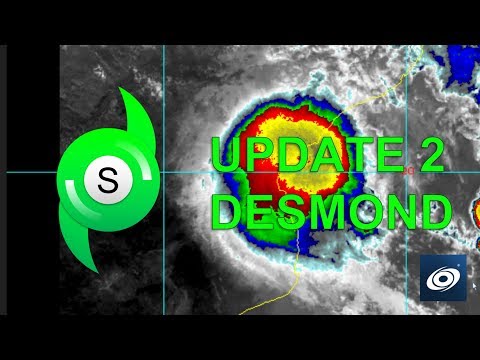
Tropical Cyclone "Desmond" formed over the southern Mozambique Channel at 12:00 UTC on January 20, 2019. The storm is expected to continue its NNW track toward Zambezia Province and make landfall over the next couple of hours as a tropical storm.
Heavy rainfall, strong winds and thunderstorms could affect Zambezia and Sofala Provinces.
At 06:00 UTC on January 21, the center of Moderate Tropical Storm "Desmond" was located about 297 km (184 miles) E of Beira and 270 km (168 miles) SSE of Quelimane, Mozambique. It had maximum winds of 65 km/h (40 mph), gusts to 94 km/h (58 mph) and a central pressure of 997 hPa.
Cyclone alerts have been issued to residents in Mozambique, from Beira to Nacala. Authorities are urging them to prepare for conditions including a storm surge of 2 – 4 meters (6 – 12 feet), dangerous seas, coastal flooding, and an inland flood threat.
"Desmond is making landfall as a weak but precipitous tropical storm, with flooding rains likely along the coast extending inland from the landfall area. The storm is likely to dissipate soon after landfall, although the rainfall could outlive Desmond by some time in the region," Force Thirteen reports in their video analysis of the event:


This is the fifth named storm of the 2018–19 South-West Indian Ocean cyclone season.

Teo Blašković founded The Watchers in 2011 and edited it until 2026, covering seismic and volcanic activity, extreme weather, space weather and near-Earth objects. Articles on this page are his archive.
Published in the last 24 hours
- Scientists directly observe how submarine landslides unfold in western Canada Epicenter
- Odisha evacuated 983,642 people before Phailin crossed near Gopalpur on 12 October 2013 with winds of 200-210 km/h gusting to 220, and 44 died, against 9,885 in the 1999 super cyclone. Cyclone Akvan crossed the same coast on 20 November 2026. Epicenter
- Lava fountains reached 1,900 feet (580 m) at Kīlauea Iki in 1959, the highest ever recorded at Kīlauea, as USGS forecasts episode 57 fountaining at Halemaʻumaʻu for November 22-26. Epicenter
- Novarupta in Alaska erupted about 3 cubic miles of magma in roughly 60 hours from 6 June 1912, 30 times Mount St. Helens in 1980, and strong northwesterly winds lifted that same loose ash on 16 November 2026, prompting an NWS SIGMET. Epicenter
