
Incoming CME to spark geomagnetic storming on July 13, 2013
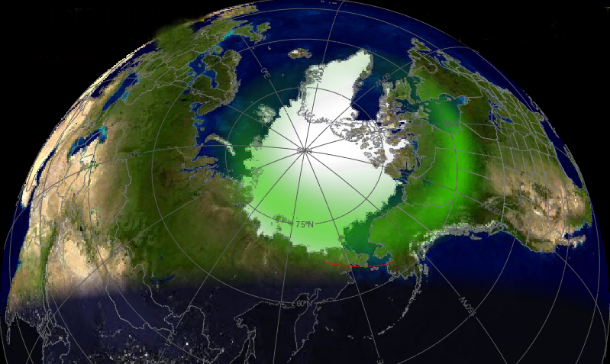
Featured image: OVATION Aurora forecast map - North Pole (Credit: NOAA/OVATION)
We saw increased geomagnetic activity for past two days as Kp index reached K=5, G1 geomagnetic storming level, on July 10. A minor CME hit Earth's magnetic field on July 9, 2013 at approximately 20:30 UTC and peaked during the early hours of July 10, 2013. G1 geomagnetic storm produced auroras in northern US states from Wisconsin to Washington after Bz component started to tipping southward.

Geomagnetic storming subsided by now, however, NOAA forecasters estimate a 40% chance of polar geomagnetic storms on July 13, 2013 due the arrival of incoming slow-moving CME that erupted on the July 9, 2013. This could spark bright auroras at high latitudes.

WSA-Enlil Solar Wind Prediction
Solar activity remains at very low levels. There are currently only two numbered sunspots on the visible solar disk. Sunspots 1785 and 1787 are decaying as moving towards the west limb. Two new sunspots emerged in the southeast quadrant and should be numbered as AR 1791 and AR 1792. NOAA/SWPC forecasters estimate 30% chances of M-class solar flares in the next 24 hours.

Published in the last 24 hours
- A meteorite blew a crater beside a village near Lake Titicaca in 2007, and dozens of villagers who went to see it got headaches and nausea, though tests found nothing the rock had added to the water Epicenter
- The people who pay closest attention to the weather are the ones storms have already cost the most, a study of 946 students found, with one damaging storm making little difference to how much attention a student paid, but two or more making a clear one Epicenter
- The sea is falling in Juneau, Alaska, because land freed from melted glaciers is rising about 0.6 inches a year Epicenter
- A dam above Los Angeles collapsed just before midnight on March 12, 1928, and the flood killed more than 400 people, hours after the engineer who built it had spent two hours looking at a new leak and decided there was no danger Epicenter
