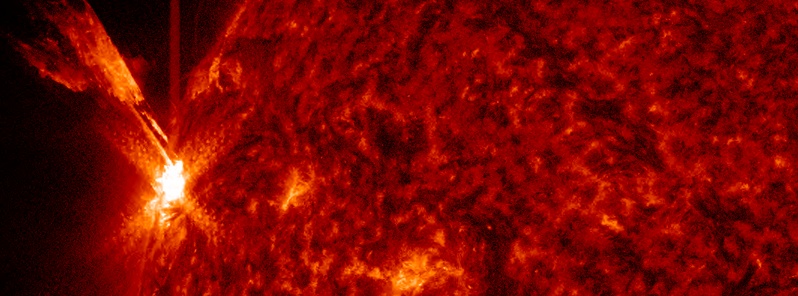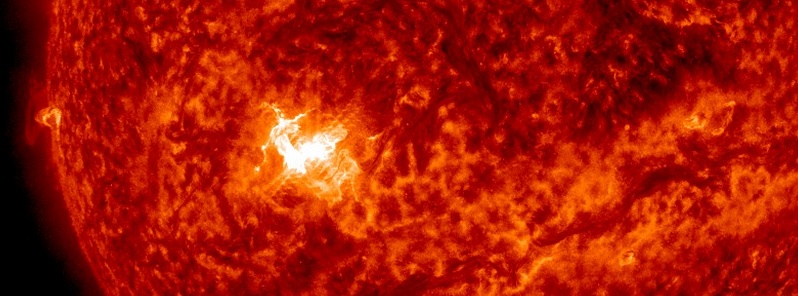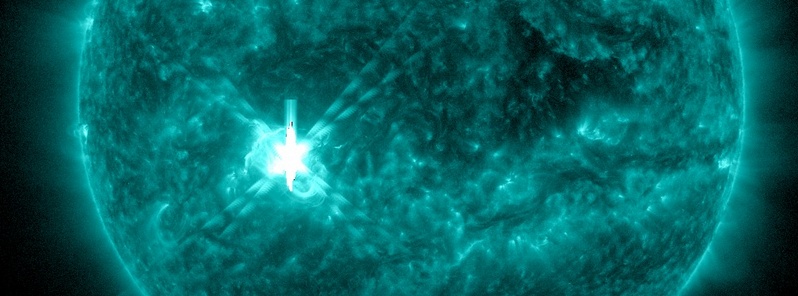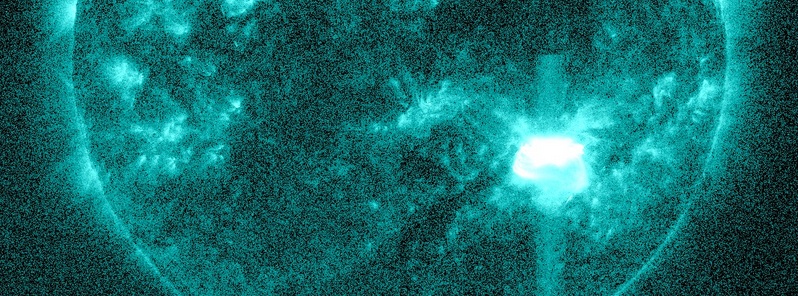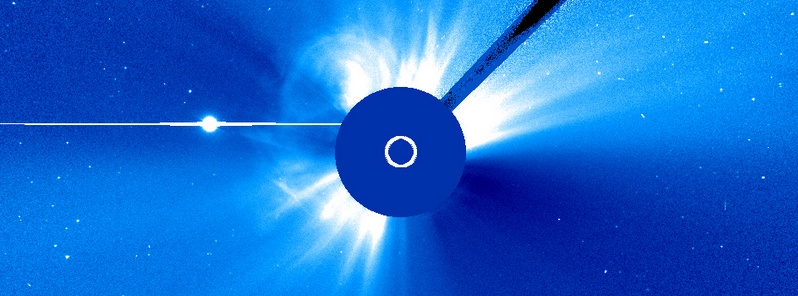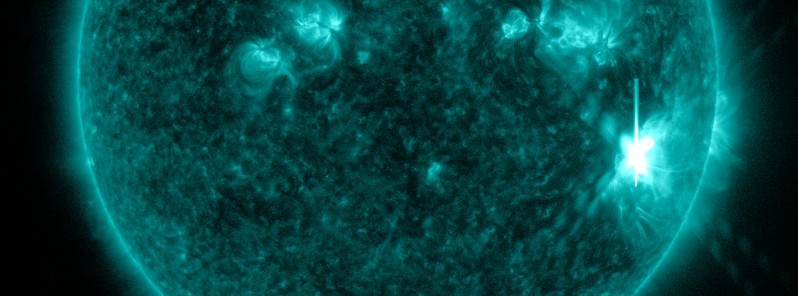
• Impulsive M7.3 solar flare erupts from Region 2673

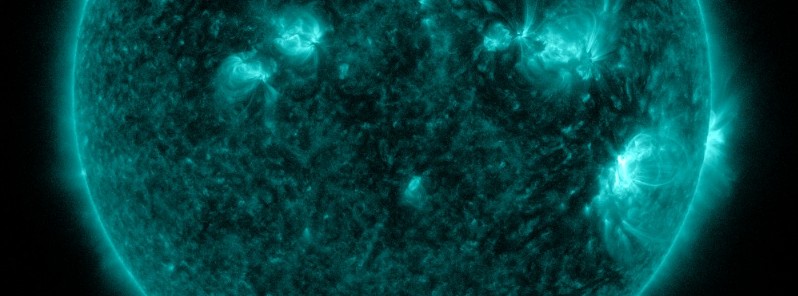
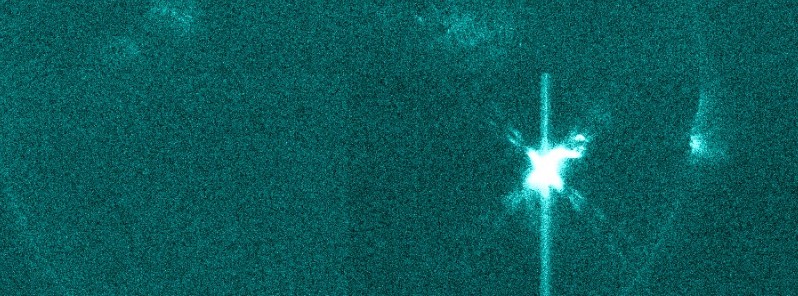
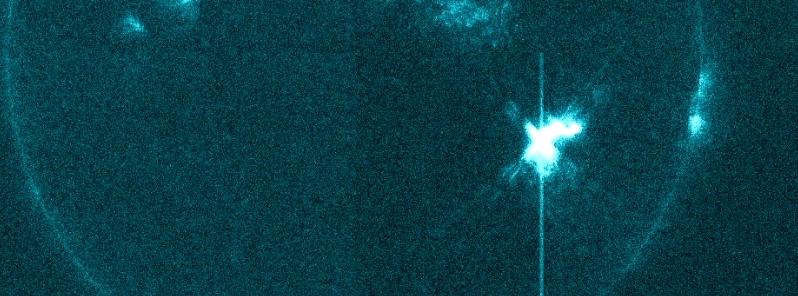
    An impulsive solar flare measuring M7.3 at its peak time erupted from Region 2673 at 10:15 UTC on September 7, 2017. The event started at 10:11, peaked at 10:15 and ended at 10:18 UTC. It comes a day after two major X-class solar flares erupted from the same region….

  • Shock arrival from September 4 Coronal Mass Ejection

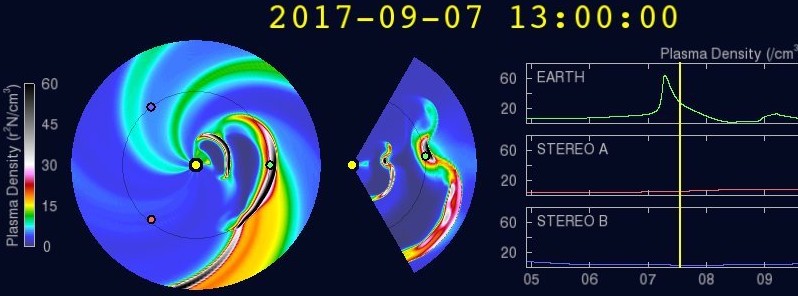
    The coronal mass ejection (CME) produced by the M5.5 solar flare on September 4, 2017 arrived at the DSCOVR spacecraft on September 6 at 23:08 UTC and at Earth 30 minutes later. The impact did not spark a geomagnetic storm, but the potential still exists as the CME…

  • Space weather highlights for March 5 – 15, 2015

    Region 2297 rotated onto the SE limb on March 5, 2015 and by March 15 it managed to produce a total of 99 C-flares, 24 M-flares and 1 X-flare. From March 8 to 12, it was the only numbered sunspot region on the solar disk and from the end of March 5 to March 16, with jus

  • Powerful solar flare measuring X2.1 erupts from Region 2297

    A major solar flare measuring X2.1 (R3-Strong radio blackout) erupted from Region 2297 at 16:22 UTC on March 11, 2015. The event started at 16:11 and ended at 16:29 UTC.A Type II (estimated velocity 1 461 km/s) and IV radio emissions were associated with the event. Type

  • Major solar flare measuring X1.8 erupted from Region 2242

    A major solar flare measuring X1.8 (R3-Strong Radio blackout) at its peak time erupted from Region 2242 ('beta-gamma-delta') at 00:28 UTC on December 20, 2014. The event started at 00:11 and ended at 00:55 UTC.A Type II radio emission with an estimated velocity

  • CME generated by X1.6 solar flare to arrive on November 10

    A partial halo Coronal Mass Ejection (CME) was generated by major X1.6 solar flare on November 7, 2014.WSA/ENLIL modeling of the event shows a partially Earth-directed component that is expected to impact the geomagnetic field early to midday on November 10 causing acti