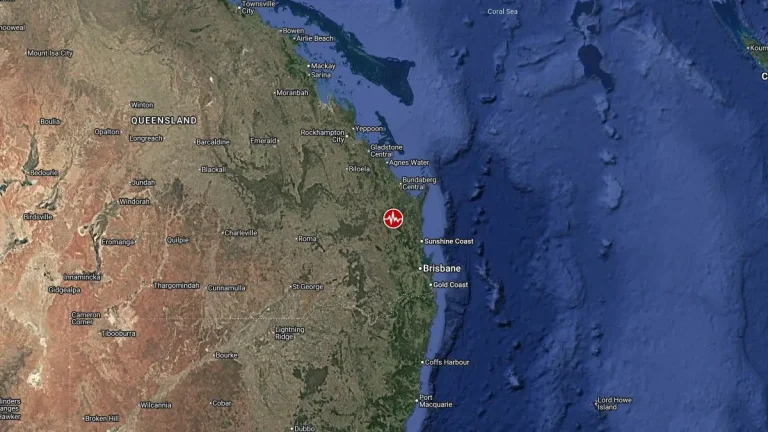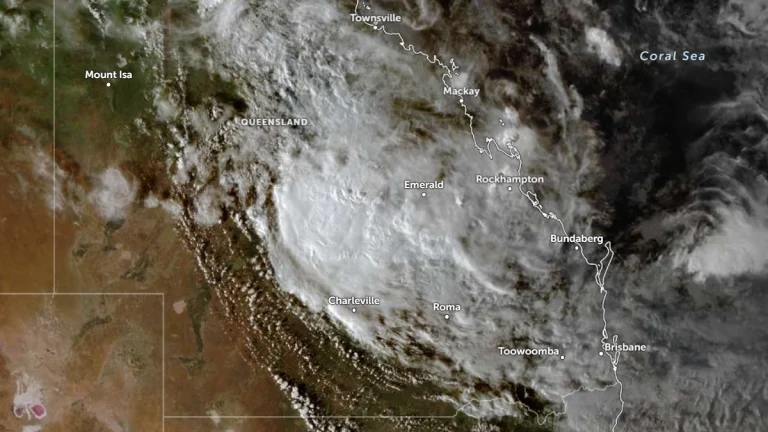
• Tropical Cyclone Koji brings severe flooding across north and central Queensland, Australia

    Tropical Cyclone Koji brought torrential rainfall and widespread flooding to north and central Queensland on January 12, 2026, following its landfall near Ayr and Bowen a day before. Major flood warnings are in effect for multiple river systems, with rainfall totals of up to 600 mm (24 inches) in some areas, while thousands of customers remain without power. Emergency crews have conducted rescues and evacuations as the system moves inland, continuing to produce heavy rain and thunderstorms.

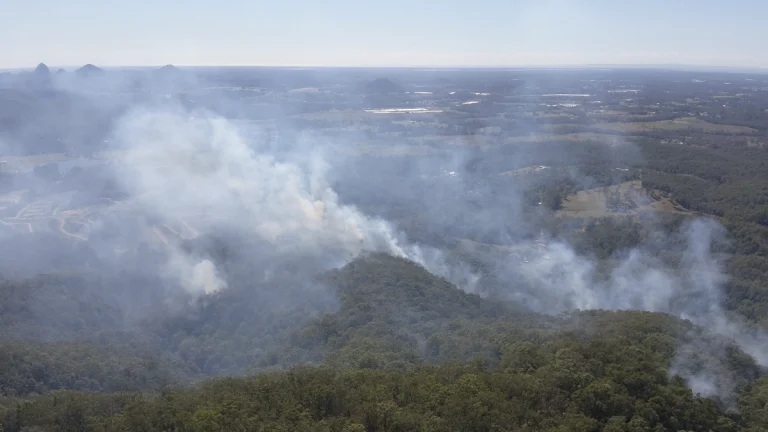
  • Over 144 000 livestock lost in devastating Queensland floods, Australia

    Recent floods in Queensland, Australia, have killed or displaced more than 144 000 livestock, across more than 500 000 km² (193 000 mi2) of land. The disaster, triggered by heavy rainfall and Cyclone Alfred, has also damaged essential infrastructure, affecting farmers and markets.

  • Ex-Tropical Cyclone Alfred washes off Australian beaches

    Ex-Tropical Cyclone Alfred made landfall on March 8, 2025, on the Queensland coast, bringing heavy rain, severe flooding, and strong winds that caused widespread damage. The landfall coincided with one of the highest tides of the year, leading to severe beach erosion along some of the region’s most popular coastal areas.

  • One dead, multiple injured as Ex-Tropical Cyclone Alfred makes landfall near Brisbane, Queensland

    Ex-Tropical Cyclone Alfred made landfall north of Brisbane at 21:00 local time (LT) on Saturday, March 8, after stalling offshore for several hours. Multiple rivers have risen above flood levels, with flood warnings being in effect across Queensland (QLD) and New South Wales (NSW). At least one death has been reported, several people have been injured, and more than 350 000 homes were left without power.

  • Tropical Cyclone Alfred makes landfall over Moreton Bay Islands

    Tropical Cyclone Alfred made landfall over the Moreton Bay Islands off the Queensland coast at approximately 23:30 AEST (13:30 UTC) on Friday, March 7, as a Category 1 cyclone. The system is expected to move closer to the Queensland mainland for several hours before making landfall again on Saturday, March 8.