
Floods and landslides kill at least 32 in Nepal, Himlung avalanche toll reaches 11
Floods, landslides, and other rain-related disasters have killed at least 32 people across Nepal since September 24, 2026, while rescue teams have recovered 11 bodies from the September 27 Himlung Himal avalanche. Updated figures from Baglung and Manang raised the combined minimum from all incidents to at least 43 by October 1, with five avalanche victims still missing.
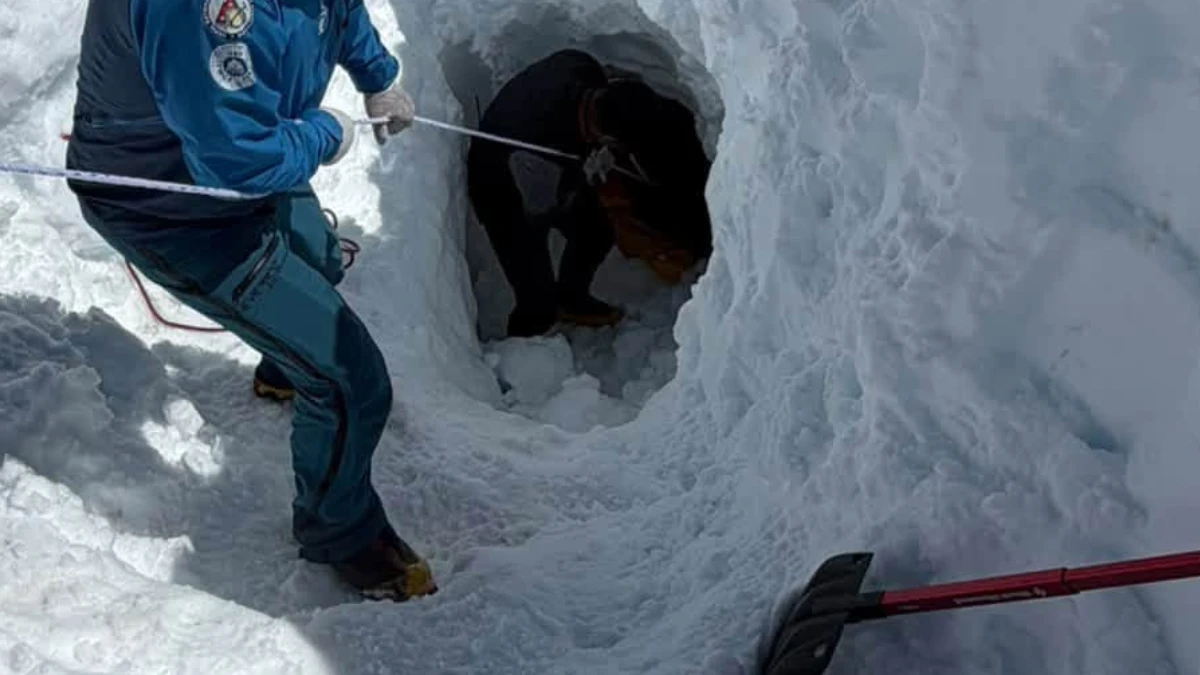
Rescue operatives looking for victims Himlung Avalanche area, Nepal on October 1, 2026, Credit NNMGGA
Nepal Police reported 35 deaths, 15 injuries and 2 695 rescues in a September 29 national update. Its district breakdown included 12 deaths in Baglung and four in Manang.
Baglung District Police reported on October 1 that the district’s landslide toll had risen to 13 after search teams recovered the body of a woman missing since September 27.
The Nepal National Mountain Guide Association reported the same day that four additional bodies had been recovered from Himlung Himal, raising the avalanche toll from seven to 11. Five of the 16 expedition support workers initially reported missing remained unaccounted for.

An earlier National Disaster Risk Reduction and Management Authority (NDRRMA) report covering the period between September 24–27 recorded 542 rain-related disaster incidents. The report documented 27 deaths, four missing people, eight injuries and 1 082 affected families.
Landslides accounted for 304 incidents, killing 20 people, leaving four missing and injuring seven. NDRRMA also recorded 87 floods that caused four deaths and 151 other heavy-rain incidents that caused three deaths and one injury.
More than 100 mm (3.94 inches) of rain was measured at 186 monitoring stations during the four-day period. Dedhgaun in Nawalparasi East recorded 544.2 mm (21.43 inches), Panchase in Kaski received 500.2 mm (19.69 inches), and Atraulitar in Tanahun recorded 472 mm (18.58 inches).
NDRRMA attributed the heavy rainfall to a low-pressure system over the Bay of Bengal.

The September 24–27 assessment recorded 227 houses completely destroyed and 142 partially damaged. Thirty-one bridges were also damaged, while 114 livestock were killed or affected.
Approximately 980 000 people received targeted flood-warning text messages, and about 2 000 people were moved from areas considered at risk. Helicopters were used to rescue people stranded in remote districts, including Myagdi, Jajarkot and Baglung.
Landslides also obstructed or reduced river flow in mountain districts. A landslide at Chame in Manang affected the Marsyangdi River, while another in Thasang Rural Municipality-3 in Mustang partially blocked the Kali Gandaki River.
Authorities warned downstream communities that sudden releases could occur if the debris blockages failed. NDRRMA subsequently reported that water levels in major rivers were gradually declining from September 28.
Road access improved as rainfall eased. By October 1, the Prithvi and BP highways had reopened to two-way traffic, according to Department of Roads officials.

The Lamjung–Manang and Myagdi–Mustang road connections remained cut while repairs continued at sections damaged by floods and landslides.
The Himlung Himal avalanche struck the mountain’s base camp in Manang on September 27 while Nepali guides and support workers were preparing for the autumn climbing season. Sixteen workers were initially reported missing, while ten other people were rescued.
Search teams continued working through packed snow and avalanche debris on October 1. No foreign climbers were at the base camp when the avalanche struck, according to the rescue team.
References:
1 Flood, landslide and disaster casualty and rescue update – Nepal Police – September 29, 2026
2 Baglung landslide death toll reaches 13 – Nepal News – October 1, 2026
3 Four days of heavy rain trigger 542 disasters, kill 27 – OnlineKhabar – September 29, 2026

Rishav Kothari is Editor-in-Chief of The Watchers, where he runs the newsroom and covers earthquakes, volcanoes, severe weather and space weather.
Published in the last 24 hours
- In February 2022, SpaceX launched 49 Starlink satellites into a solar storm so mild that forecasters rated it minor, and within days 38 of them had fallen back and burned up, because the storm had swollen the thin air they were flying through Epicenter
- On a Friday night in October 1992, a fireball over the eastern US was filmed by fans at high school football games before it punched through the trunk of a teenager’s $400 Chevy Malibu in Peekskill, New York, and she sold the wrecked car for $10,000 Epicenter
- Green Lake, Hawaii's largest freshwater lake, was gone by the afternoon of June 2, 2018, after lava from Kilauea filled its basin. The water was about 20 feet deep, not the 200 feet often claimed. Epicenter
- Flying glass cut a teacher in Russia but none of her 44 pupils, because when a meteor flashed across the sky in 2013, she told them to get under their desks Epicenter
