
Eastern Pacific reaches 21 named storms for the first time since 2018 as Tropical Storm Vance strengthens
Tropical Storm Vance strengthened over the eastern Pacific on October 22, becoming the 21st named storm of the 2026 season and making 2026 the first eastern Pacific season since 2018 to reach that total. At 15:00 UTC, maximum sustained winds had increased to 95 km/h (60 mph), and the National Hurricane Center (NHC) forecast Vance to become a hurricane during the night of October 22 and possibly a major hurricane by the weekend.
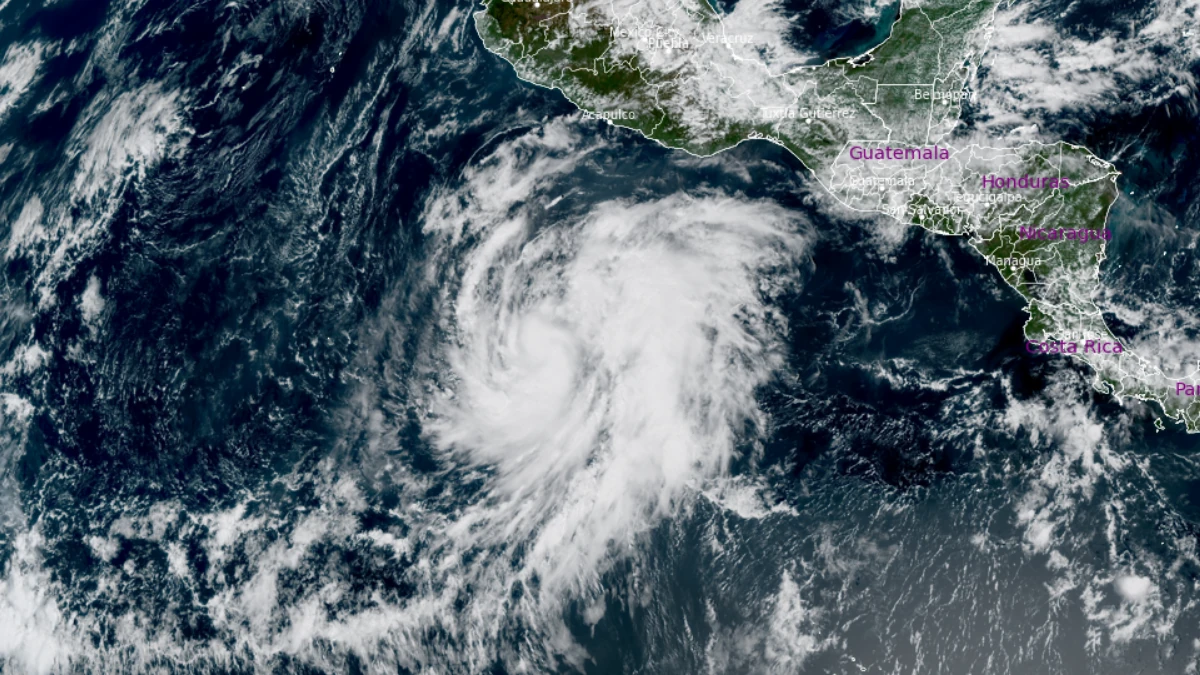
Satellite image Tropical Storm Vance at 18:20 UTC on October 22, 2026. Credit: NOAA/GOES-19, RAMMB/CIRA, The Watchers
At 15:00 UTC (09:00 LT) on October 22, the center of Tropical Storm Vance was located approximately 810 km (505 miles) south of Acapulco and 1 095 km (680 miles) south-southeast of Manzanillo, Mexico.
1-minute sustained winds reached 95 km/h (60 mph), while the estimated minimum central pressure had fallen to 997 mb. The storm was moving northwest at 6 km/h (3 mph).
Tropical-storm-force winds extended outward up to 150 km (90 miles) from the center. No coastal watches or warnings were in effect.
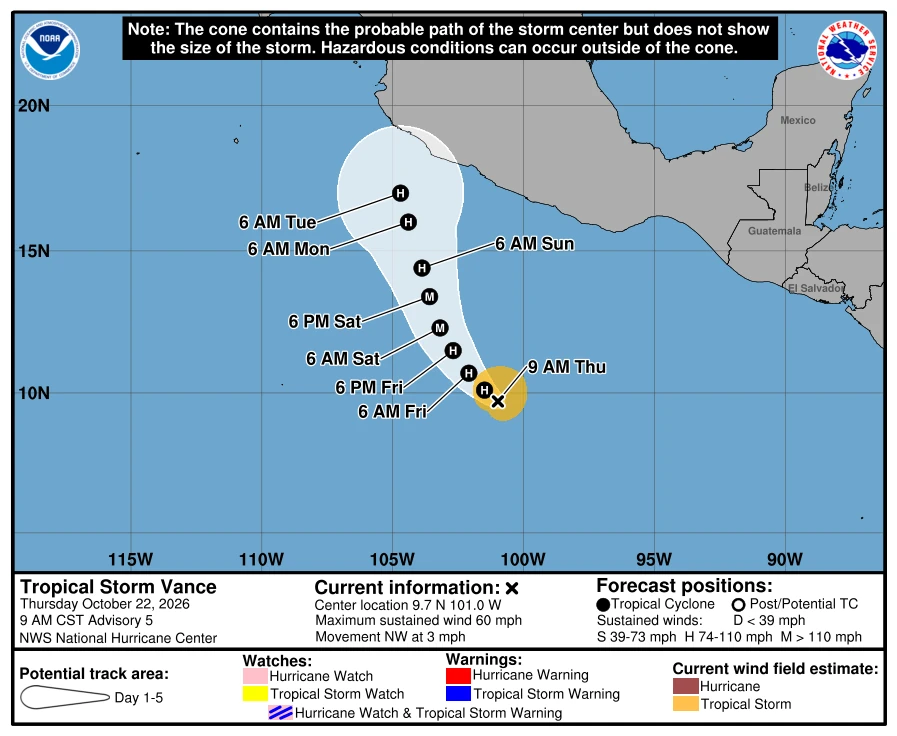
NHC said Vance was forecast to continue a slow northwest to north-northwest motion over the following few days. The agency expected the storm to become a hurricane during the night of October 22 and said it could become a major hurricane by the weekend.
Satellite observations during the previous NHC forecast cycle showed Vance becoming better organized, with deep convection expanding near the center and very cold cloud tops. NHC had identified warm sea-surface temperatures, low vertical wind shear, and sufficient mid-level moisture as favorable for substantial strengthening during the next couple of days.
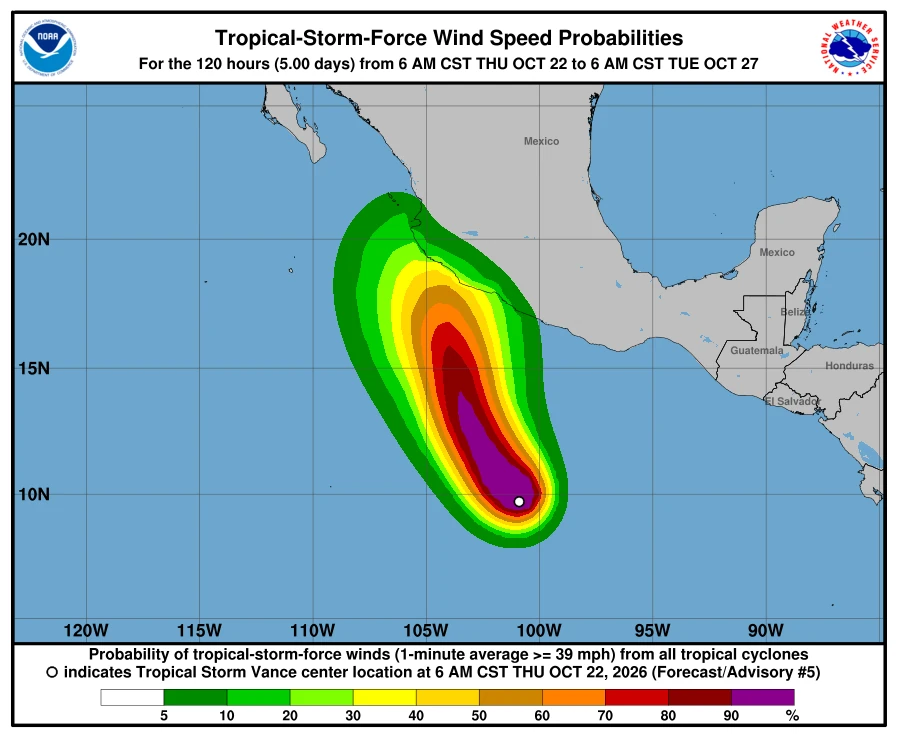
The earlier NHC forecast discussion also indicated that increasing vertical wind shear and less favorable upper-level outflow were expected later in the forecast period. Confidence in the longer-range track decreased as steering currents weakened and model solutions diverged.
Swells generated by Vance were expected to begin affecting portions of southern and southwestern Mexico during the weekend and continue into the following week. NHC said these swells were likely to produce life-threatening surf and rip-current conditions.
NHC initially designated the system Tropical Depression Twenty-Two-E at 15:00 UTC on October 21, when maximum sustained winds were 55 km/h (35 mph). Six hours later, the depression strengthened into Tropical Storm Vance with sustained winds of 65 km/h (40 mph).
Vance is the 22nd numbered tropical cyclone of the eastern Pacific season but the 21st system to receive a name. Tropical Depression Nineteen-E did not reach tropical-storm strength, leaving Vance as the season’s 21st named storm.
The last eastern Pacific season to produce at least 21 named storms was 2018, when NHC recorded 22 named storms, including 12 hurricanes and nine major hurricanes. The 1991–2020 climatological average for the basin is 15 named storms, eight hurricanes, and four major hurricanes.
The eastern Pacific hurricane season runs from May 15 through November 30, placing Vance’s October formation within the official season.
References:
1 Tropical Storm Vance Public Advisory Number 5 – NOAA/NHC – October 22, 2026
2 Tropical Storm Vance Forecast Discussion Number 5 – NOAA/NHC – October 22, 2026
3 2018 Eastern Pacific hurricane season summary – NOAA/NHC – Accessed on October 22, 2026

Rishav Kothari is Editor-in-Chief of The Watchers, where he runs the newsroom and covers earthquakes, volcanoes, severe weather and space weather.
Published in the last 24 hours
- NASA built the Opportunity rover to last 90 days on Mars, and Martian winds helped keep it alive for nearly 15 years by blowing dust off its solar panels, until a planet-wide dust storm in 2018 blocked sunlight and silenced the rover Epicenter
- In the winter of 1811–12, earthquakes near New Madrid, Missouri, shook so hard that witnesses saw the Mississippi River flow backward, and the shaking left a brand-new lake in Tennessee Epicenter
- On 28 August 1859 a solar storm shocked telegraph operators and threw sparks on other lines, and on 2 September Boston to Portland clerks unhooked their batteries and kept sending for more than two hours on the aurora's current alone. Epicenter
- In 2019, the Ronald Reagan Presidential Library hired hundreds of goats to eat 13 acres of brush around it; months later the Easy Fire surrounded the library, and the fire break the goats left behind slowed the flames before they reached the building Epicenter
