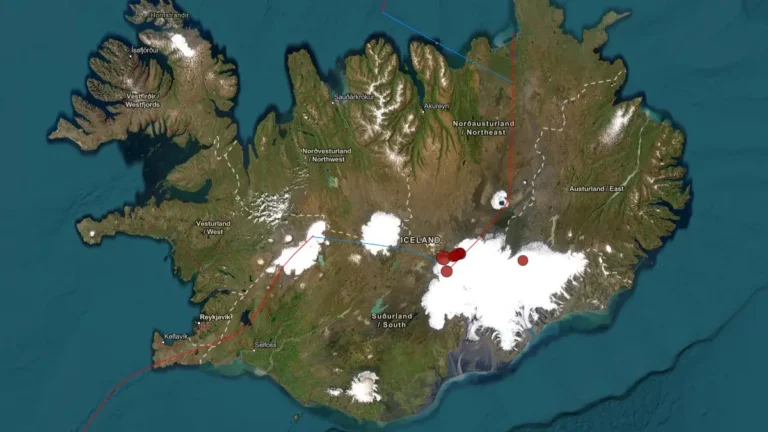
Earthquake swarm near Eldey and Reykjanestá, Iceland
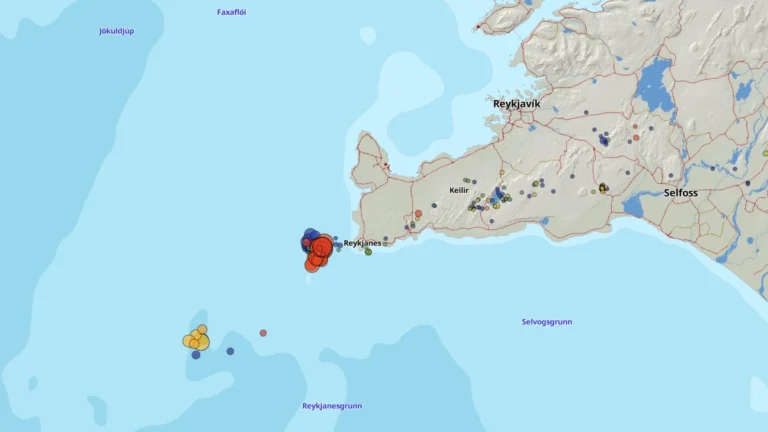
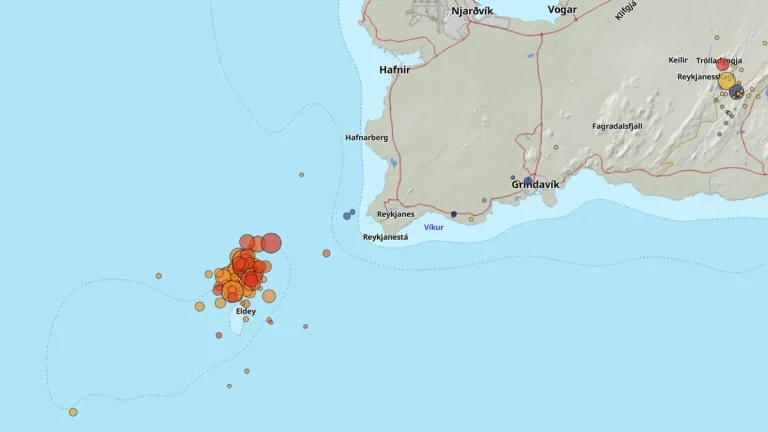
More than 220 earthquakes have been recorded near Reykjanestá and Eldey, Iceland, since May 23, 2026, with the largest measuring M3.5 at 05:06 UTC on May 24.

More than 220 earthquakes have been recorded near Reykjanestá and Eldey, Iceland, since May 23, 2026, with the largest measuring M3.5 at 05:06 UTC on May 24.

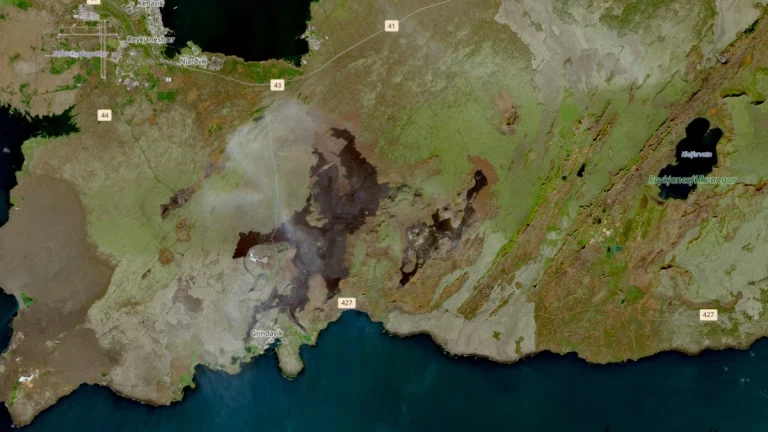
More than 25 million m³ (883 million ft³) of magma has accumulated beneath Svartsengi, Iceland, since the last eruption in July 2025, the Icelandic Meteorological Office (IMO) reported on April 28, 2026. IMO said ground uplift continues at up to 2 cm (0.8 inches) per month, while magmatic dike propagation toward the Sundhnúkur crater row remains the most likely scenario and could lead to an eruption.

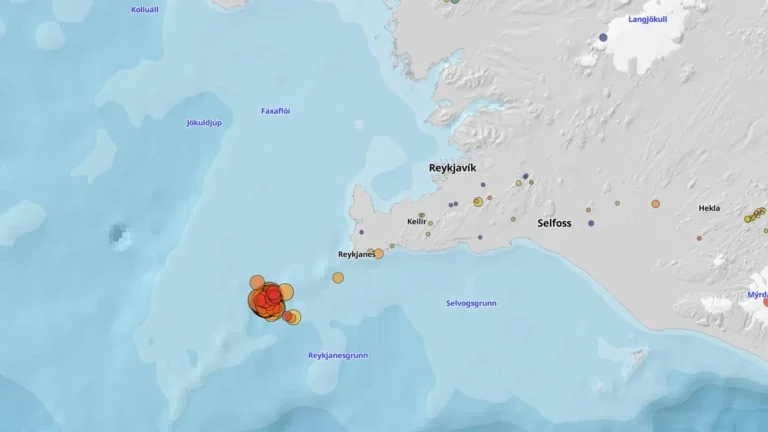
An earthquake swarm with over 300 events over 48 hours is in progress on the Reykjanes Ridge southwest of Eldey, Iceland, since March 23, 2026, with the largest earthquake thus far registered as M4.4. The Icelandic Meteorological Office said there are no indications linking the activity to volcanic processes on the Reykjanes Peninsula.

Magma continues to accumulate beneath the Svartsengi volcanic system on the Reykjanes Peninsula, Iceland, as of March 3, 2026. The Icelandic Meteorological Office reports that uplift remains steady, seismic activity is minimal, and the total stored magma has reached about 22.5 million cubic meters since the last eruption in July 2025.

An earthquake swarm began near Eldey Island on Iceland’s Reykjanes Ridge at around 12:40 UTC on February 8, 2026. The activity consisted of several hundred shallow earthquakes, most below M3. There is no reported damage or indications of eruptive activity.

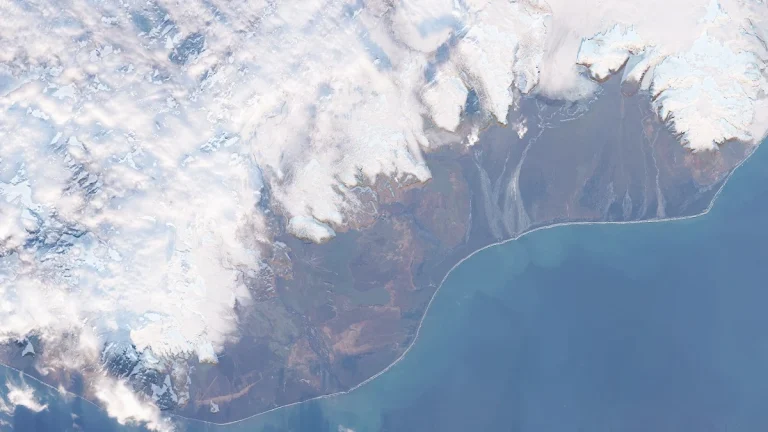
A glacial outburst flood in Iceland’s Skaftá River, first detected on December 8, 2025, has been confirmed to originate from the Vestari-Skaftár caldera beneath Vatnajökull ice cap. Flow at the Sveinstind station has decreased to just over 120 m³/s, down from 200 m³/s earlier in the week. Conductivity remains high and hydrogen sulfide continues to be detected along the river, but no impacts on major roads have been reported.

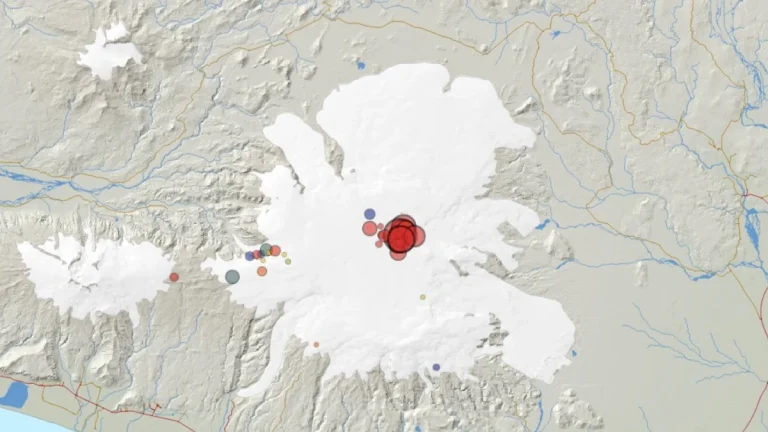
A strong seismic swarm began beneath Iceland’s Mýrdalsjökull glacier, part of the Katla volcanic system, around 10:30 UTC on October 20, 2025. Several earthquakes above magnitude 3 were recorded, the largest reaching M4.5 at 10:51 UTC. The Icelandic Meteorological Office reports no felt activity and no changes in river levels, conductivity, or deformation, indicating no immediate signs of eruption at the Katla volcano or glacial flooding.

Around 6 to 7 million m3 (212 to 247 million ft3) of magma have accumulated beneath Svartsengi, Iceland since the eruption on July 16, 2025. At the current rate of accumulation, the estimated threshold of 12 million m3 (424 million ft3) could be reached in the latter half of September, increasing the likelihood of a new eruption.

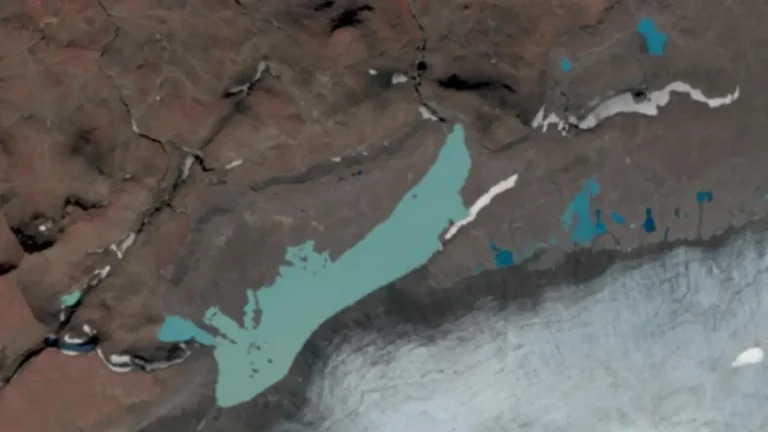
The Icelandic Meteorological Office reported a glacier flood in Hafrafellslón, west of Langjökull glacier, on August 22, 2025, with rising water levels measured in Hvítá River above Húsafell.

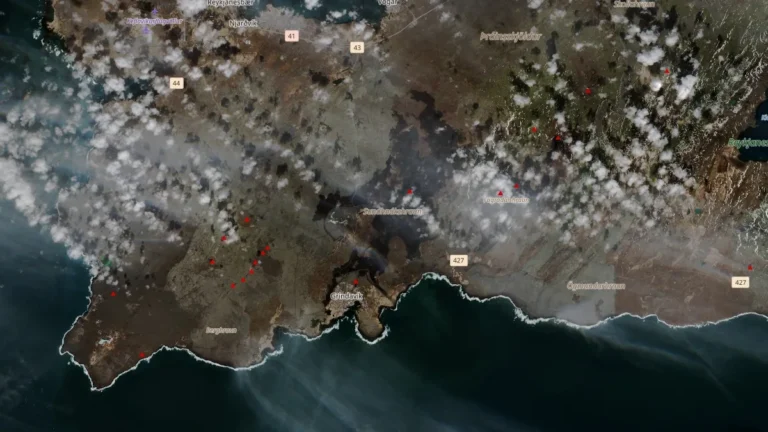
Volcanic haze and elevated levels of sulfur dioxide (SO2) from the Sundhnúk crater range eruption are affecting the western half of Iceland, especially the southwesternmost regions. The Icelandic Meteorological Office forecasts persistent volcanic haze in the south and west through Monday, due to slow and variable winds.