• Sunspots 1271 and 1272 are growing again

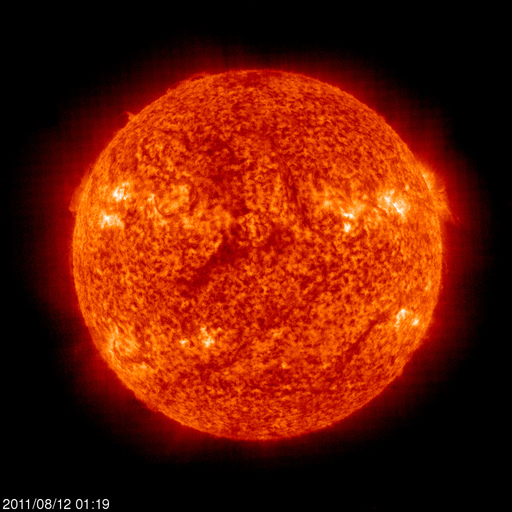
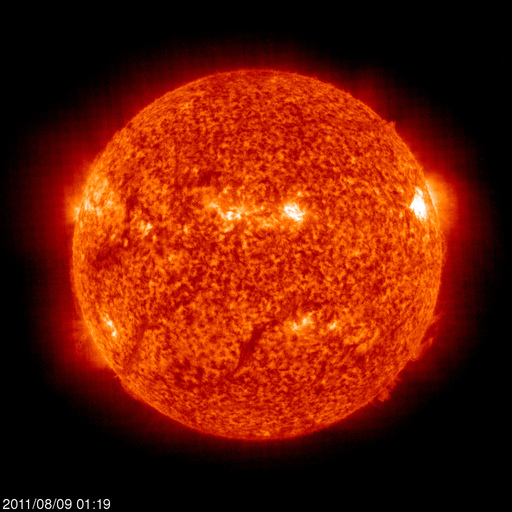
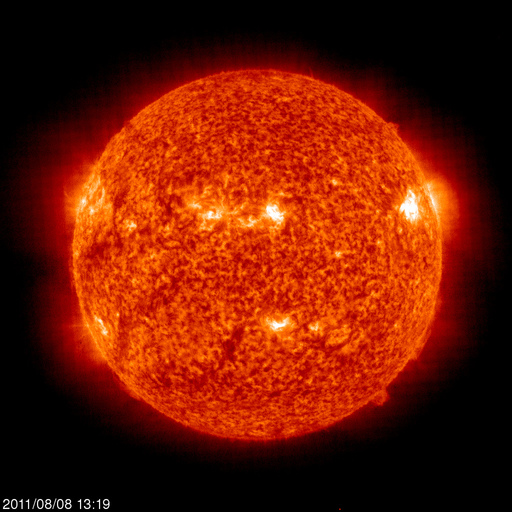
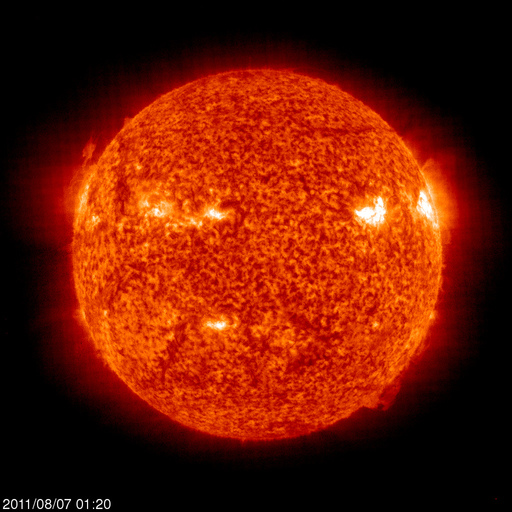
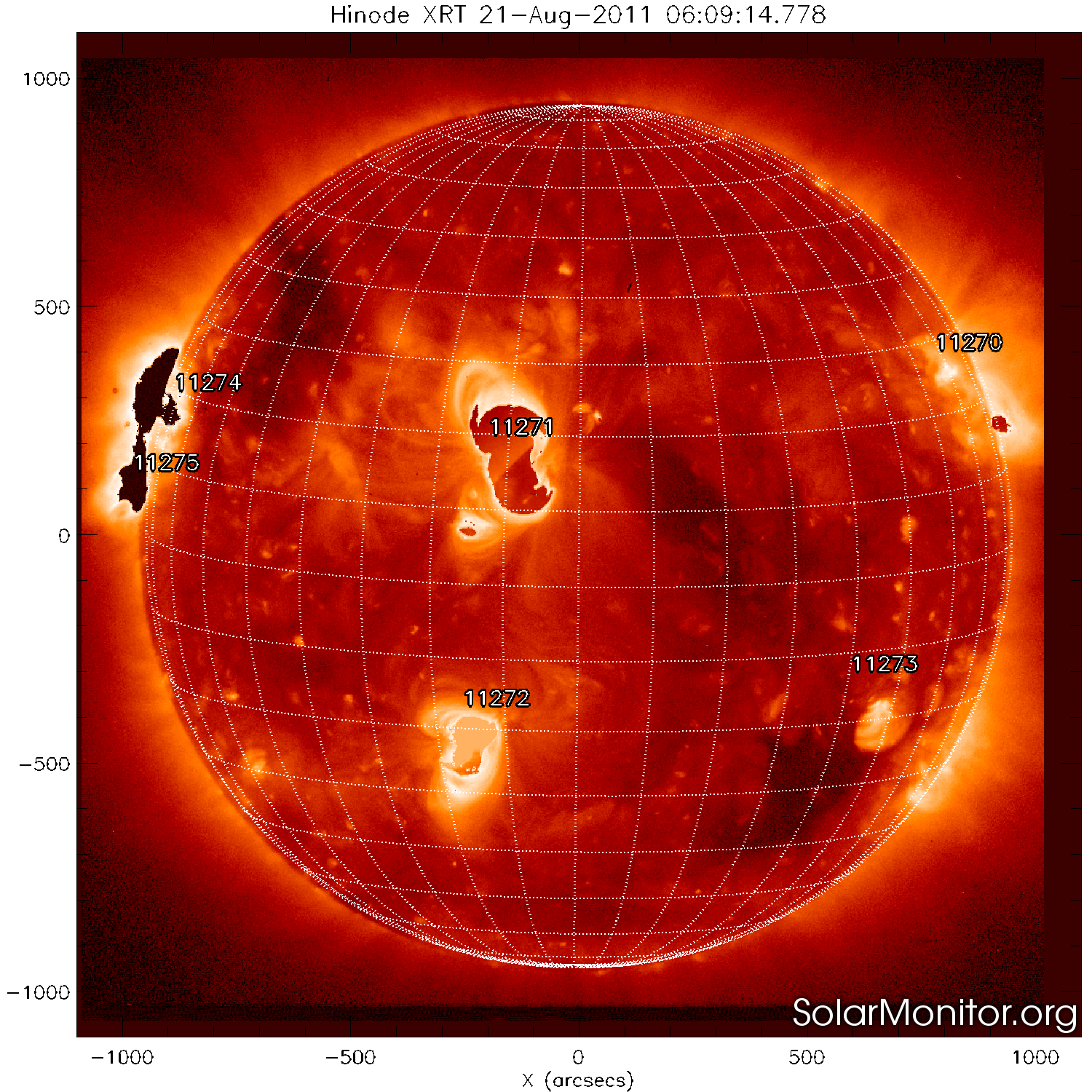
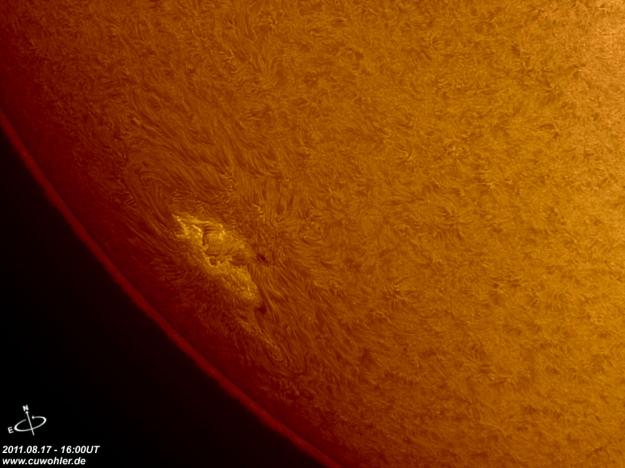
    After a weekend of quiet decay, sunspots 1271 and 1272 are growing again. Click on the image to view 24 hours of development:The increase in size has not yet translated into a significant increase in flares. Solar activity remains low, although this could change if
  • Farside CME activity continues

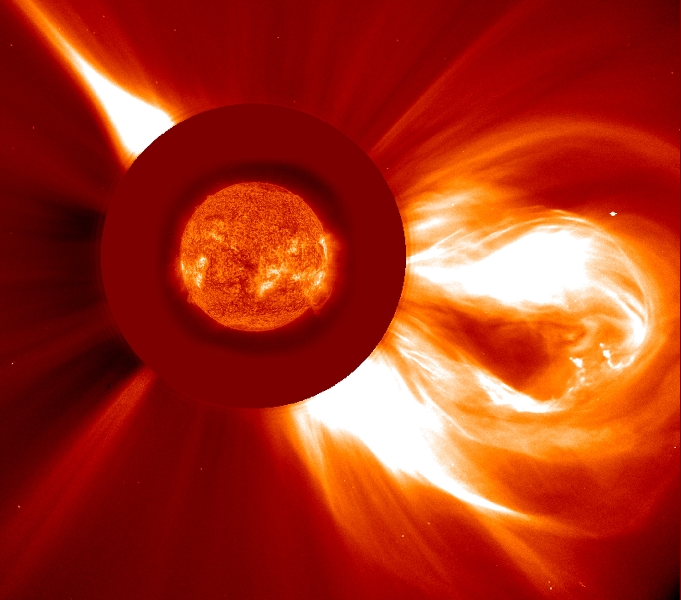
    Solar Activity continues at fairly low levels with only C-Class activity taking place in the past 24 hours. Sunspot 1271 is the largest visible area and it may pose a small threat for an M-Class event.Farside CME activity continues and you can view all of the action

  • Spacecraft sees solar storm engulf Earth

    For the first time, a spacecraft far from Earth has turned and watched a solar storm engulf our planet. The movie, released today during a NASA press conference, has galvanized solar physicists, who say it could lead to important advances in space weather forecasting.

  • New sunspots forming, Venus-directed CME

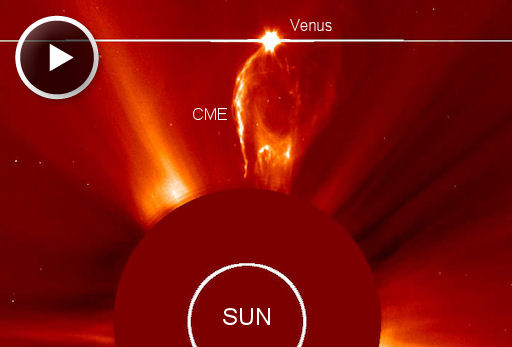
    Yesterday, the Solar and Heliospheric Observatory witnessed a spectacular explosion on the sun that seemed to pass perilously close to Venus.As the movie shows, the CME passed harmlessly. There was no collision, and it wasn’t even close. Although Venus seems to be

  • Active sunspot 1263 has left the Earthside of the sun

    Active sunspot 1263, which just two days ago produced the most powerful solar flare of the new Solar Cycle (an X7), has left the Earthside of the sun. It is now beginning a two week transit across the solar farside. We can still see signs of its ongoing activity,

  • X 6.9 solar flare took place – partialy Earth-directed!!!

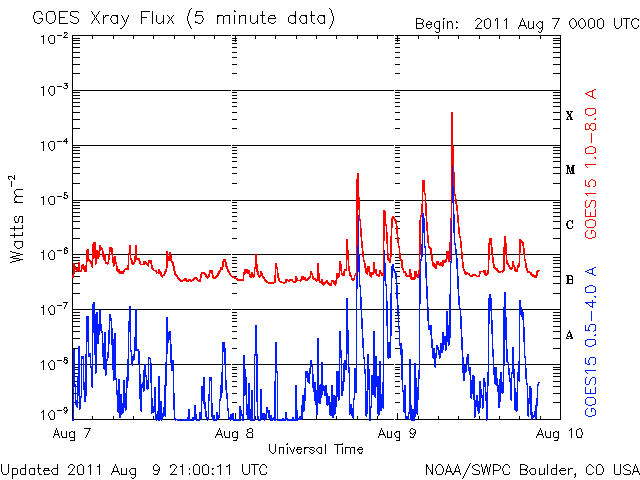
    The largest solar flare of Cycle 24 just took place at 08:05 UTC and it registered a whopping X6.9. The source was Sunspot 1263 which is nearing the Western Limb. Because of its location, any large explosions may not be fully earth directed. When watching new video

  • Another M-class solar flare

    A second M-Class flare, this time a M2.5 took place at 03:54 UTC Tuesday morning around Sunspot 1263. This is in addition to the earlier M3.5 flare which we reported yesterday. The first flare produced a small, but fast moving (2010 km/s) Coronal Mass Ejection…

  • M3.5 solar flare took place around Sunspot 1263

    At 18:10 UTC Monday, a short duration M3.5 Solar Flare took place around Sunspot 1263. Because of its location, any explosions at this point may not be earth directed.Just when solar activity was slowing down, an M3.5 Solar Flare took place around Sunspot 1263

  • Behemoth sunspot 1263 has almost doubled in size

    Behemoth sunspot 1263 has almost doubled in size this weekend. A 28-hour movie from NASA's Solar Dynamics Observatory shows the spot developing a tail that has added some 50,000 km of length to the active region.This development may increase the likelihood of a stro