
Giant Devonian scorpion identified from 400-million-year-old fossils in Britain
A giant scorpion that lived more than 410 million years ago may have been one of the earliest apex predators on Earth and could have spent much of its life in water, according to a new study published in Palaeontology. Researchers re-examined the fossil of the arthropod Praearcturus gigas and concluded that it was a giant scorpion rather than a crustacean, resolving a debate that has persisted for more than 150 years.
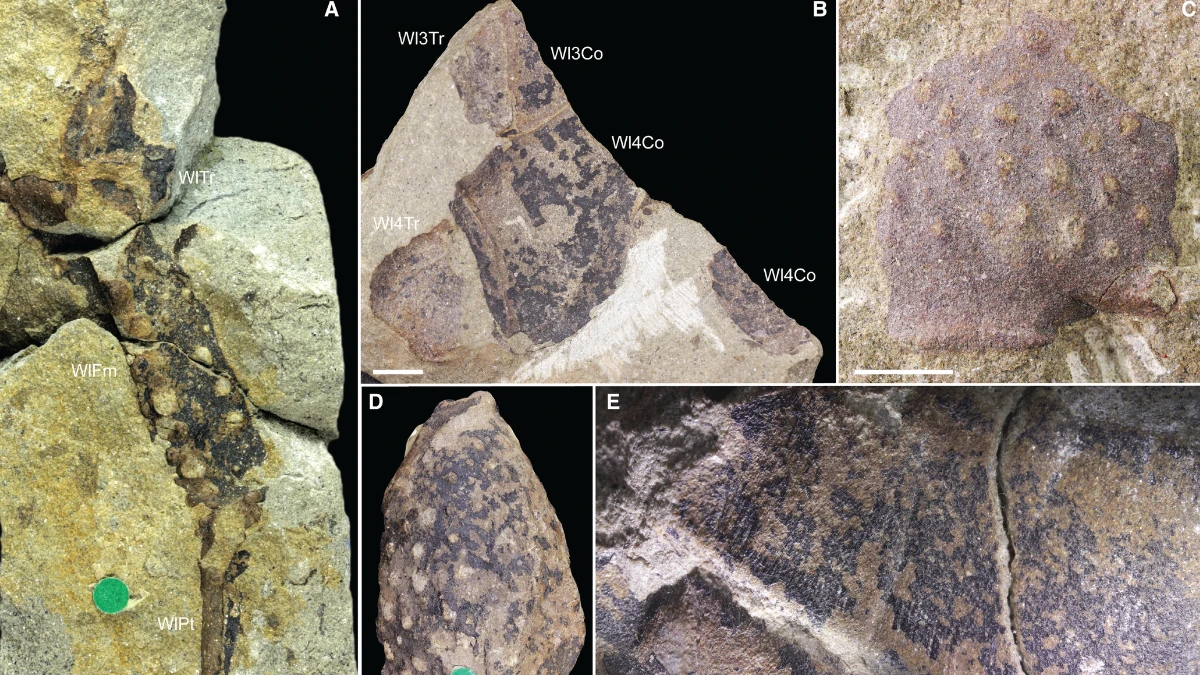
Various elements of Praearcturus gigas Woodward 1870a from the Lochkovian St Maughan's Formation of Rowlestone (A, B, D, E) and Longtown (C), Herefordshire, England. Credit: Howard, R.J., Garwood, R.J., Edgecombe, G.D. and Legg, D.A. (2026), A revision of Praearcturus gigas: a giant scorpion from the Lower Devonian (Lochkovian) of Britain.
The Early Devonian species, Praearcturus gigas, was first described in 1870 from fossils discovered in the Old Red Sandstone deposits of England and Wales.
Since then, its identity has been repeatedly questioned. Originally interpreted as a giant isopod-like crustacean, it was later reassigned to several different arthropod groups before being proposed as a giant scorpion in the 1980s.
In the new study, researchers from the Natural History Museum in London, the University of Manchester, and Technological University Dublin conducted the most comprehensive examination of the fossil material to date.
Using high-resolution photography, digital reconstructions, camera lucida drawings, and CT scanning of key specimens, the team reassessed all known remains attributed to the species.
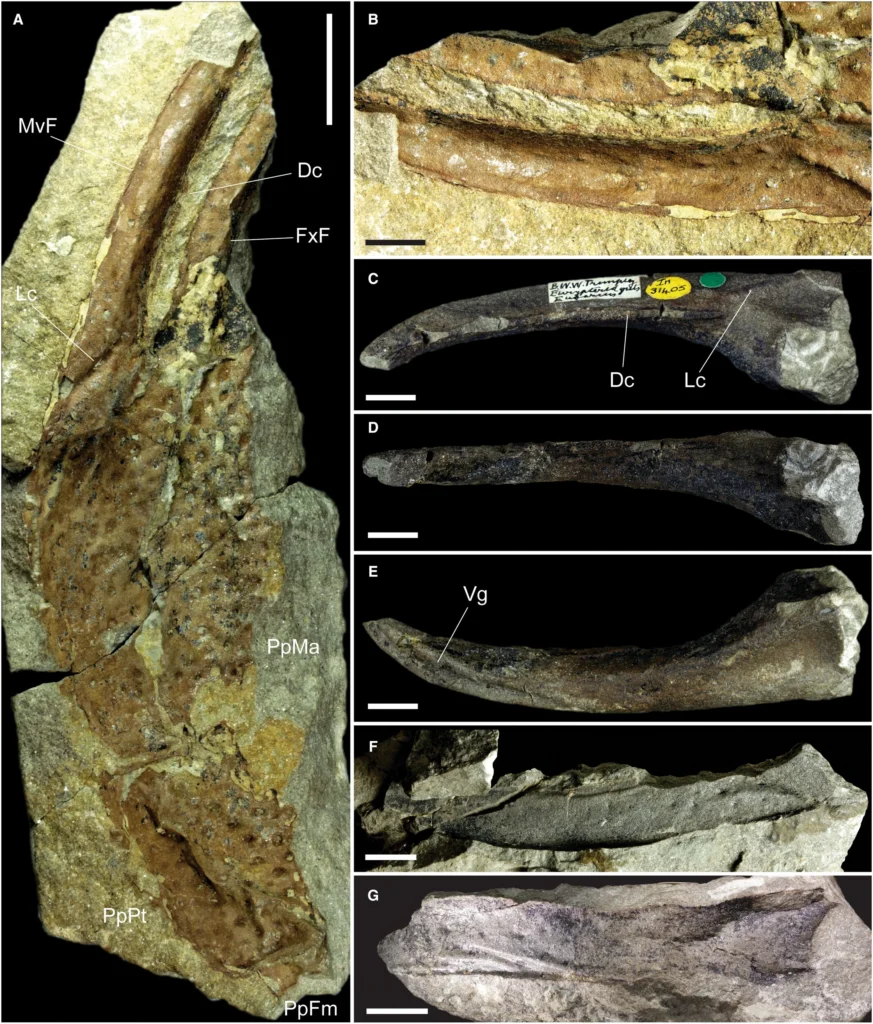
Their analysis found multiple anatomical features characteristic of scorpions, including large grasping pedipalps with fixed and movable fingers, a distinctive elongated triangular sternum, and evidence of a possible stridulatory organ used to produce sound. The researchers also identified strong similarities between Praearcturus gigas and the Silurian scorpion Eramoscorpius brucensis, one of the oldest confirmed scorpions known.
The study further concludes that two other fossil taxa—Brontoscorpio anglicus and Bennettarthra annwnensis—are not separate species but represent additional material belonging to Praearcturus gigas. This substantially expands the known fossil record of the animal and allows for a more complete reconstruction of its body.
Although the fossils are incomplete and do not preserve the tail region, the preserved anatomy indicates an exceptionally large animal. The pedipalp claws reached lengths of up to approximately 16 cm (6.3 inches), making Praearcturus gigas one of the largest known arachnids of the Early Devonian.
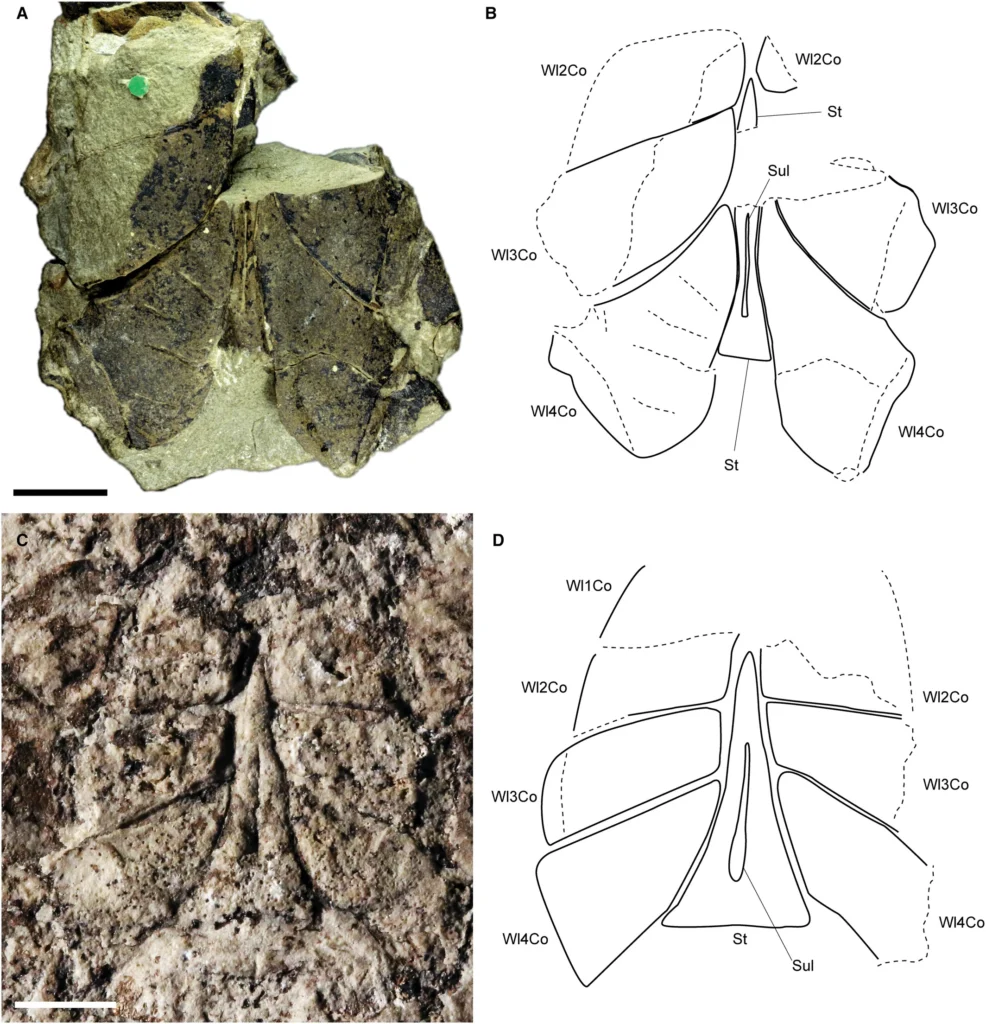
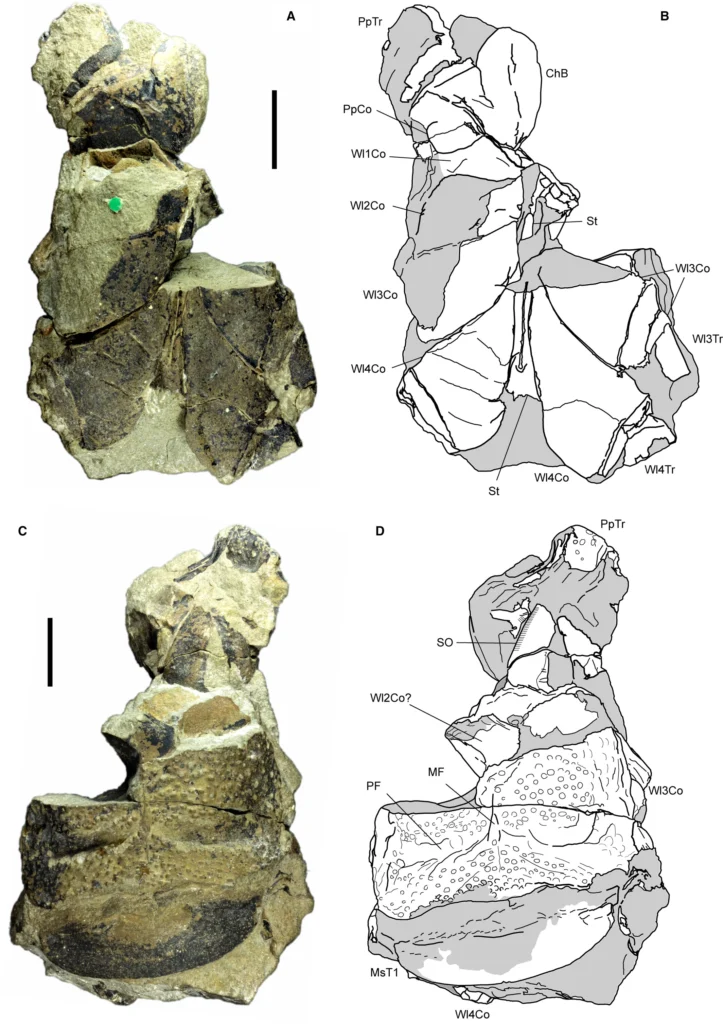
One of the most unusual discoveries was the presence of lateral abdominal expansions known as epimera, structures not found in any other known scorpion. Combined with the fluvial sediments in which the fossils were preserved, these features suggest the animal may not have been fully terrestrial.
Instead, the researchers propose that Praearcturus may have been aquatic or amphibious, capable of moving between freshwater environments and land. Such a lifestyle could explain how an animal of its size survived during a period when terrestrial ecosystems were still relatively simple and dominated by small plants and arthropods.
The Early Devonian world lacked forests, large terrestrial vertebrates, and the complex food webs that characterized later Paleozoic ecosystems.
According to the authors, it would have been difficult for a giant predator to sustain itself solely by hunting the small arthropods that then lived on land. Access to freshwater prey, including fish and other large arthropods such as eurypterids, would have provided a much larger food resource.
The findings also have broader implications for understanding the evolution of scorpions. Modern scorpions are fully terrestrial, but the study suggests that some early lineages may have occupied aquatic or amphibious niches. If correct, the transition of scorpions from water to land may have been more gradual and complex than previously assumed.
The discovery further challenges traditional explanations for arthropod gigantism. Giant terrestrial arthropods are often associated with elevated atmospheric oxygen levels during the late Carboniferous and early Permian periods.
However, Praearcturus lived tens of millions of years before those oxygen peaks, indicating that ecological opportunity and predator-prey dynamics may also have played important roles in driving the evolution of giant arthropods.
The authors conclude that Praearcturus gigas was likely a giant predatory scorpion that occupied a top position in Early Devonian ecosystems and may represent one of the earliest large arachnid apex predators known from the fossil record.
References:
1 Richard J. Howard et al, A revision of Praearcturus gigas : a giant scorpion from the Lower Devonian (Lochkovian) of Britain, Palaeontology (2026). DOI: 10.1111/pala.70064

I am an Assistant Editor and Severe Weather & Science Journalist at The Watchers, specializing in real-time severe weather coverage, geophysical event reporting, and research-driven scientific analysis. You can reach me at rishav(at)watchers(.)news.

Commenting rules and guidelines
We value the thoughts and opinions of our readers and welcome healthy discussions on our website. In order to maintain a respectful and positive community, we ask that all commenters follow these rules.