• The comet Venus and its missing craters

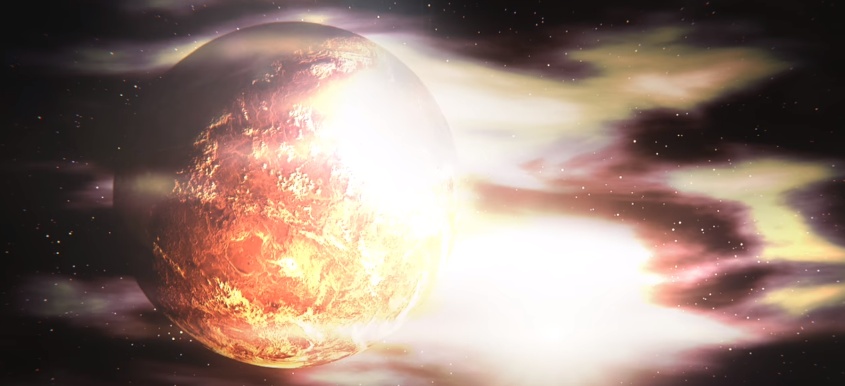
    Since the dawn of the Space Age, the planet Venus has been a proving ground for competing hypotheses in planetary science. From the 1950s to 1970s, Venus was at the center of a blazing scientific controversy. In 1950, in the bestselling book Worlds in Collision, the…
  • Martian dust storm now officially a global dust event

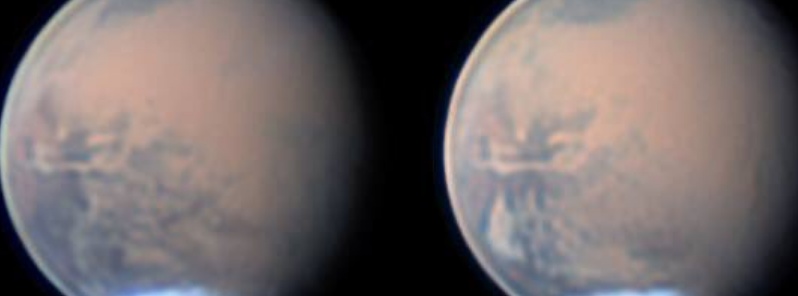
    One of the most intense dust storms ever observed on Mars is raging across the planet since May 30, 2018. The storm grew rapidly over the next 20 days and is now officially a 'planet-encircling' (global) dust event. Although Martian dust storms are common…

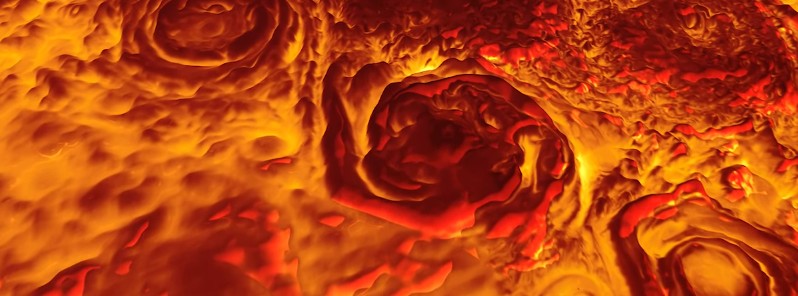
  • 3D infrared animation of Jupiter’s north pole

    NASA's Juno scientists have unveiled their 3D infrared movie depicting densely packed cyclones and anticyclones that permeate Jupiter’s polar regions, and the first detailed view of a dynamo, or engine, powering the magnetic field for any planet beyond…

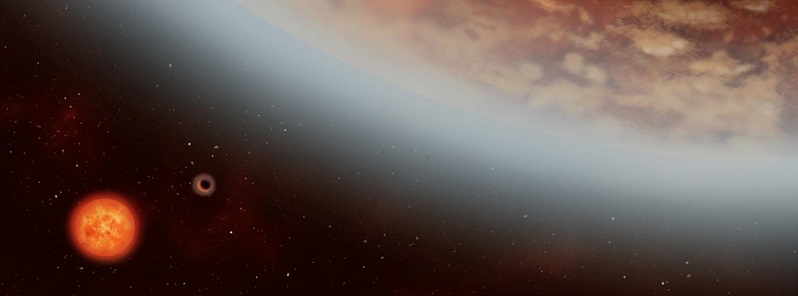
  • Two Super-Earths around red dwarf K2-18

    New research using data collected by the European Southern Observatory (ESO) has revealed that a little-known exoplanet called K2-18b could well be a scaled-up version of Earth. Just as exciting, the same researchers also discovered for the first time that the…

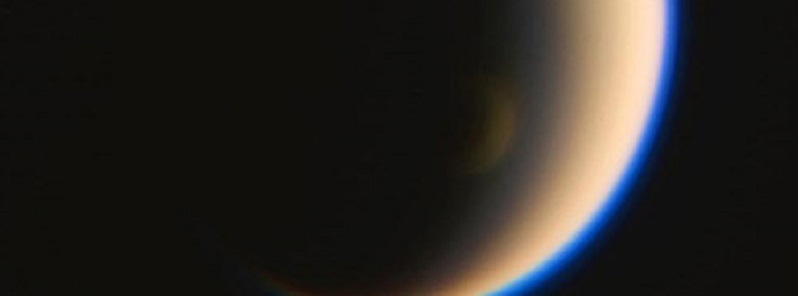
  • Unexpected atmospheric vortex behavior on Saturn’s moon Titan

    A new study, led by a University of Bristol earth scientist, has shown that recently reported unexpected behavior on Titan, the largest moon of Saturn, is due to its unique atmospheric chemistry. Titan’s polar atmosphere recently experienced unexpected and…

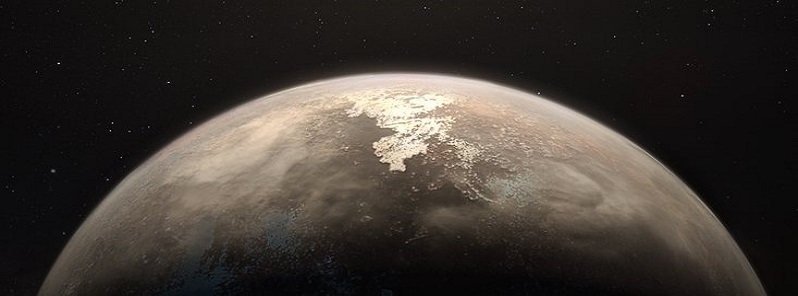
  • Closest temperate world orbiting quiet star discovered

    A temperate Earth-sized planet has been discovered only 11 light-years from the Solar System by a team using ESO’s unique planet-hunting HARPS instrument. The new world has the designation Ross 128 b and is now the second-closest temperate planet to be…

  • ALMA discovers cold dust around nearest star

    The ALMA Observatory in Chile has detected dust around the closest star to the Solar System, Proxima Centauri. These new observations reveal the glow coming from cold dust in a region between one to four times as far from Proxima Centauri as the Earth is from the…

  • Saturn’s radiation belts: A stranger to the solar wind

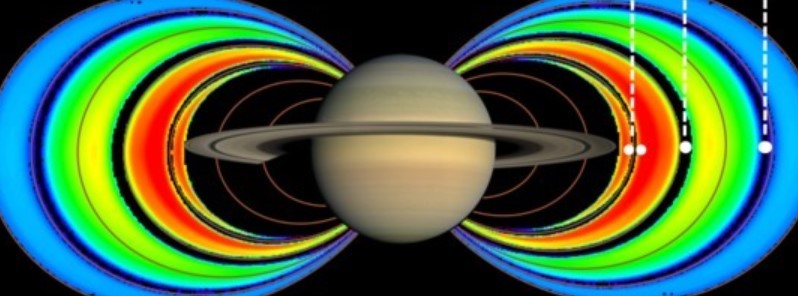
    The high energy proton population in the environment of Saturn develops independently of the solar wind – and thus in a considerably different way from the one on Earth. The radiation belts of Earth and Saturn differ more strongly than previously assumed. In these…

  • ‘Monster’ planet discovery challenges formation theory

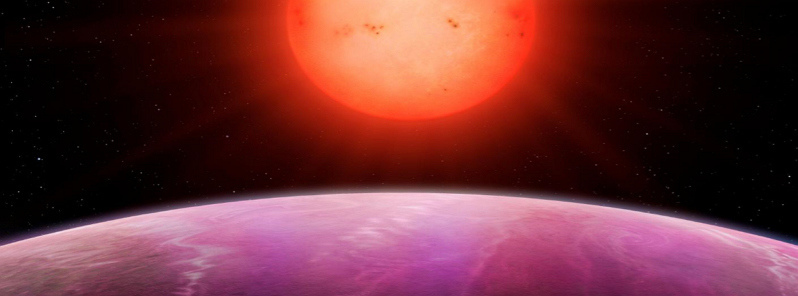
    A giant planet – the existence of which was previously thought extremely unlikely – has been discovered by an international collaboration of astronomers, with the University of Warwick taking a leading role. New research, led by Dr. Daniel Bayliss and Professor…