• New time-lapse video from ISS

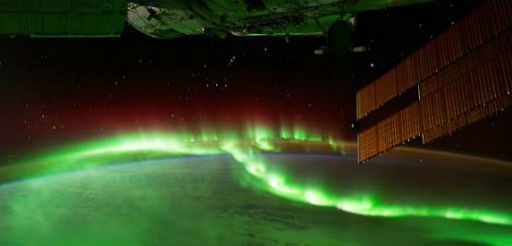
    The latest time-lapse sequence of photographs by ISS Space crew shows period fromAugust to October, 2011 with amazing auroras. Images was put together by Michael König. These views are taken with a special low-light 4K-camera now on the Space Station.You can see
  • Huge solar filament and Mercury-directed CME

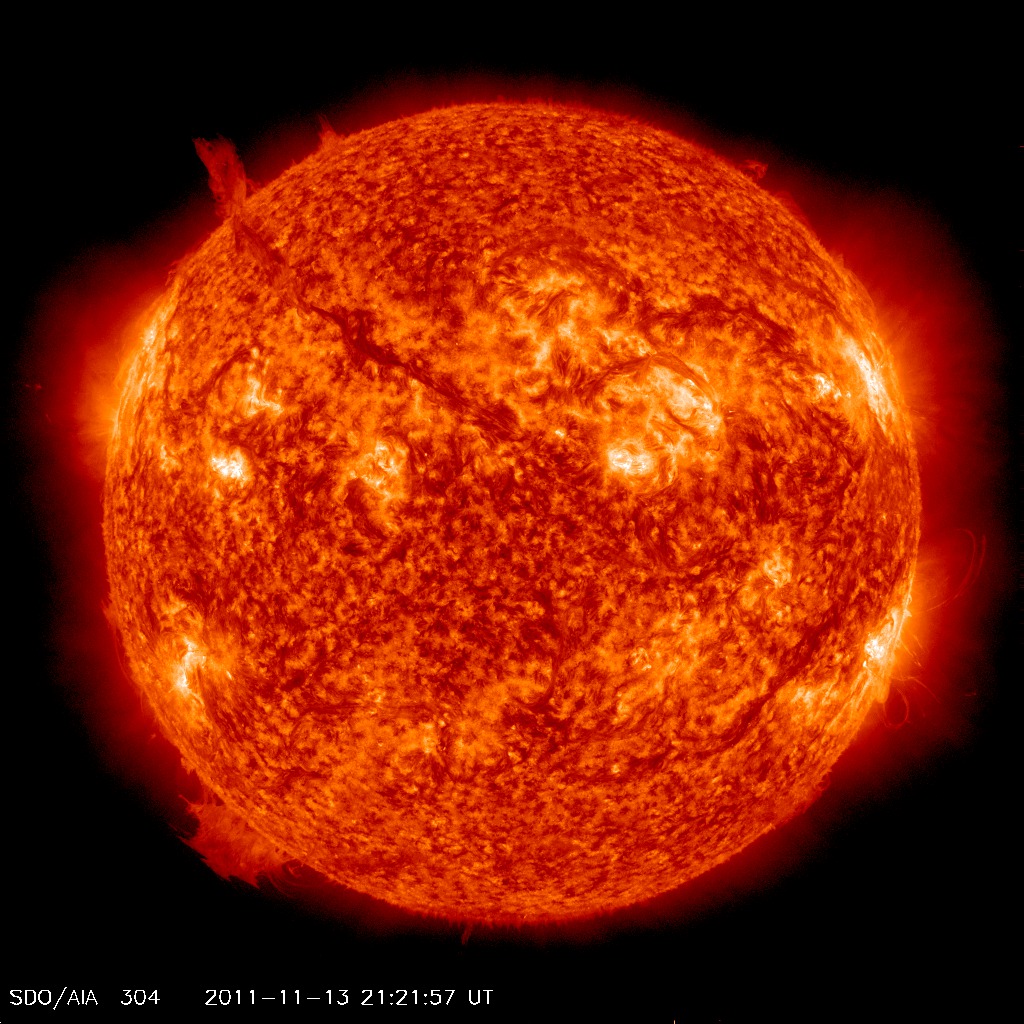
    There haven’t been any strong solar flares in days. Nevertheless, some impressive activity is underway on the sun. For one thing, an enormous wall of plasma is towering over the sun’s southeastern horizon. Huge solar filament is the biggest in a longer time period. A

  • Incoming CME

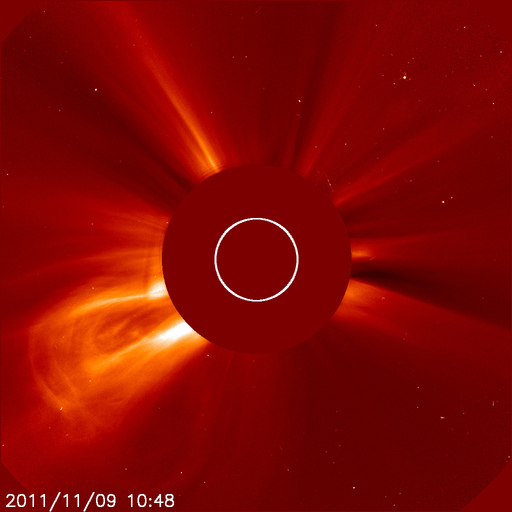
    Yesterday, Nov. 9th around 1330 UT, a magnetic filament in the vicinity of sunspot complex 1342-1343 erupted, producing a M1-class solar flare and hurling a CME into space. The Solar and Heliospheric Observatory recorded the progress of the expanding plasma

  • 2005 YU55 flyby images and videos

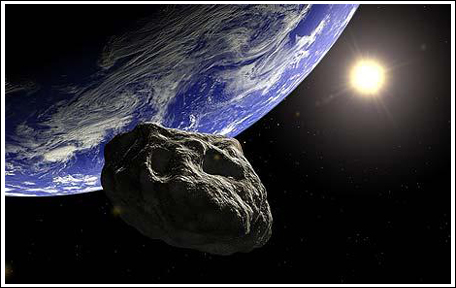
    The huge asteroid 2005 YU55 was small and dim in the sky during its close Earth approach yesterday (Nov. 8). At 1,300 feet (400 meters) wide, 2005 YU55 is about the size of a city block. It came within 201,700 miles (324,600 kilometers) of Earth Tuesday at 6:28

  • M-class solar flare, possibly Earth-directed CME

    M-class solar flare reaching M1.1 took place at 13:35 UTC Wednesday morning around Sunspot 1342 which is located in the northeast quadrant. It now looks like a Coronal Mass Ejection (CME) resulted and a portion of it may be Earth Directed. A region located on the

  • Comparing Sunspot 1339

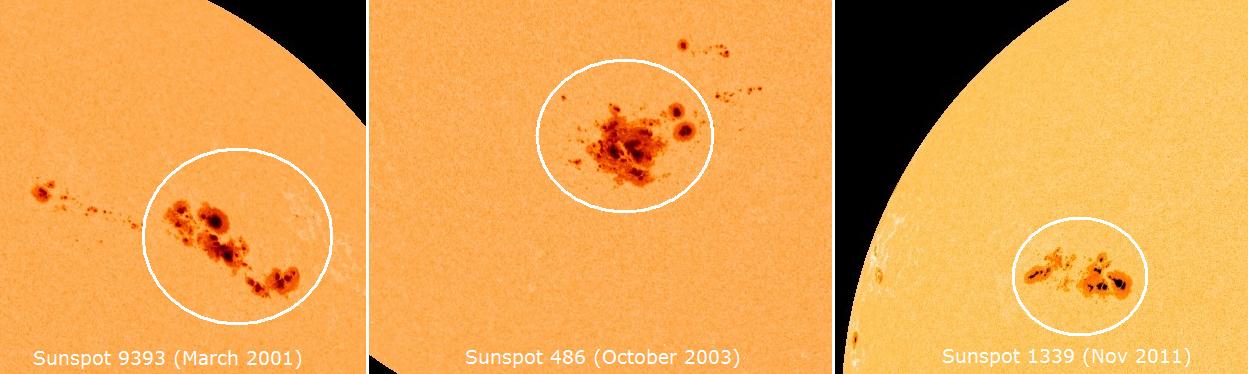
    Sunspot 1339 is indeed one of the largest Sunspot groups in years. Here is a size comparison of 1339 vs. a couple of the largest Sunspots from Cycle 23. Sunspot 9393 was responsible for the second largest Solar Flare in recorded history (X20) back in April 2001.

  • 2005 YU55 – A quick guide for skywatchers

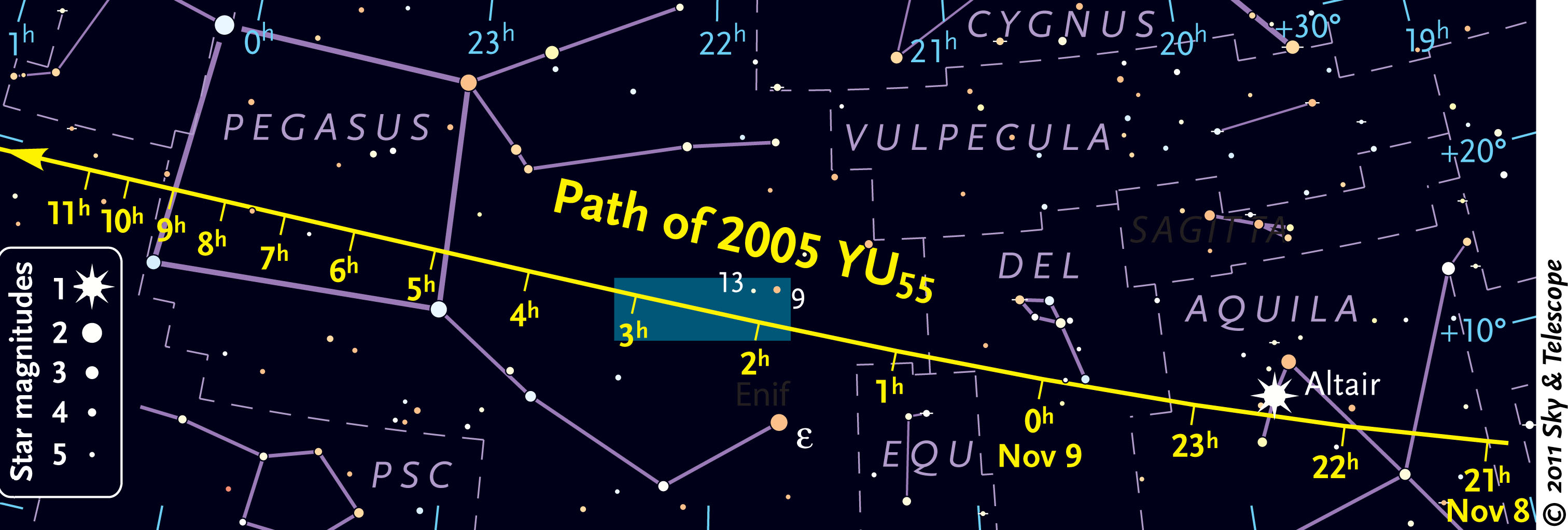
    Those of us without access to the world's biggest radio telescopes still have a chance to spot 2005 YU55 as it zips past Earth. The asteroid will be brightest in the sky a few hours after its closest approach and should be visible with decent equipment under clear,

  • 2005 YU55 flyby – “The Day the Earth Stood Still”

    The asteroid 2005 YU55, which is about 400 meters (1,300 feet) in diameter, will make its closest approach to Earth at 23:28 UTC (23:28 GMT, 6:28 p.m. EST, 3:28 PST) today. At that point, the space rock will be traveling at about 46,671 km (29,000 mph) with distance

  • Northern hemisphere entering the solar winter

    The Northern Hemisphere is entering the quarter of the year with the least amount of daylight, known as solar winter.As the Northern Hemisphere is tilted away from the direct rays of the sun, over 50 percent of the hemisphere is in darkness at any one time. Colder

  • Asteroid 2005 YU55, The Moon, Taurids and drills

    Discovered nearly six years ago by Robert McMillan at Steward Observatory’s Spacewatch Telescope in Arizona, 2005 YU55 has been this way before. In April 2010 it passed close enough for detailed radar probing by the giant radio dish at Arecibo, Puerto Rico. It