• Lyrid meteor shower peaks on April 23, 2015

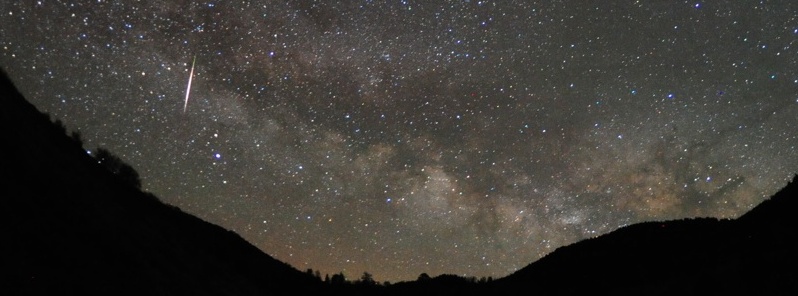
    Lyrid meteor shower will reach its maximum activity this year on the morning of April 23, 2015. The Moon will be 5 days old at the time, and so will present minimal interference. Lyrid meteors are known for their luminous dust trains observable for several seconds.The p

  • Gamma-ray spectrometer prompts researchers to rethink how Mercury formed

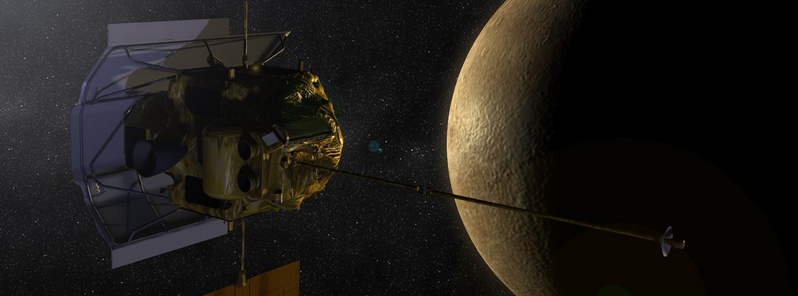
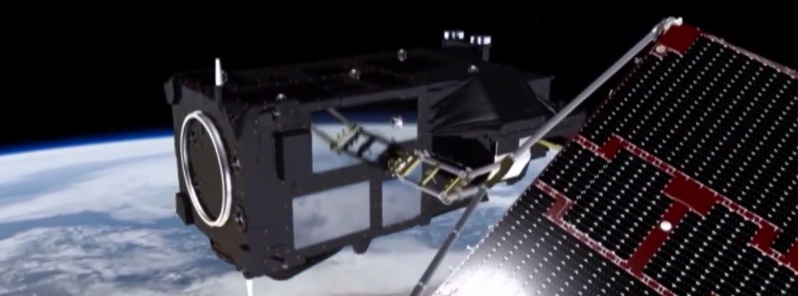
    A versatile instrument developed by Lawrence Livermore National Laboratory (LLNL) scientists and riding on the first spacecraft to ever orbit Mercury is causing researchers to rethink their theories on the planet’s formation.Known as the Gamma-Ray Spectrometer,

  • Scientists identify missing wave near Jupiter’s equator

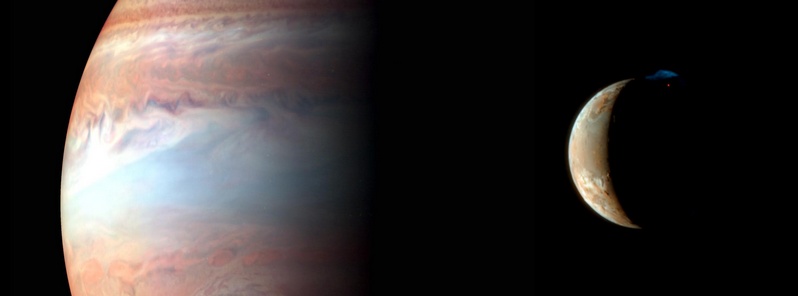
    In the clouds of Jupiter, scientists have found evidence of a type of atmospheric wave that had long been proposed but had not been identified in images before now.Researchers consider this kind of wave, called a Kelvin wave, a fundamental part of a planetary atmosphere

  • Dawn’s new Ceres color map reveals surface diversity

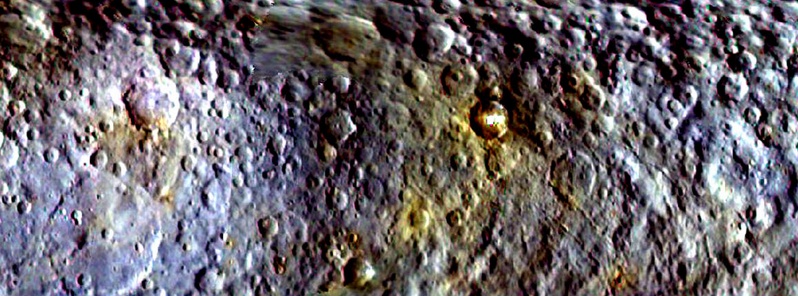
    A new color map of dwarf planet Ceres, which NASA's Dawn spacecraft has been orbiting since March 2015, reveals the diversity of the surface of this planetary body. Differences in morphology and color across the surface suggest Ceres was once an active body, Dawn

  • Does gravity alone rule the cosmos?

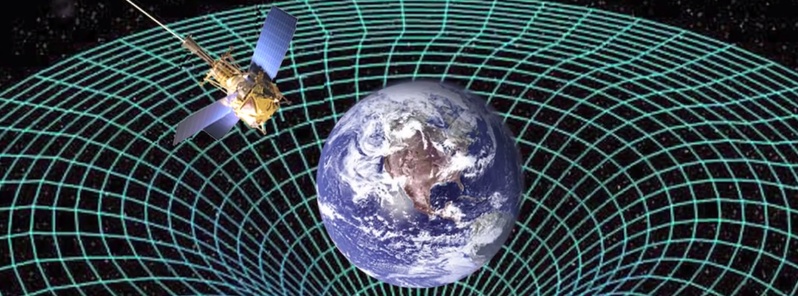
    For nearly three years we have reported on countless discoveries that challenge the foundations of modern cosmology and astrophysics. Today we routinely hear of celestial objects ranging in scale from stars, galaxies and quasar groups that should not exist if the standa

  • Daylight fireball explodes over Kosice, Slovakia

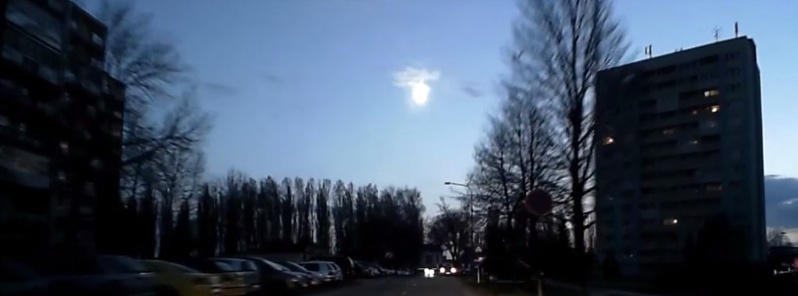
    A bright meteor was observed and recorded over eastern Slovakia on April 6, 2015. The event happened around 16:30 UTC (18:30 local time).One video of the meteor was taken from a car in the Hungarian town of Rakospalota, and another in a second car in the Slovak city of

  • Are bright spots on Ceres electric?

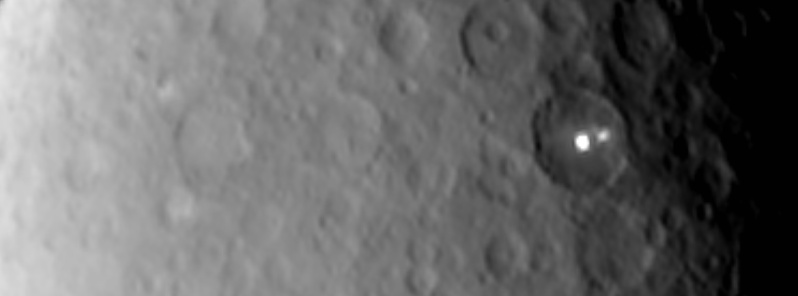
    In March, the NASA Dawn Spacecraft entered the orbit of the mysterious dwarf planet Ceres, with the craft scheduled to begin sending images to Earth later this month.For several weeks, surprising and unexplained bright spots within a crater on the planet’s surface

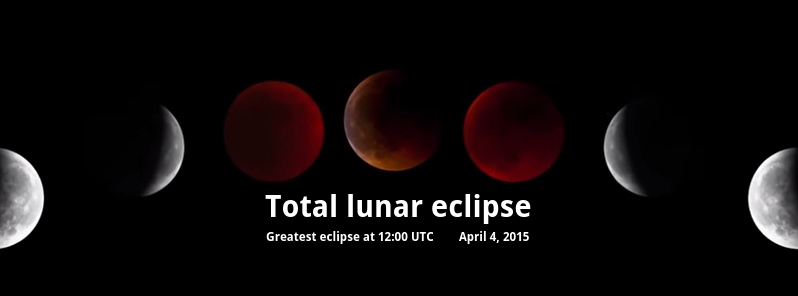
  • Total lunar eclipse on April 4, 2015

    A total lunar eclipse will occur on April 4, 2015. This is the shortest total lunar eclipse of the century and third of four total lunar eclipses separated by approximately 6 months, a rare phenomenon astronomers call a 'tetrad.' The first two were on April 15 a

  • The electrochemistry of Comets with Dr. Franklin Anariba

    It is a great paradox in comet science: We are told that a comet nucleus is a ball of ice, or dirty snowball, or icy fluff ball that accreted billions of year ago in the solar system’s infancy. Comets are said to sublimate ices as they move toward the sun, and

  • Night sky guide for April 2015

    This month is marked by the third of four total lunar eclipses separated by approximately 6 months – tetrad – which will occur at 12:00 UTC on April 4, 2015. The Moon will gradually get darker and then take on a rusty or blood red color. The eclipse will be visible thro