• Millions of images observed by NEOWISE now available to the public

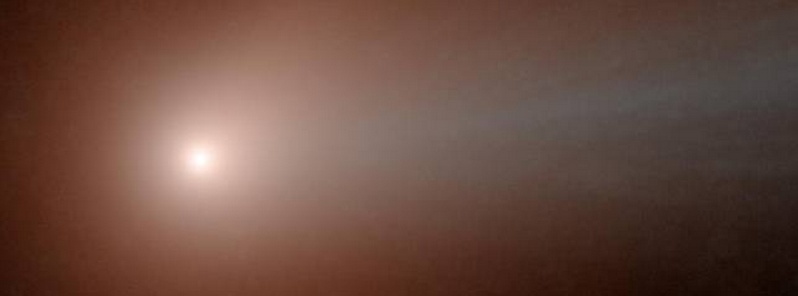
    Millions of images of celestial objects, including asteroids, observed by NASA's Near-Earth Object Wide-field Infrared Survey Explorer (NEOWISE) spacecraft are now available online to the public. The data was collected following the restart of the asteroid-seeking s

  • Primordial plasma: Hot gas or streams of charged particles?

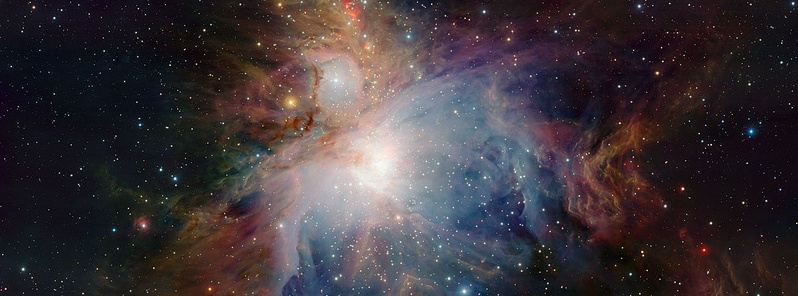
    Complex rings, knots, and twisted streamers are often ejected from stars (and other celestial objects). The overall shape of so-called “planetary nebula” sometimes reveal gigantic, bifurcated jets emerging from the central star, indicating the beginnings of

  • Asteroid 2014 YB35 to safely flyby Earth on Friday, March 27, 2015

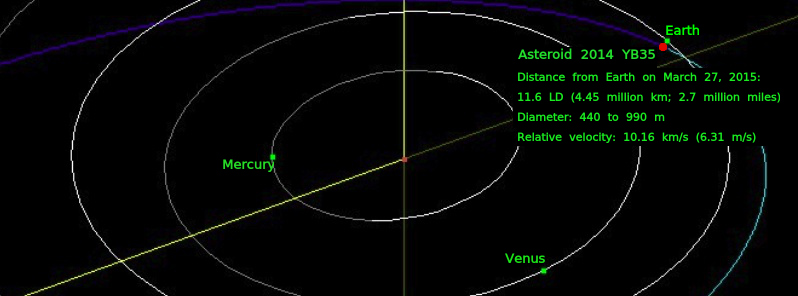
    A large asteroid named 2014 YB35 will flyby Earth at a safe distance of 11.6 LD (lunar distances) or about 4.45 million km (2.7 million miles) at 06:20 UTC on Friday, March 27, 2015. This asteroid is approximately 440 – 990 meters in diameter and is traveling at a relat

  • Unexplained warm layer discovered in Venus’ atmosphere

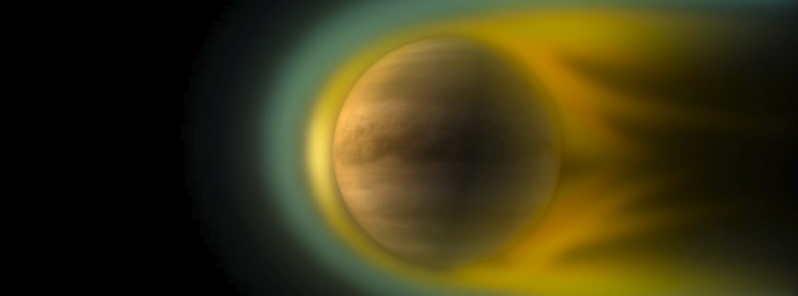
    A group of Russian, European and American scientists have found a warm layer in Venus’ atmosphere, the nature of which is still unknown. The researchers made the discovery when compiling a temperature map of the upper atmosphere on the planet’s night side ba

  • Dawn of a new era: the revolutionary ion engine that took spacecraft to Ceres

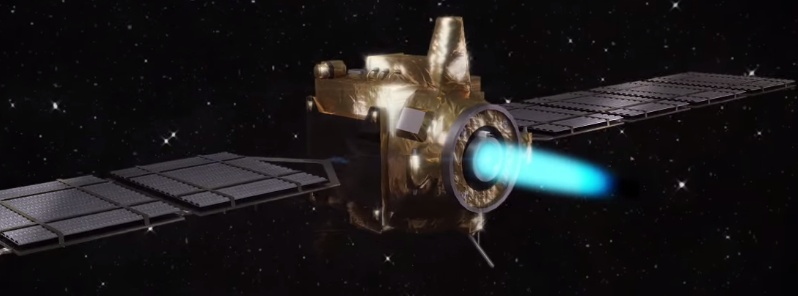
    The NASA spacecraft Dawn has spent more than seven years travelling across the Solar System to intercept the asteroid Vesta and the dwarf planet Ceres. Now in orbit around Ceres, the probe has returned the first images and data from these distant objects. But inside

  • How is Mars rover Opportunity still alive?

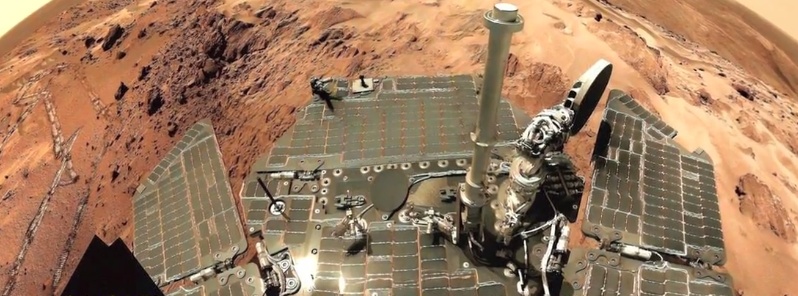
    Today, we review one of the great ongoing mysteries in the history of Mars exploration. In January of 2004, the Mars rovers Spirit and Opportunity arrived at the red planet about three weeks apart.Due to the extreme dustiness of the Martian environment, it was believed

  • Large underground ocean on Ganymede, Jupiter’s largest moon

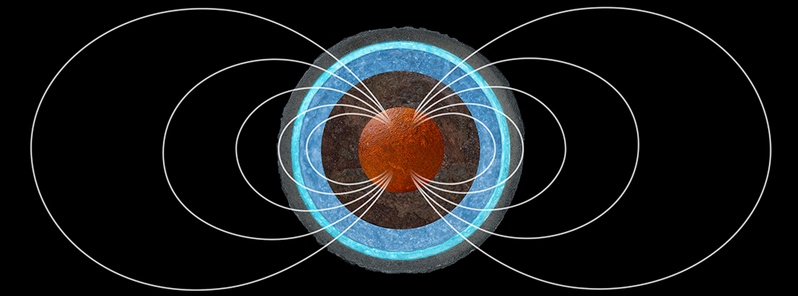
    Hubble Space Telescope has the best evidence yet for an underground saltwater ocean on Ganymede, Jupiter’s largest moon. The subterranean ocean is thought to have more water than all the water on Earth's surface. Identifying liquid water is crucial in the

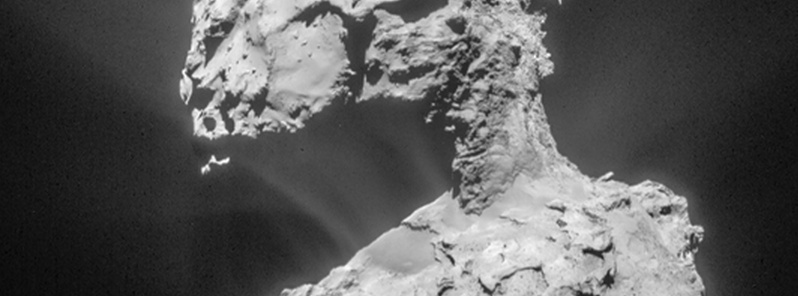
  • Rosetta makes first detection of molecular nitrogen at a comet

    ESA's Rosetta spacecraft has made the first measurement of molecular nitrogen at a comet, providing clues about the temperature environment in which Comet 67P/Churyumov-Gerasimenko formed, the agency reports.The in situ detection of molecular nitrogen has long been

  • The mystery of solar nanoflares

    Nanoflares are eruptions on the Sun which are billion times less energetic than ordinary flares but still have the power that belies their name. They appear as little brightenings of the solar surface at extreme ultraviolet and X-ray wavelengths and they might solve a l

  • MAVEN detects unexpected aurora and mysterious dust cloud around Mars

    Mars Atmosphere and Volatile Evolution (MAVEN) spacecraft has observed two unexpected phenomena in the Martian atmosphere: an unexplained high-altitude dust cloud and aurora that reaches deep into the Martian atmosphere.The presence of the dust at orbital altitudes from