• Most detailed map of ‘super Earth’ reveals a lava planet

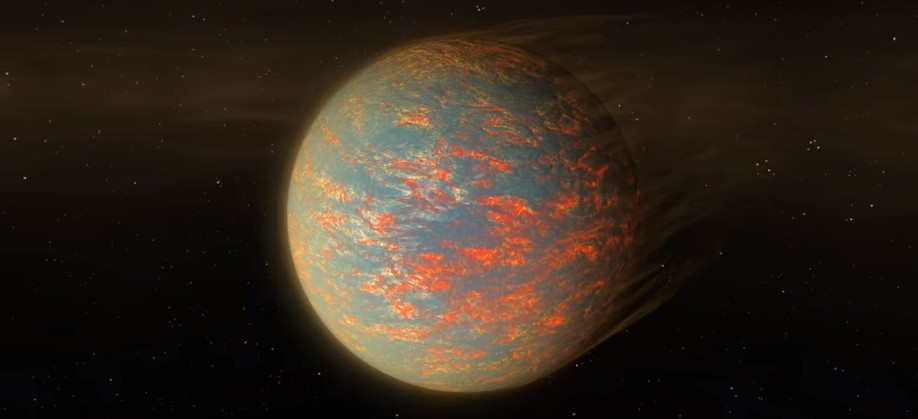
    An international team of astronomers, led by the University of Cambridge, used data from NASA’s Spitzer Space Telescope and obtained the most detailed ‘fingerprint’ of a rocky planet outside our solar system to date. They found a planet of two…

  • Earth’s moon wandered off axis billions of years ago

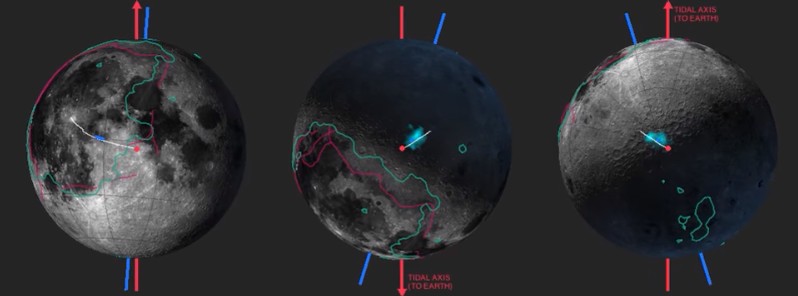
    Planetary scientist Matt Siegler at Southern Methodist University, Dallas, and colleagues discovered that Earth's moon slowly moved from its original axis roughly 3 billion years ago. The move would be as if Earth's axis relocated from Antarctica to…

  • Meteor mission launched to ISS

    After two failed attempts, Meteor mission was successfully launched at 03:05 UTC on March 23, 2016. Instruments needed for the mission, along with more than 3 ½ tons of supplies were packed inside an Orbital ATK Cygnus spacecraft and launched via the United…

  • Penumbral lunar eclipse on March 23, 2016

    Observers located in the extreme eastern Asia, eastern Australia, the Pacific Ocean and the west coast of North America including Alaska will get to see a penumbral lunar eclipse on March 23, 2016, the first of three lunar eclipses in 2016. The eclipse will reach…

  • Analysis of St. Patrick’s day fireball over the UK

    A very large fireball illuminated the sky over London, UK for 4 seconds at 03:16 UTC on March 17, 2016. The event was observed from the UK, the Netherlands, France and Belgium and recorded by 5 stations and 7 cameras operated by the United Kingdom Meteor Observation…

  • New Mars’ gravity map released

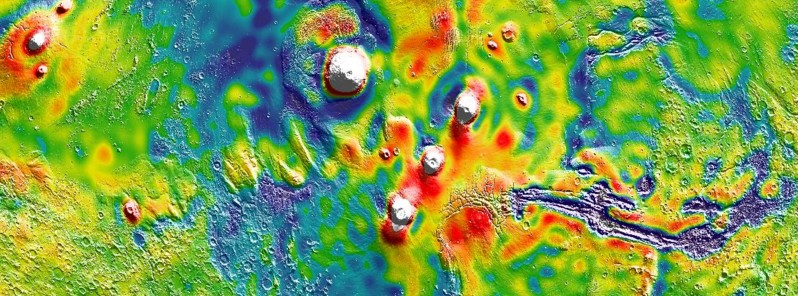
    A new map of Mars' gravity was released this month, providing a glimpse into the hidden interior of the planet. The map, most detailed to date, was derived using Doppler and range tracking data collected by NASA's Deep Space Network from three NASA…

  • Colossal ‘super spiral’ galaxies discovered

    Scientists using archived NASA data have discovered a strange new kind of galactic beast in the cosmic wilderness. Dubbed "super spirals," these unprecedented galaxies dwarf our own spiral galaxy, the Milky Way, and compete in size and brightness with the…

  • ‘Twin comets’ to safely fly past Earth

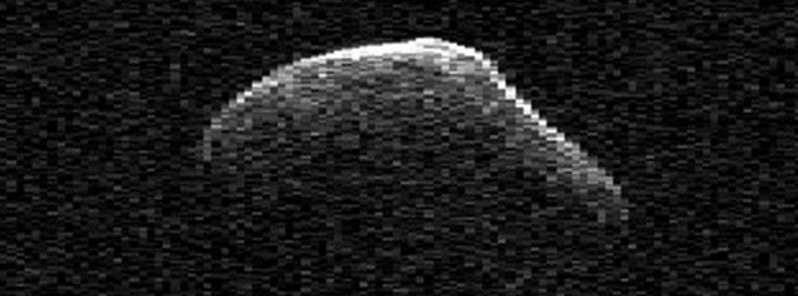
    Two Jupiter-family comets – 252P/LINEAR and P/2016 BA14 (PANSTARRS) – will safely fly past Earth on March 21 and 22, 2016 at a distance of 5.2 million km (3.3 million miles) and 3.5 million km (2.2 million miles), respectively. The two comets have intriguingly…