Long-duration M1.8 solar flare erupted from Region 1520
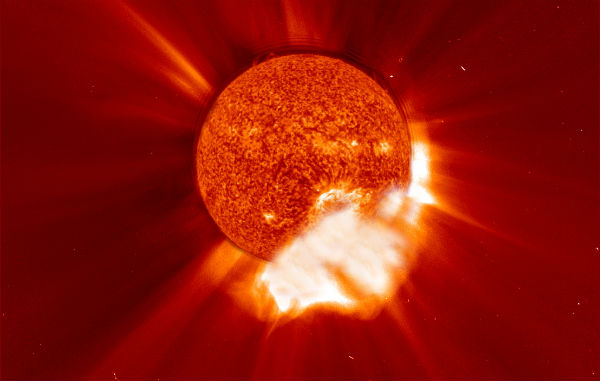
A long-duration solar flare measuring M1.8 erupted from Active Region 1520 at 17:15 UTC on July 15, 2012. The event started at 12:50 UTC and ended at 18:30 UTC.
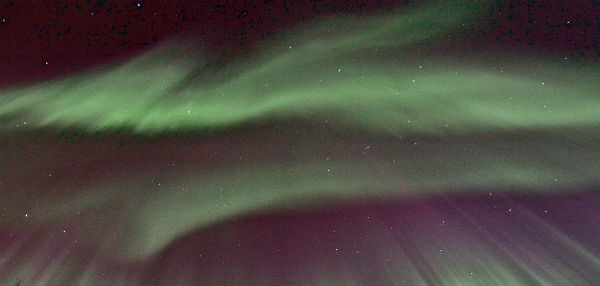
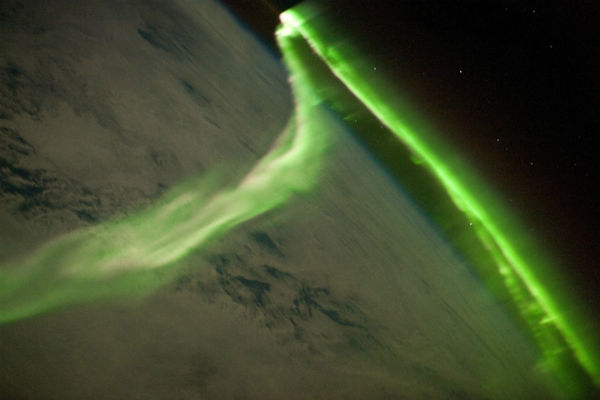
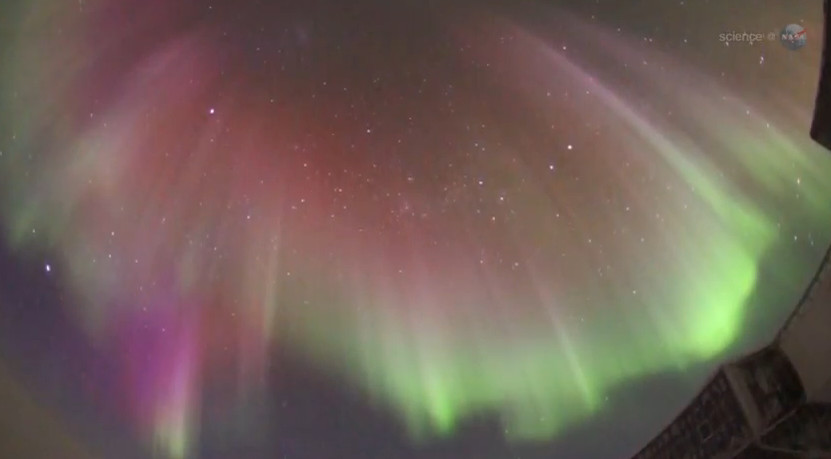
The geomagnetic storming started on July 14th through 16th and it is subsiding right now. Geomagnetic storm was triggered by a CME impact on July 14th around 18:00 UTC when strong X1.4 solar flare exploded from Sunspot AR 1520. Conditions at the peak showed Moderate
We are still experiencing effects of incoming CME generated from Sunspot 1520 which produced strong X1.4 Solar Flare on Thursday. A Moderate G2 Geomagnetic Storm (KP=6) is in progress right now due to an incoming CME shock. The geomagnetic field has been at active to
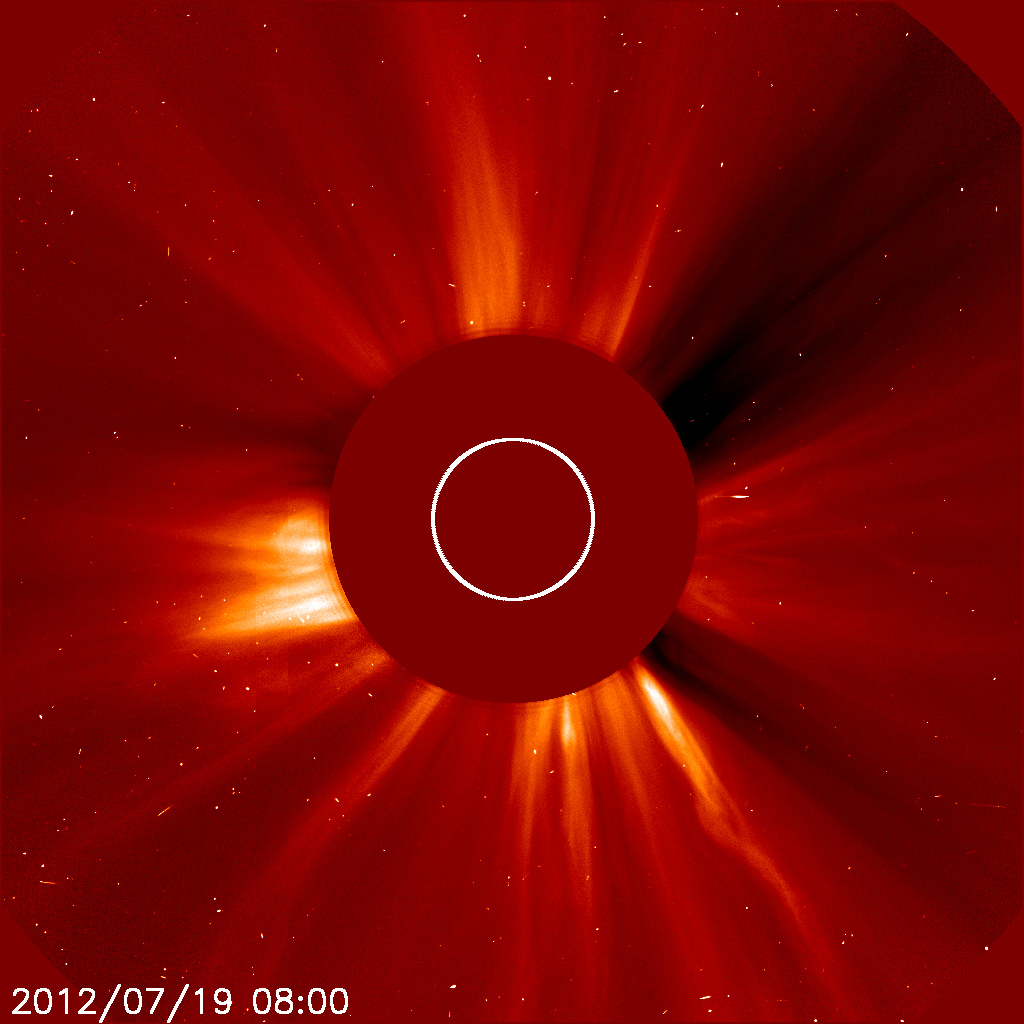
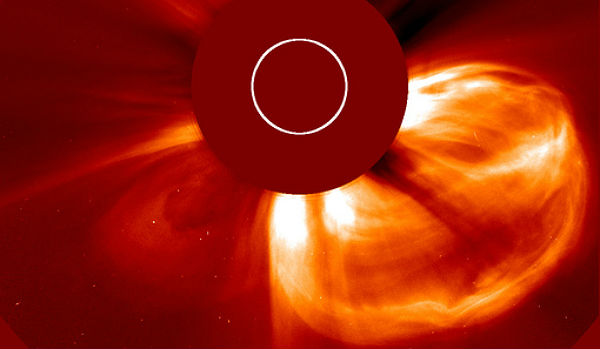
The CME cloud, generated by an X1.4 Solar Flare on Thursday around Sunspot 1520, hit Earth’s magnetic field on July 14th at approximately 18:11 UTC. 43 minutes earlier, at 17:28 UTC, measurements made by the ACE spacecraft indicated a shock arrival. Solar wind
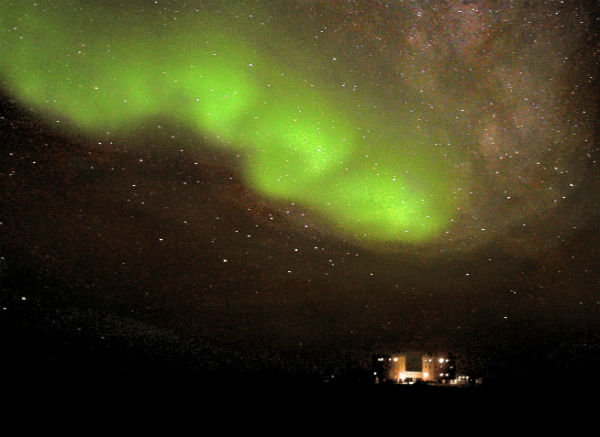
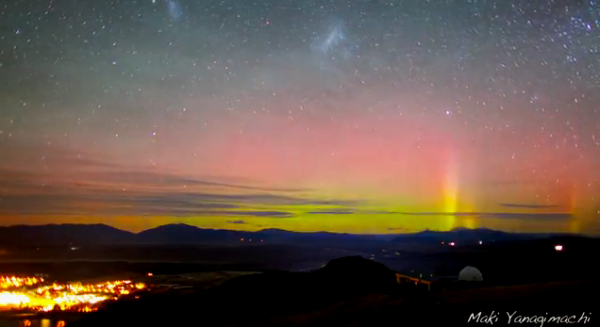
A powerful solar flare was unleashed from a massive sunspot 1520, blocking high-frequency radio communication in the Northern Hemisphere and producing the potential for auroras. It’s the second major solar storm to impact Earth in less than a week.Giant sunspot
A major and long duration solar flare peaked at 16:52 UTC on July 12, 2012. The source of this solar flare is Region 1520. A Type II and IV Sweep frequency events were recorded. Strong R3 radio blackout on the sunlit side of the Earth was recorded. This solar flare
One of the largest Sunspots of the current cycle is rotating into position for Earth directed Solar Flares. Sunspot 1520 has a Beta-Gamma-Delta magnetic configuration and may produce an X-Class flare. M1.1 flare at 05:10 UTC was followed up with a M2.0 flare at 06:27
A minor Geomagnetic Storm (KP=5) is again in progress due to southward Bz component of the IMF. Be on the lookout for Aurora at high latitudes. Stay tuned for more updates.Interplanetary Mag. FieldBtotal: 10.7 nTBz: 10.5 nT south Sunspot 1515 is now
Geomagnetic Storming reaching the minor G1 level was observed due to effects from a minor CME impact. The Bz component of the Interplanetary Magnetic Field has been pointing south at times and this could help intensify geomagnetic activity.July 9th began with a brief
Notorious Sunspot 1515 produced yet another strong M-class solar flare. This event started at 16:23 UTC on July 8, 2012, peaked 16:32 UTC at M6.9 and ended at 16:42 UTC. Sunspot 1515 is about to rotate to western limb so huge CME it has produced was not Earth