• Strong solar activity causing severe geomagnetic storm

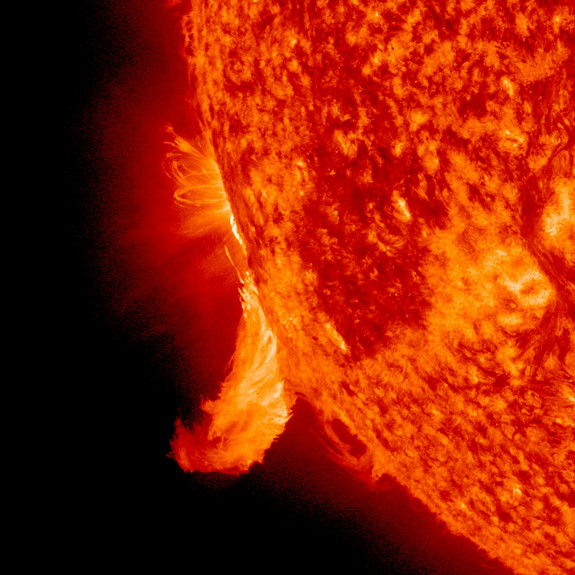
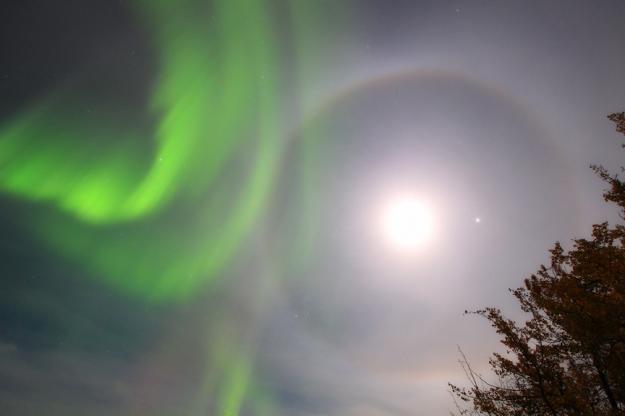
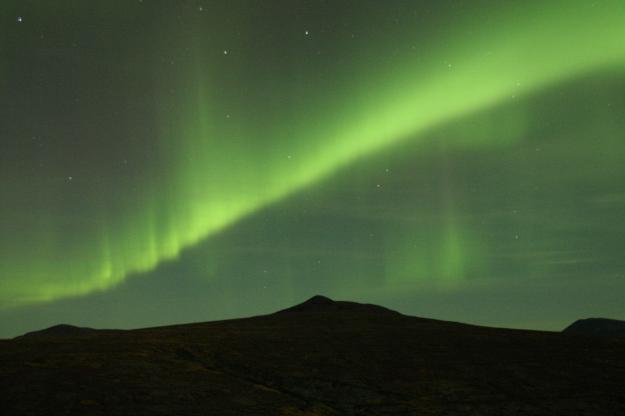
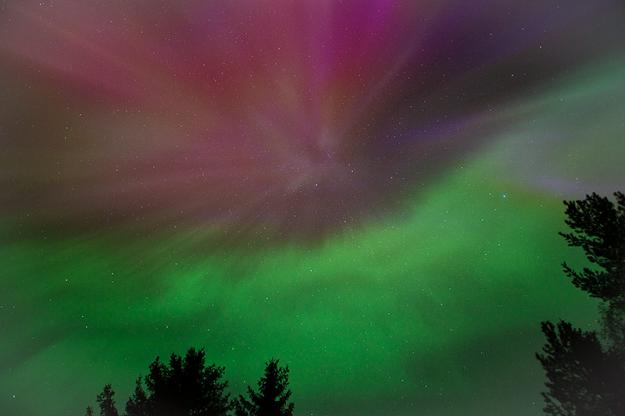
    High-latitude sky watchers should be alert for auroras. A strong (Kp=7) geomagnetic storm is in progress. Earth's magnetic field has been strongly disturbed since approximately 1300 UT on Sept. 26th when a CME hit our planet. The impact strongly compressed the…

  • Strong solar activity from Sunspot 1302

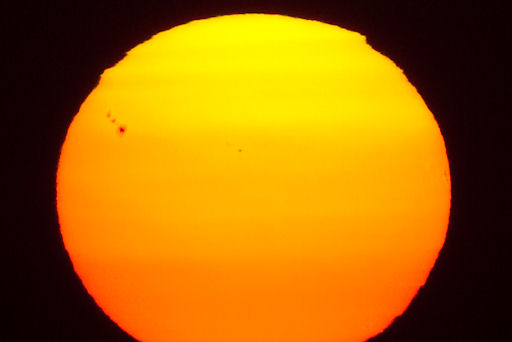
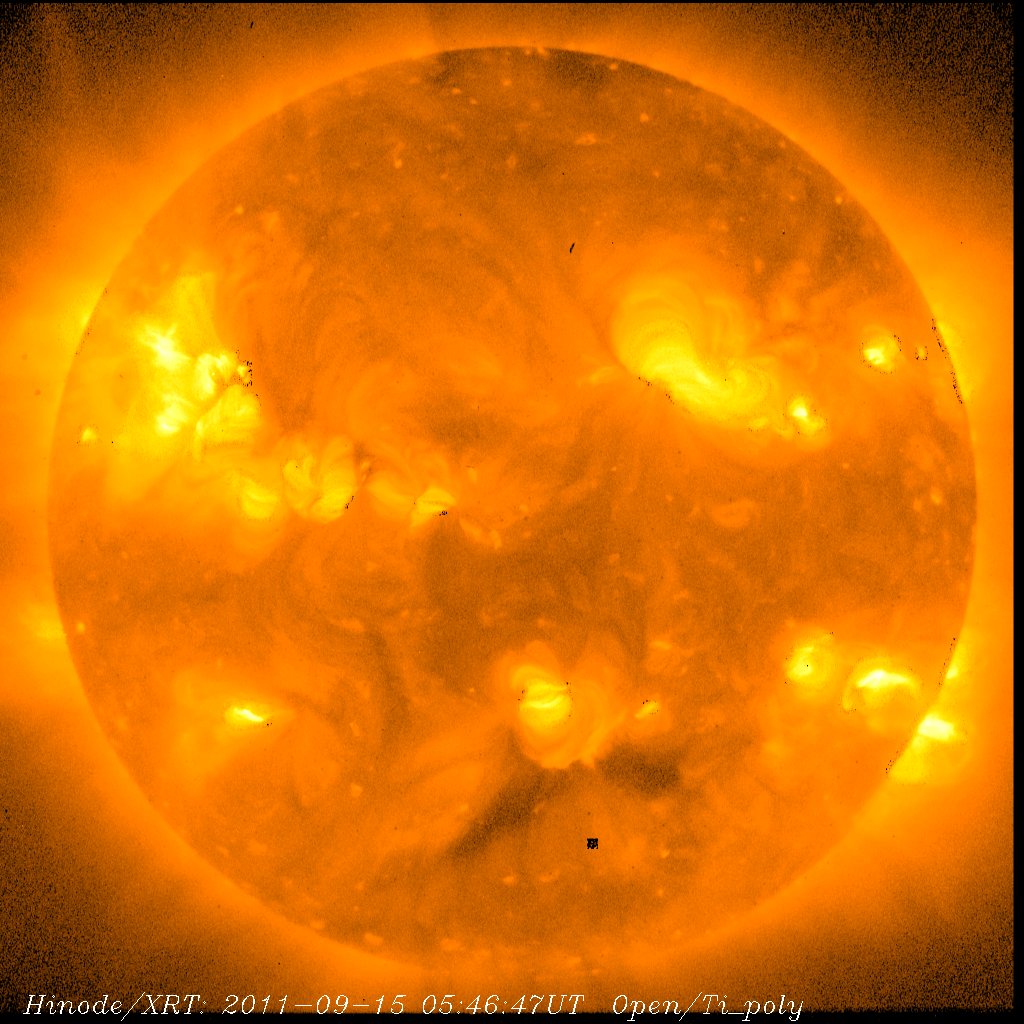
    A pair of closely-spaced CMEs propelled by explosions of sunspot AR1302 on Sept. 24th are heading not-quite directly toward Earth. A significant glancing blow to our planet’s magnetic field is possible on Sept. 26th around 14:00 UT (+/- 7 hours). NOAA forecasters

  • X1.9 solar flare took place

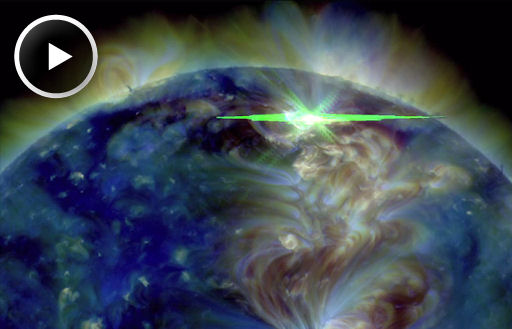
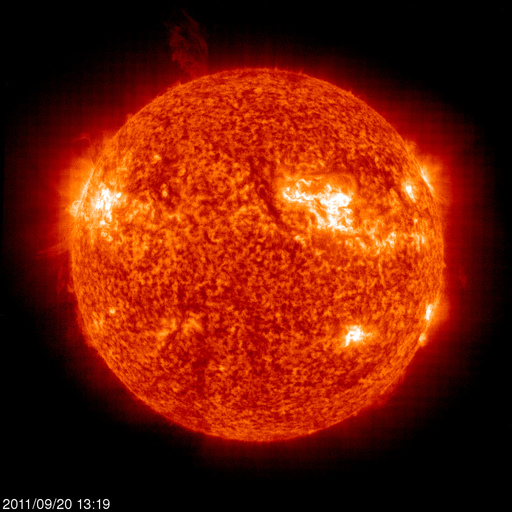
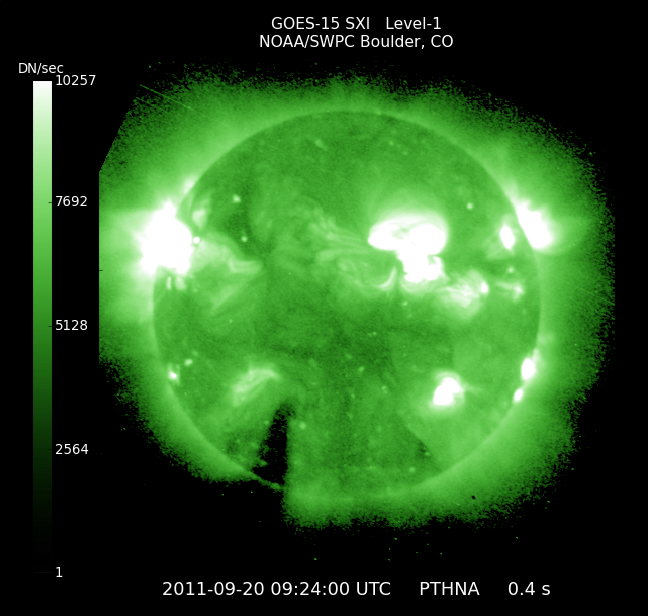
    Sunspot 1302 is back at it again, this time producing an X1.9 Solar Flare at 09:40 UTC. This major event resulted in an R3 level radio blackout as well as producing a 10.7cm Radio Burst (TenFlare). A fast moving type II sweep frequency event is reported also. As this

  • Long duration X1.4 solar flare took place at new sunspot

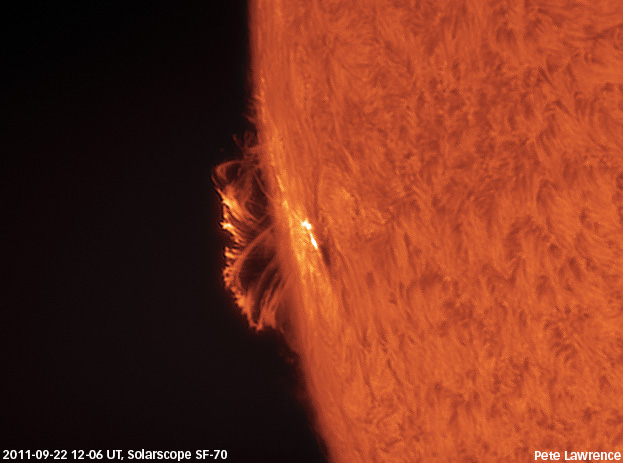
    Earth-orbiting satellites have detected a long-duration X1.4-class solar fare coming from a new sunspot on the sun’s eastern limb. The blast, which peaked at 1100 UT, produced a significant CME, but the cloud is not Earth-directed.

  • Earth-directed coronal mass ejection expected

    A coronal mass ejection (CME) is heading toward Earth and it could deliver a glancing blow to our planet’s magnetic field on Sept. 22th around 23:00 UT. There are no large coronal holes on the Earth-facing side of the sun. High-latitude sky watchers should be alert for

  • STEREO-SOHO detected six coronal mass ejections

    On Sept. 19th, the STEREO-SOHO fleet of spacecraft surrounding the sun detected six coronal mass ejections (CMEs). Two of the clouds rapidly dissipated. The remaining four, however, are still intact and billowing through the inner solar system. Click to view a movie of

  • Subsiding geomagnetic storm

    A coronal mass ejection (CME) hit Earth’s magnetic field on Sept 17th, sparking a moderate geomagnetic storm and auroras around the Arctic Circle. The view from Siberia was exquisite:The storm is subsiding now. Nevertheless, high-latitude sky watchers should remain

  • Geomagnetic storm in progress

    As predicted by analysts at the Goddard Space Weather Lab, a coronal mass ejection (CME) hit Earth's magnetic field at ~03:30 UT on Sept 17th. The impact sparked a moderate geomagnetic storm (in progress) and auroras around the Arctic Circle. High-latitude sky watch

  • Incoming coronal mass ejection

    As predicted by analysts at the Goddard Space Weather Lab, a coronal mass ejection (CME) hit Earth’s magnetic field at ~03:30 UT on Sept 17th. The impact was not strong. Nevertheless, the arrival of the CME could spark geomagnetic activity around the Arctic Circle.