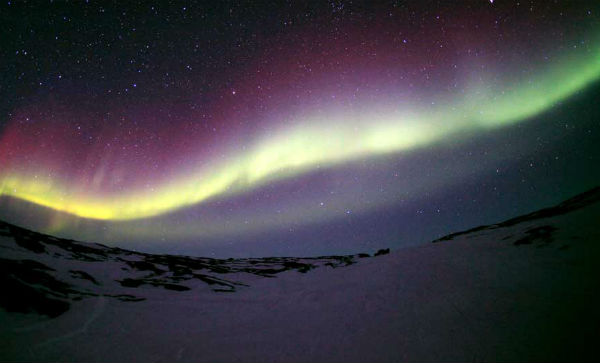
• Incoming CME could spark bright auroras over Polar Circle

    According to the latest WSA-Enlil Solar Wind Prediction track, the CME from Thursday may deliver a glancing blow late on April 8th. Only minor geomagnetic activity is expected as a majority of the plasma cloud will miss Earth. (Check this animation). NOAA forecasters

  • A pair of CMEs on the farside

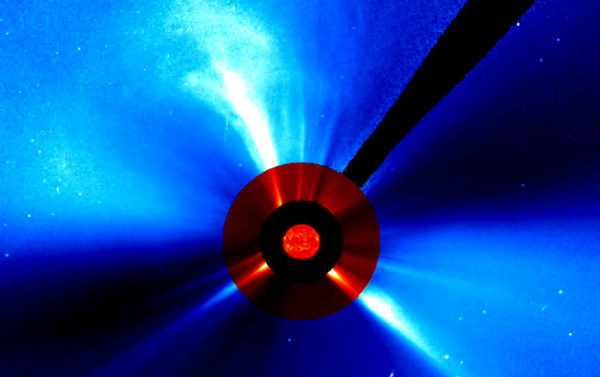
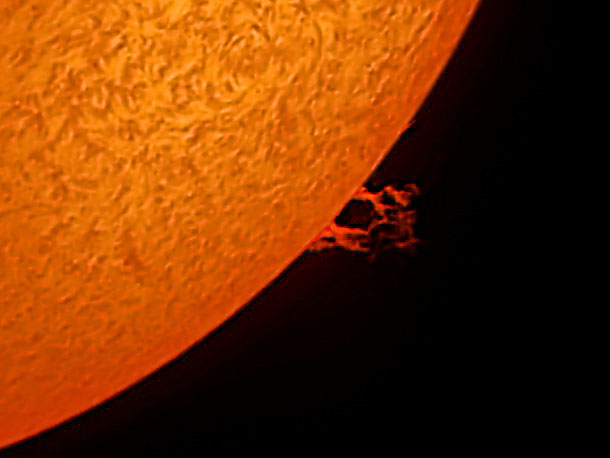
    A pair of Coronal Mass Ejections are now visible in the latest STEREO Ahead COR2 images. The source of the first CME was located on the farside of the Sun. The second plasma cloud was the result of a filament liftoff near Sunspot 1450. The plasma cloud appears to be

  • Possible minor CME impact

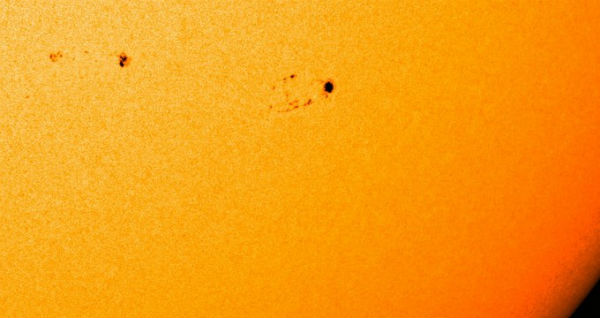
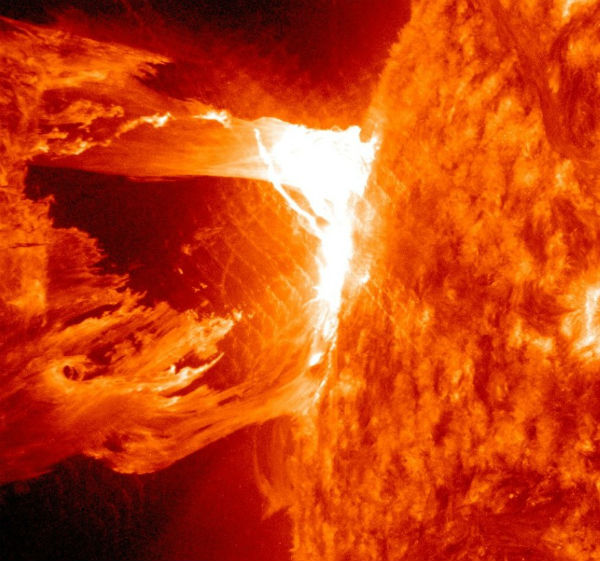
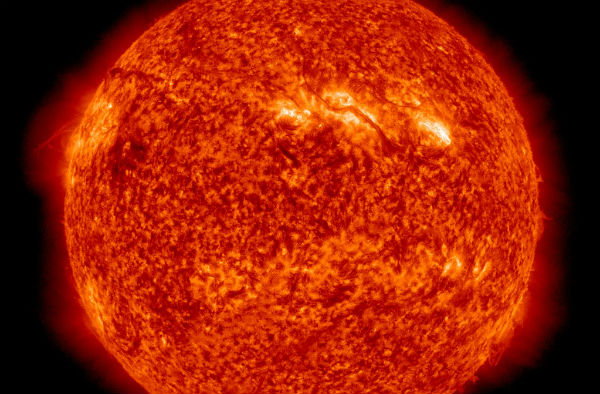
    A magnetic filament connected to sunspot AR1450 erupted on April 2nd, hurling a faint CME in the direction of Earth. This CME has a northerly trajectory and is not expected to be geoeffective. However, a weak impact is expected sometime on April 4th as it can be seen

  • The first sprites of summer appear in the skies of North America

    The first sprites of summer are starting to appear in the skies of North America. It looks like the sprite season is beginning early this year – summer is almost three months away. Sprites are electrical discharges that come out of the top of thunderclouds,

  • Solar ‘climate change’ could cause rougher space weather

    Recent research shows that the space age has coincided with a period of unusually high solar activity, called a grand maximum. Isotopes in ice sheets and tree rings tell us that this grand solar maximum is one of 24 during the last 9300 years and suggest the high

  • March solar storms heated Earth’s atmosphere

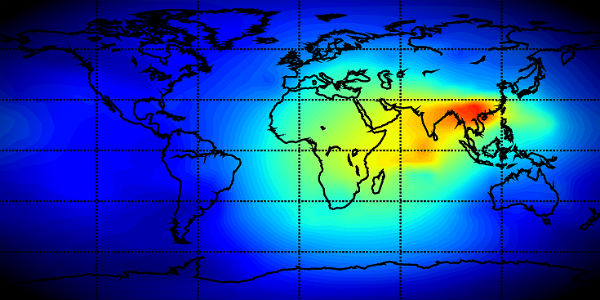
    The recent solar activity did more than spark pretty auroras around the poles. Researchers say the solar storms of March 8th through 10th dumped enough energy in Earth’s upper atmosphere to power every residence in New York City for two years. Although the influx of