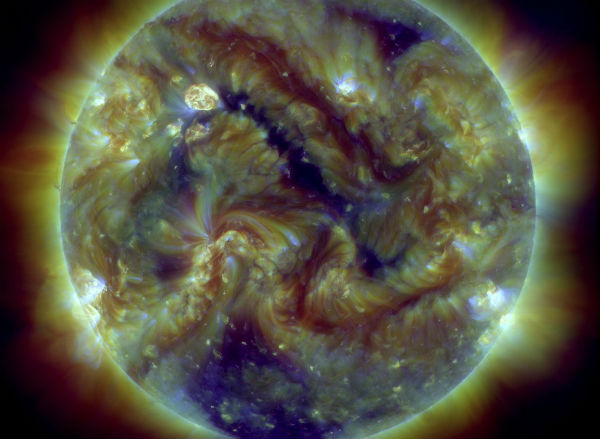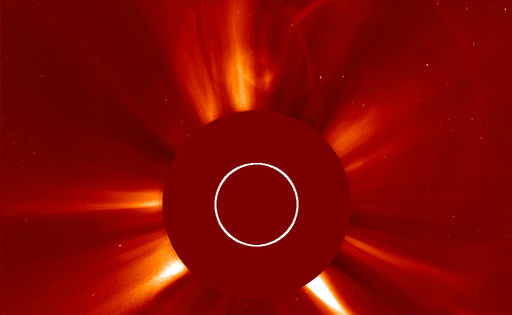
• Returning Sunspot 1431 produced moderate M1 solar flare

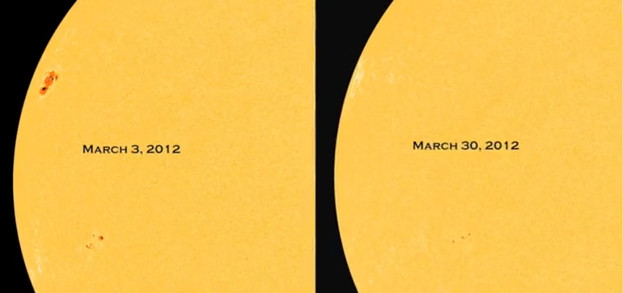
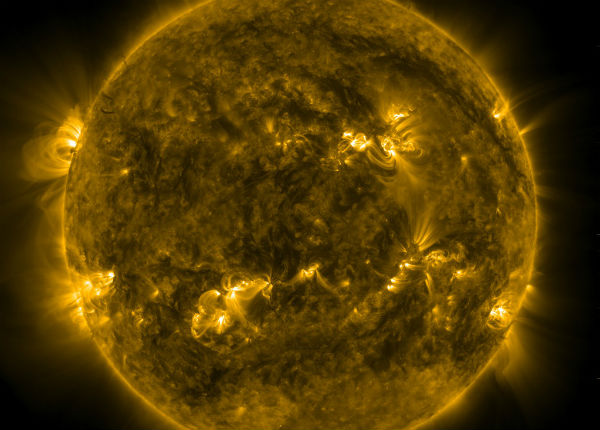
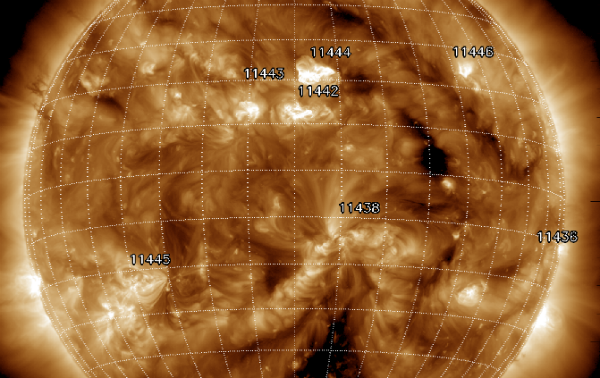
    Old Sunspot 1431 is now rotating back into view off the southeast limb and is also producing solar flares. So far this afternoon it produced a minor C6.5 flare, followed by a moderate M1.0 event at 19:40 UTC. Various small sunspots did form including regions 1441, 1442

  • Vernal equinox auroras

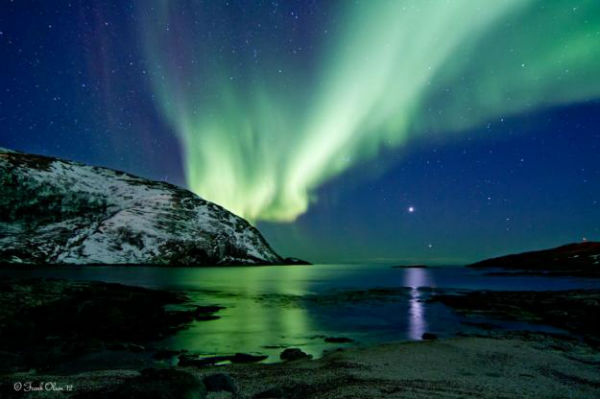
    March 20th began with the vernal equinox and ended with this outburst of Spring-green over Tromsø, Norway: Spring is aurora season. For reasons not fully understood by scientists, the weeks around the vernal equinox are prone to Northern Lights. Auroras are

  • Electron storm in progress

    The number of energetic electrons in Earth’s outer radiation belt is significantly elevated. According to analysts at the Goddard Space Weather Lab, the enhancement is caused by the aftermath of recent geomagnetic storms mixed with a high-speed solar wind stream.

  • Farside eruption on Sun’s northwestern limb

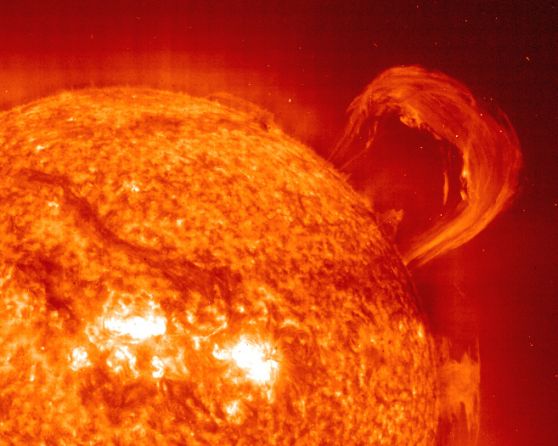
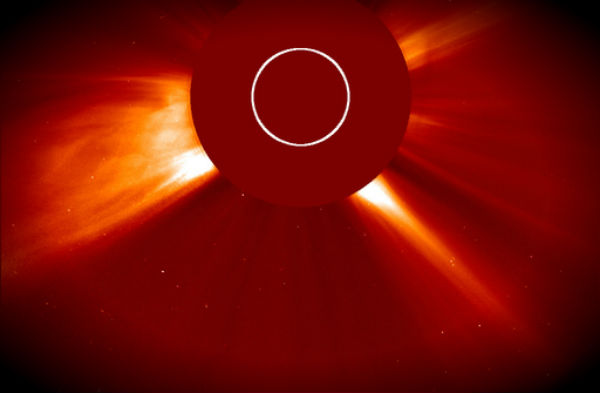
    Old sunspot AR1429 is still very active as it transits the far side of the sun. During the early hours of March 18th it produced a spectacular solar flare, blasted away from northwestern limb. Earth will not be affected by the CME cloud.Joint USAF/NOAA Report of

  • Aurora Sub-storm March 15/16, 2012 (timelapse and gallery)

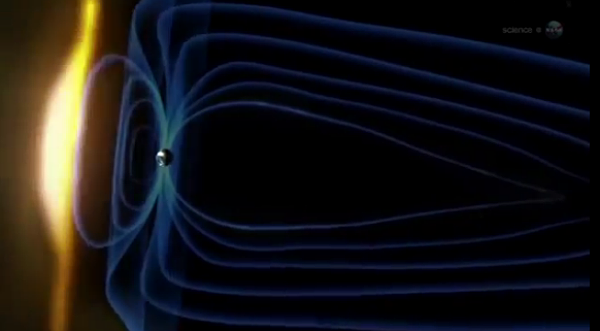
    The flank of a CME hit Earth’s magnetic field on March 15th around 13:00 UTC. The impact sparked a moderate (Kp=6) geomagnetic storm. Beautifull auroras colored sky into March 16th. Here are some images and great timelapse-movie. Just outside

  • Sunspot 1434 unleashed M1.3 solar flare

    Sunspot 1434 located in the southern hemisphere, produced a rapid M1.3 Solar Flare at 20:39 UTC on March 17, 2012. A Type II Sweep Frequency Event with a velocity of 1140 km/s was detected as well. Analysis of the M1.3 flare is ongoing to determine if it was

  • What does a solar storm sound like?

    To get an idea what does a solar storm sound like, a University of Michigan researcher has created a "sonification" of measurements from two spacecraft during the most recent storm. The researcher who created it is Robert Alexander, a University of Michigan de