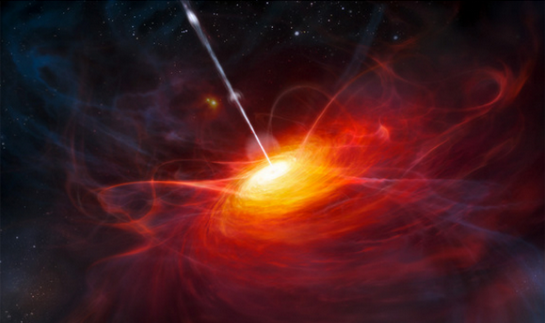
• Supermassive black hole at the center of cosmology

    In physical reality there are no black holes. Instead there are intense magnetic field regions that are formed whenever the field strength in plasma becomes much stronger compared with its surroundings. The most intense magnetic field regions are formed at the most

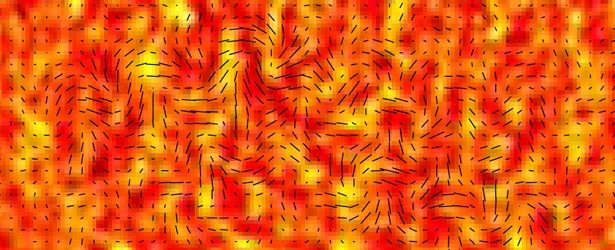
  • First direct evidence of cosmic inflation

    Almost 14 billion years ago, the universe we inhabit burst into existence in an extraordinary event that initiated the Big Bang. In the first fleeting fraction of a second, the universe expanded exponentially, stretching far beyond the view of our best telescopes. All

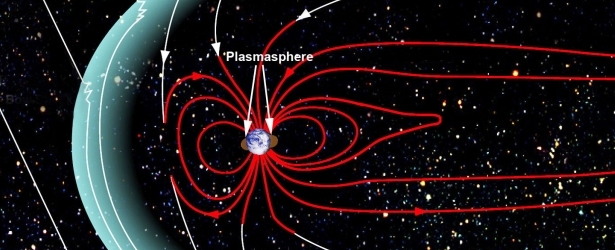
  • THEMIS discovers new process that protects Earth from space weather

    In the giant system that connects Earth to the sun, one key event happens over and over: solar material streams toward Earth and the giant magnetic bubble around Earth, the magnetosphere helps keep it at bay. The parameters, however, change: The particles streaming in

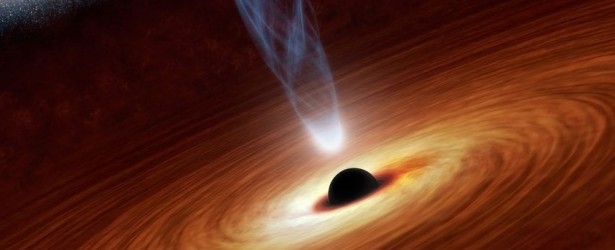
  • Hawking still in the dark on black holes

    In a new online paper titled Information Preservation and Weather Forecasting for Black Holes, the 72-year-old scientist Stephen Hawking says, "There are no black holes — in the sense from which light can't escape to infinity."

    The

  • When mind games masquerade as physics

    While sensational news headlines sometimes laud definitive breakthroughs such as the so-called discovery of the God particle, more and more scientists are warning that physics has reached a state of crisis. In the video below, physicist Wal Thornhill

  • Breakthrough metamaterials may make buildings immune to earthquakes

    For decades, architects, engineers and construction experts have struggled to find designs and materials that would make buildings more survivable during earthquakes. Now, finally, that breakthrough may have occurred.

    In fact, there are likely going to be many uses

  • Quantum craziness – Space news from Electric Universe

    A new paper published by an MIT physicist claims to theoretically prove that so-called "quantum entanglement" — two particles seemingly occupying more than one state simultaneously — gives rise to a wormhole that allows particles to communicate through a