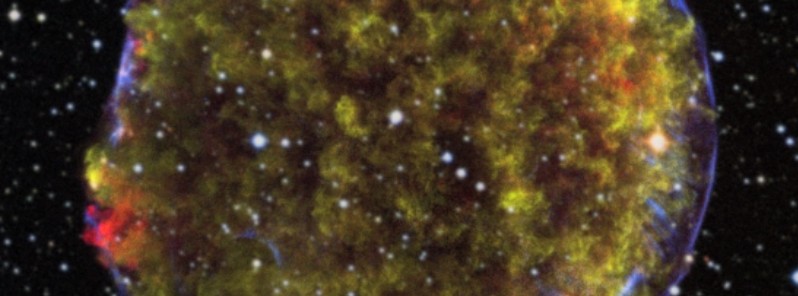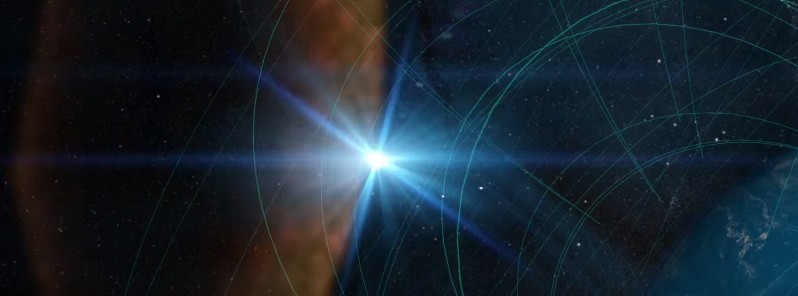
• X-ray observatory captures expanding debris from a stellar explosion

    Using data from NASA's Chandra X-ray Observatory, the NSF’s Karl G. Jansky Very Large Array (VLA) and many other telescopes astronomers are observing the debris field from supernova explosion first extensively observed and written about by Danish…

  • 3-D structures of moving volcanic clouds to aid forecasts

    A research team from NASA's Goddard Space Flight Center in Greenbelt, Maryland has used the satellite measurements of sulfur dioxide, the main component of volcanic emissions, and maps of the location and vertical profiles of volcanic aerosols to improve the…

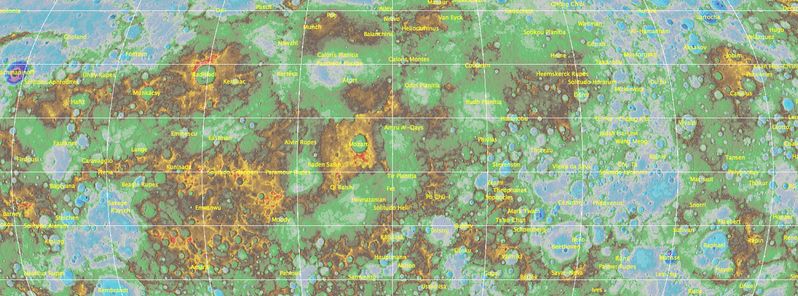
  • Mercury’s rich topography revealed for the first time

    A team of scientists from the US Geological Survey (USGS), the Arizona State University, Carnegie Institute of Washington, Johns Hopkins University Applied Physics Laboratory and NASA have produced a first comprehensive, high-resolution topographic map of…

  • Flying through explosive magnetic phenomenon to understand space weather

    Analyzing data obtained by four identical spacecraft that passed directly through a magnetic reconnection site on the boundary between the solar wind and Earth's magnetosphere, researchers have observed how this explosive physical process converts stored…

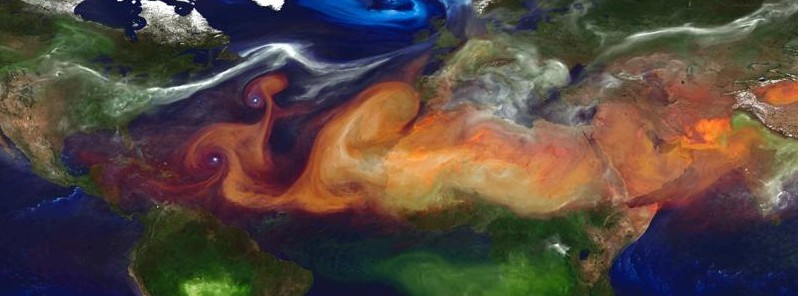
  • Saharan dust affects marine bacteria, potential pathogen Vibrio

    A new study conducted in collaboration with a group of scientists from the University of Georgia suggests the Vibrio bacteria, commonly found in the world's oceans, and well-known for its capabilities of causing serious illness to both human population and…