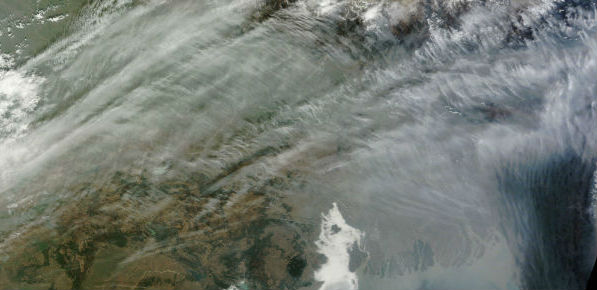
• Haze continues to hover over northern India and Bangladesh

    Ongoing haze blows across the mouths of the Ganges River and over the Bay of Bengal. Temperature inversion keeps smoke from agricultural fires and urban and industrial pollutants near the ground, rather than rising higher into the atmosphere and dispersing. Haze
  • Dust plumes from Sahara over Mediterranean Sea

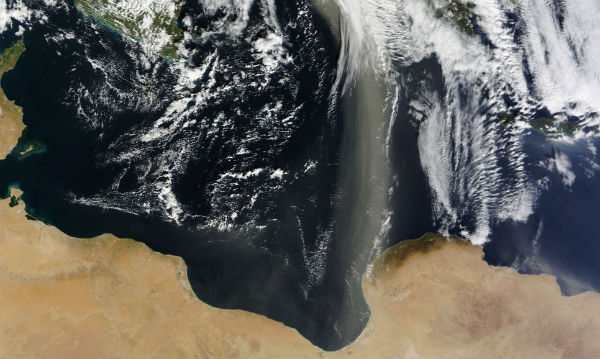
    A plume of Saharan dust, extending roughly 1,110 kilometers (700 miles), spanned the Mediterranean Sea in late January 2013. A swath of dust blows northward from the Sahara Desert in Libya, over the Gulf of Sidra, past the western end of the Jebel Akhdar

  • Polar mesospheric clouds over South Pacific Ocean

    Polar mesospheric clouds—also known as noctilucent or “night shining” clouds—form between 76 to 85 kilometers (47 to 53 miles) above the Earth’s surface, near the boundary of the mesosphere and thermosphere, a region known as the…

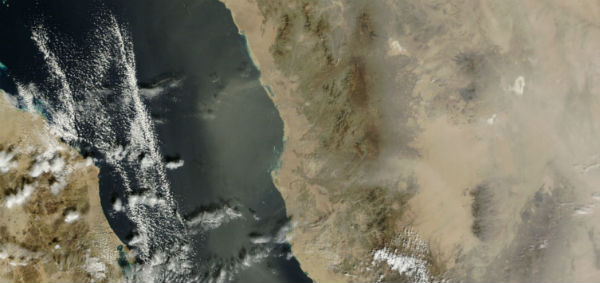
  • Dust over Saudi Arabia and Red Sea

    Dust can be seen in the air over Saudi Arabia and blowing westward over the Red Sea. Unsettled weather is typical in Saudi Arabia in winter, with strong winds a frequent occurrence. The Rub’ al Khali desert, the world’s largest sand sea, covers large parts of the

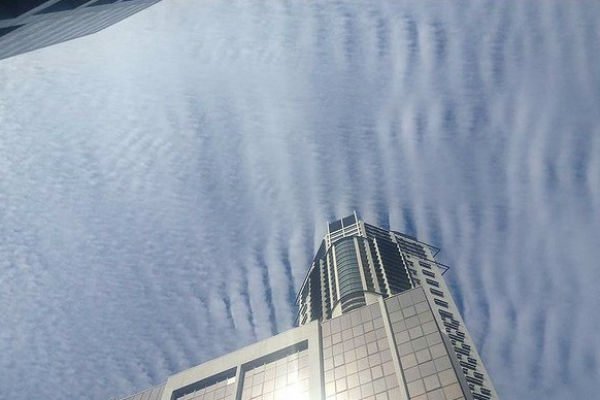
  • Unusual cloud pattern over Brisbane

    An unusual cloud pattern formed over Brisbane and southeast Queensland on August 9, 2012. According to Weatherzone meteorologist Josh Fisher, this pattern represents a signal that the weather is about to turn cold, a harbinger of cooler weather. It’s a high

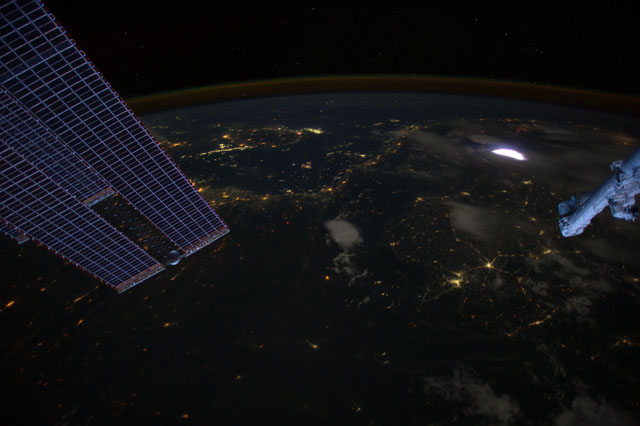
  • Red sprite captured from the International Space Station

    “Red sprites” are short-lived, red flashes that occur about 80 kilometers (50 miles) up in the atmosphere. These electrical discharges can extend 20 to 30 kilometers up into the atmosphere and are connected to thunderstorms and lightning. Red sprites are difficult

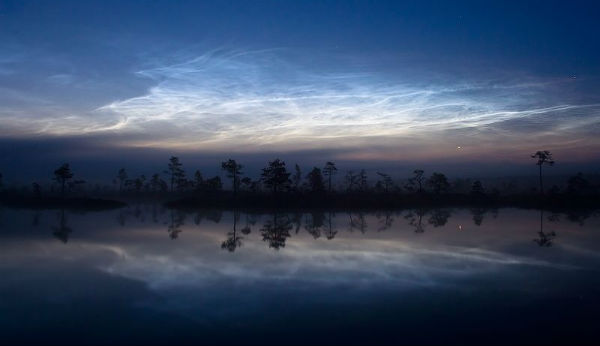
  • Start of Noctilucent Clouds season

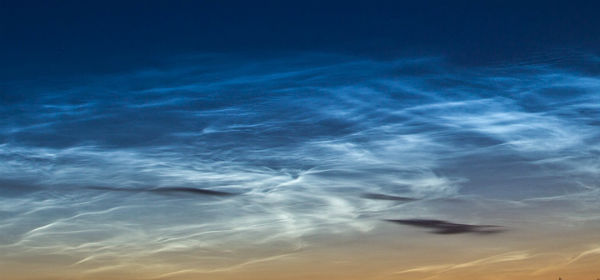
    Noctilucent clouds (NLCs) turn on every year in late spring, reaching almost full intensity over a period of no more than 5 to 10 days. These electric-blue ice clouds hang 85 km (53 miles ) above Earth’s surface, at the edge of space itself, circling the north and

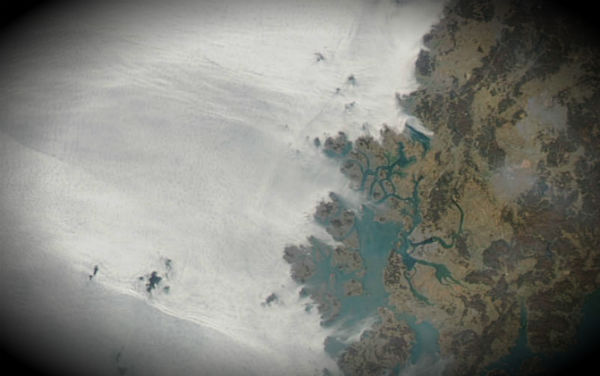
  • Fog blankets the Yellow Sea

    The shallow Yellow Sea, which has a number of busy ports, usually sees 50 foggy days a year; some weather stations in the area have measured fog on up to 80 days. One of those days was March 28, 2012, when the Moderate Resolution Imaging Spectroradiometer (MODIS) on

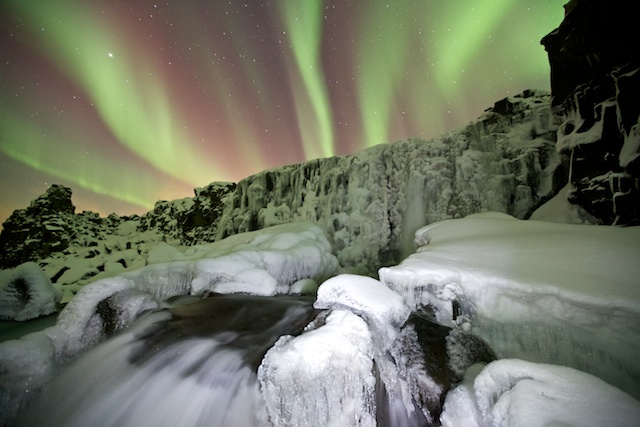
  • Fabulous displays of northern lights after M8.7 solar flare

    The anticipated geomagnetic storm caused by Monday’s M8.7 solar flare and Tuesday’s coronal mass ejection (CME) impact is over. The aurora watch has been cancelled today for all but the highest latitudes around the Arctic Circle but a dazzling display of aur

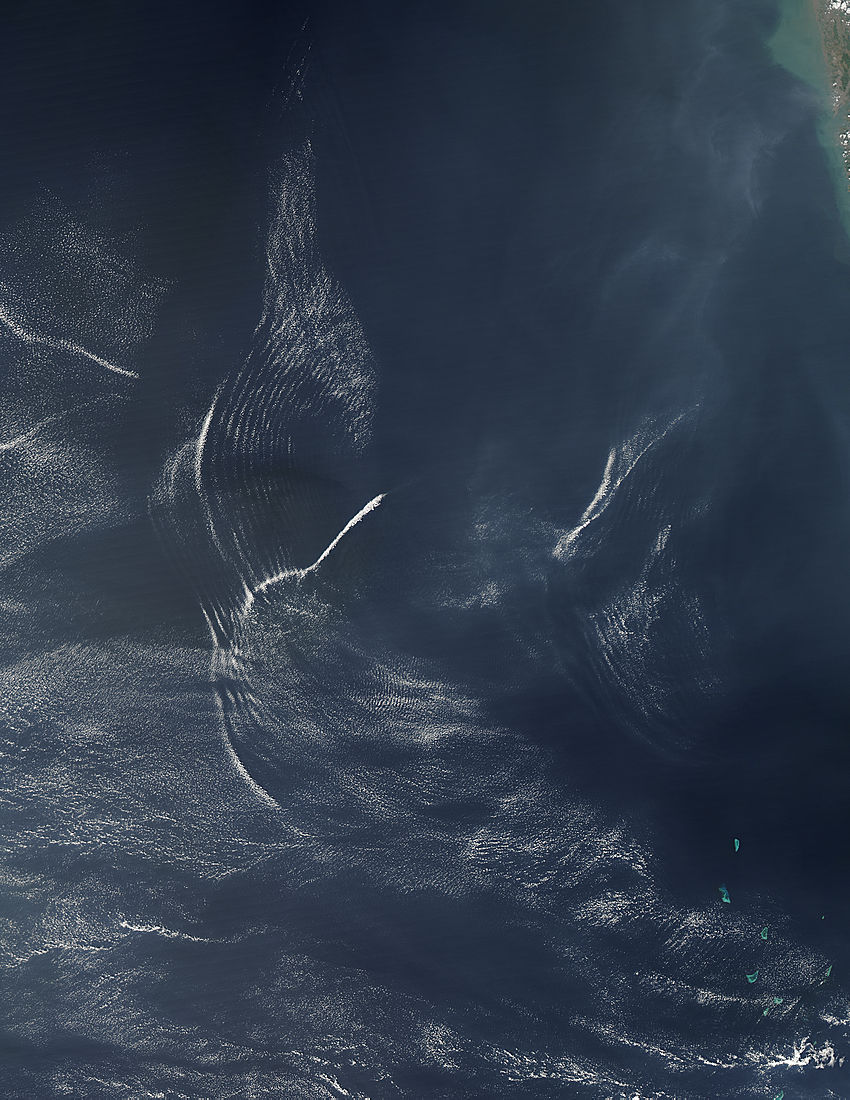
  • Atmospheric gravity waves over the Arabian Sea

    On November 15, 2011, the Moderate Resolution Imaging Spectroradiometer (MODIS) aboard the Aqua satellite passed over the Arabian Sea and captured this true-color image of a large-scale, overlapping wave pattern. The wave pattern is not caused by ocean waves, however.