I'm a dedicated researcher, journalist, and editor at The Watchers. With over 20 years of experience in the media industry, I specialize in hard science news, focusing on extreme weather, seismic and volcanic activity, space weather, and astronomy, including near-Earth objects and planetary defense strategies. You can reach me at teo /at/ watchers.news.

  • Multiple CMEs heading toward Earth, impacts expected between October 15 and 17

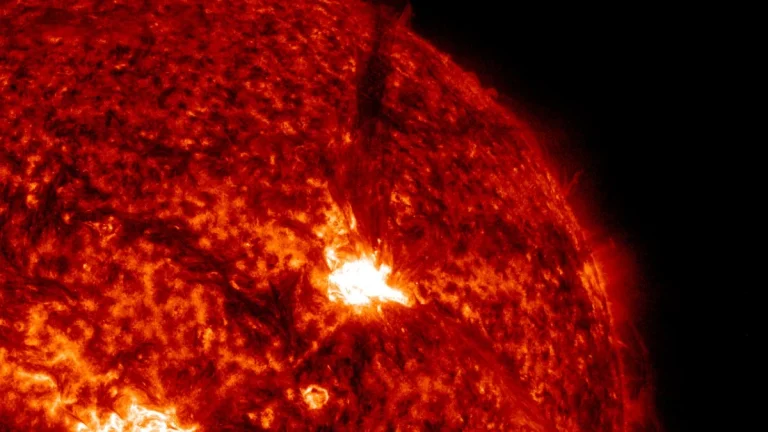
    Two coronal mass ejections (CMEs) launched from Active Region 4246 on October 13, 2025, are heading toward Earth and are expected to impact Earth over the next couple of days, according to NOAA’s Space Weather Prediction Center (SWPC). Model output indicates arrival around mid to late October 17, though forecasters note a possible earlier impact as both CMEs interact with earlier ejecta from the same region.

  • ESA confirms controlled reentry plan for Cluster satellite Rumba on October 22

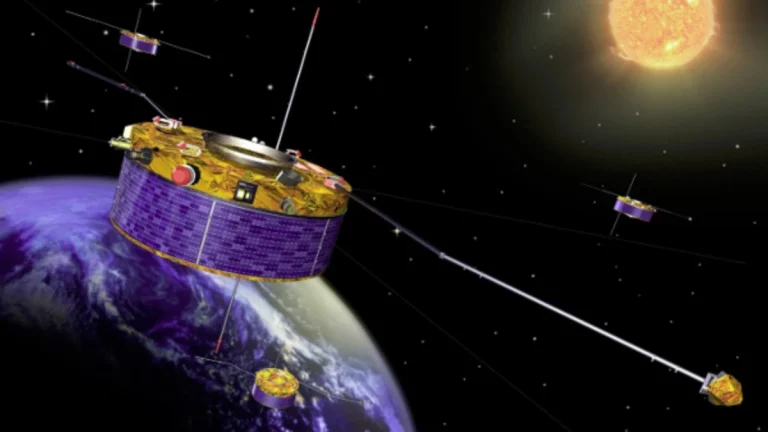
    ESA is preparing the second targeted atmospheric reentry of its long-running Cluster mission, with the spacecraft Rumba expected to descend into Earth’s atmosphere over a remote region of the South Pacific Ocean on October 22, 2025. The maneuver will follow the first controlled reentry of Salsa in September 2024 and continues ESA’s program to end the 24-year mission through precise, safe disposal of each satellite.

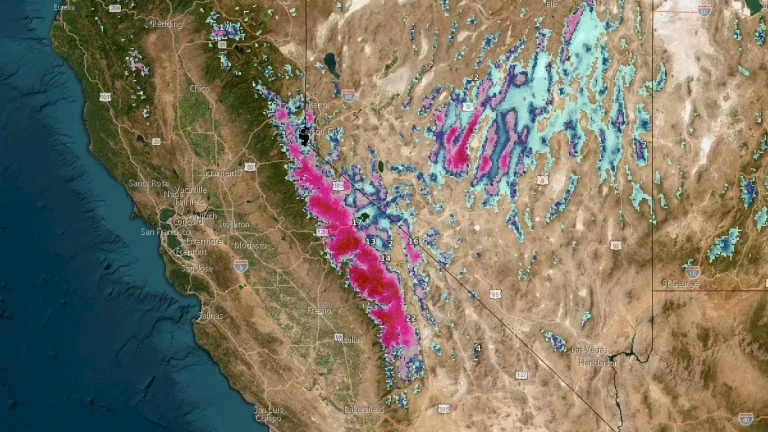
  • Major to extreme impacts expected across the central Sierra Nevada as Pacific storm moves into California

    A Pacific storm will move into California from the northwest between October 13 and 15, 2025, bringing widespread valley rain and heavy snow to the Sierra Nevada. Snowfall totals along the Sierra crest may reach 30–90 cm (12–36 inches), with hazardous driving conditions expected across Interstate 80 and other major passes. The National Weather Service warns that chain controls and travel delays are likely during the peak of the event.

  • Major flooding hits Pagosa Springs, Colorado

    Severe flooding struck Pagosa Springs, Archuleta County, Colorado, between October 10 and 12, 2025, as the remnants of Tropical Storm Priscilla delivered up to 160 mm (6.3 inches) of rain across the San Juan Mountains. The San Juan River recorded its third-highest crest since 1911, forcing evacuations, damaging about 90 homes, and closing sections of U.S. Highway 160. A local disaster emergency was declared, later expanded by the state, as additional rainfall remained in the forecast.

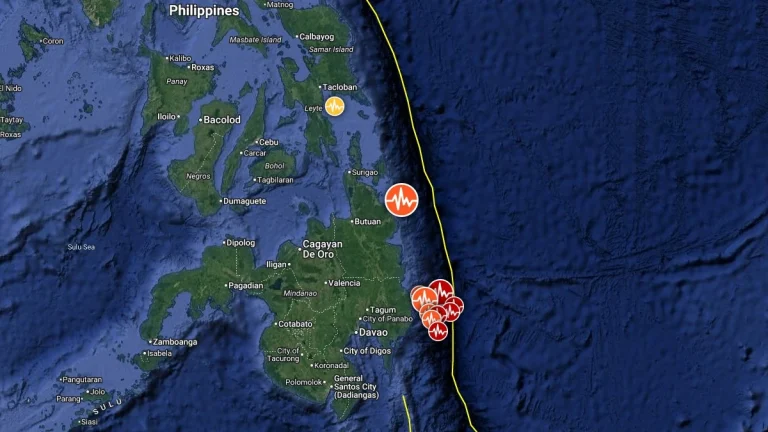
  • Strong M6.0 earthquake hits Mindanao, Philippines

    A strong earthquake registered by the USGS as M6.0 struck near Aras-asan, Mindanao, Philippines, at 14:32 UTC (22:32 LT) on October 11, 2025. The agency is reporting a depth of 59.3 km (36.8 miles). EMSC is reporting the same magnitude at a depth of 59 km (36.7 miles). This earthquake is likely part of the ongoing aftershock sequence following the M7.4 event off eastern Mindanao on October 10, 2025, in which at least 9 people were killed and more than 900 were injured.

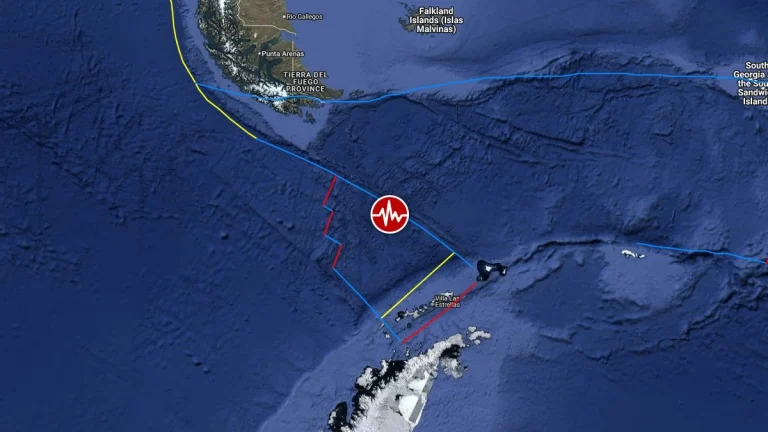
  • Major M7.6 earthquake hits Drake Passage, hazardous tsunami waves possible

    A major and shallow earthquake registered by the USGS as M7.6 struck the Drake Passage at 20:29 UTC on October 10, 2025. The agency is reporting a depth of 10.5 km (6 miles). EMSC is reporting M7.7 at a depth of 10 km (6.2 miles). According to the Pacific Tsunami Warning Center (PTWC), hazardous tsunami waves are possible within 1 000 km (620 miles) of the epicenter.

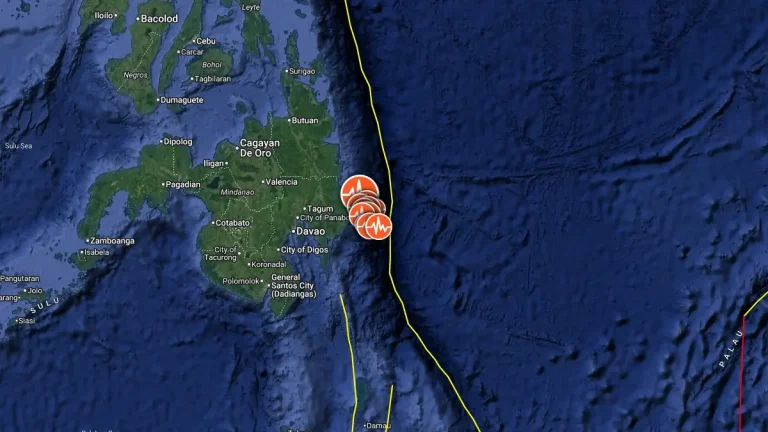
  • Strong M6.7 aftershock hits Mindanao, Philippines hours after deadly M7.4

    A strong and shallow earthquake registered by the USGS as M6.7 struck Mindanao, Philippines, at 11:12 UTC (19:12 LT) on October 10, 2025. The agency is reporting a depth of 61 km (38 miles). According to the Pacific Tsunami Warning Center (PTWC), there is no tsunami threat from this event. This event is considered a significant aftershock of the powerful M7.4 earthquake that hit the same region earlier the same day.