I'm a dedicated researcher, journalist, and editor at The Watchers. With over 20 years of experience in the media industry, I specialize in hard science news, focusing on extreme weather, seismic and volcanic activity, space weather, and astronomy, including near-Earth objects and planetary defense strategies. You can reach me at teo /at/ watchers.news.

  • Multi-model forecasts indicate increased atmospheric river activity and transition from West Coast Ridge to Pacific Ridge in late December

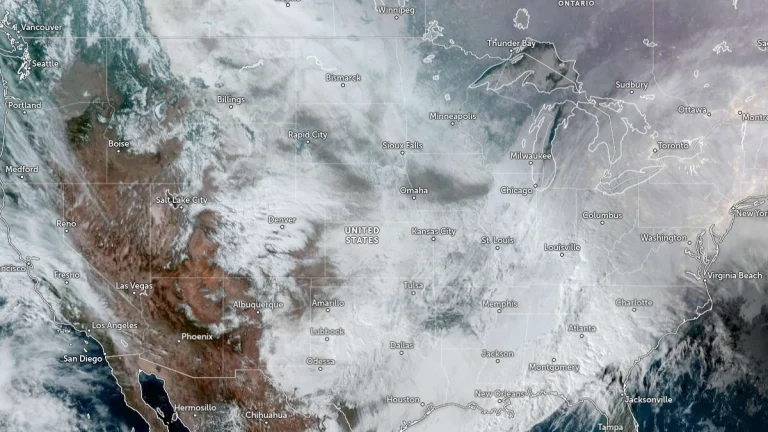
    Subseasonal forecasts by CW3E show strong multi-model agreement on above-normal atmospheric river activity across the U.S. West Coast during mid- to late December, with the strongest signals over Northern California. Forecast regime tools indicate a transition from a West Coast Ridge to a Pacific Ridge during this period, altering temperature and precipitation patterns across the region.

  • Major atmospheric river brings heavy rain and flooding to Pacific Northwest

    Two successive atmospheric river pulses are affecting the Pacific Northwest this week, delivering multi-day heavy rainfall and flooding risk across western Washington and northwestern Oregon. The first made landfall early December 9, and a stronger second pulse is forecast to arrive late December 9–early December 10, maintaining high integrated vapor transport and major flood potential through December 11.

  • Major M7.6 earthquake hits near the coast of Hokkaido, Japan, hazardous tsunami waves possible

    A major earthquake registered by the Japan Meteorological Agency (JMA) and USGS as M7.6 struck off the east coast of Aomori Prefecture, Japan, at 14:15 UTC (23:15 JST) on December 8, 2025. Both agencies are reporting a depth of 50 km (31 miles). According to the Pacific Tsunami Warning Center (PTWC), hazardous tsunami waves are possible within 1 000 km (620 miles) of the epicenter.

  • USGS V3 camera destroyed by lava fountain during Kīlauea’s Episode 38, Hawaiʻi

    A powerful lava fountain from Kīlauea’s Halemaʻumaʻu crater, Hawaiʻi, destroyed the USGS Hawaiian Volcano Observatory’s V3 streaming camera at around 10:00 HST (20:00 UTC) on December 6, 2025. The camera was recording live when an inclined fountain from the south vent buried it in hot pumice and tephra during Episode 38 of the ongoing summit eruption.

  • G3 – Strong geomagnetic storm forecast following Earth-directed CME produced by M8.1 solar flare

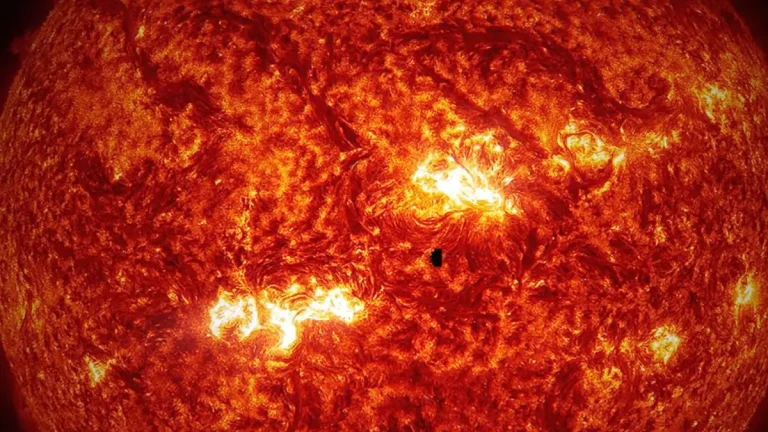
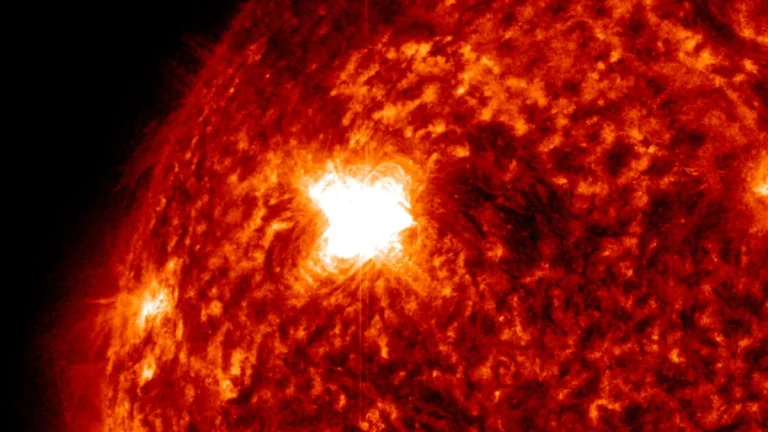
    A G3 – Strong geomagnetic storm watch is in effect following a powerful M8.1 solar flare from geoeffective Active Region 4299 at 20:39 UTC on December 6, 2025. The resulting full-halo coronal mass ejection (CME) is expected to impact Earth between early and midday UTC on December 9, possibly producing periods of strong geomagnetic storming.

  • Episode 38 at Kīlauea produces extremely rare triple-fountain event and destroys USGS camera, Hawaiʻi

    Kīlauea’s Halemaʻumaʻu crater, Hawaiʻi, began erupting at 08:45 HST (18:45 UTC) on December 6, 2025, when fountains emerged from the north vent, marking the start of Episode 38 of the ongoing summit eruption. Within minutes, a south vent opened, and by 09:15 HST a rare triple-vent lava fountain was active, producing jets up to 370 m (1 200 ft) high and a 6 km (20 000 feet) plume above the summit. The eruption lasted 12.1 hours, covered more than half of Halemaʻumaʻu crater with new lava, destroyed the USGS V3 streaming camera, and ended abruptly at 20:52 HST on the same day (06:52 UTC on December 7).

  • Very strong M7.0 earthquake hits near Yakutat, Alaska

    A strong and shallow earthquake registered by the USGS as M7.0 struck near Yakutat, Alaska, at 20:41 UTC on December 6, 2025. The agency is reporting a depth of 10 km (6.2 miles). EMSC is reporting M6.8 at a depth of 10 km. According to the National Tsunami Warning Center (NTWC), there is no tsunami danger from this earthquake.