I'm a dedicated researcher, journalist, and editor at The Watchers. With over 20 years of experience in the media industry, I specialize in hard science news, focusing on extreme weather, seismic and volcanic activity, space weather, and astronomy, including near-Earth objects and planetary defense strategies. You can reach me at teo /at/ watchers.news.

  • NWS increases confidence in heavy snow across the Carolinas and southern Virginia as Arctic air deepens

    A surge of Arctic air will spread across the central and eastern United States from Friday, January 30, 2026, bringing the longest duration of cold in several decades to parts of the region. Forecast confidence has increased for a winter storm to develop along the East Coast over the weekend, with the highest likelihood of heavy snowfall across the Carolinas and southern Virginia, and gusty coastal winds extending into the Mid-Atlantic.

  • Rare gulf-effect snow setup appears in model guidance for Florida this weekend

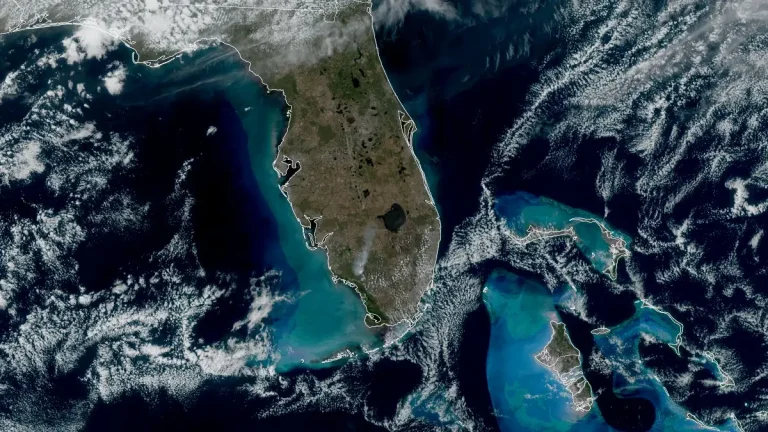
    Forecast models are indicating a rare possibility of gulf-effect snow developing over parts of the Florida Gulf Coast during the weekend of January 31 – February 1, 2026. The setup could briefly produce isolated snow flurries near Tampa and along the coast as Arctic air flows across the warm Gulf of Mexico. The probability remains very low and is dependent on the precise alignment of wind, temperature, and moisture conditions.

  • Victoria sets new all-time temperature record of 48.9°C (120°F) amid severe heatwave, Australia

    Temperatures across southeastern Australia reached record levels on January 27, 2026, with the Bureau of Meteorology confirming a new all-time high of 48.9°C (120°F) at Walpeup and Hopetoun in Victoria. The readings surpassed the previous state record of 48.8°C (119.8°F) set in 2009, amid severe to extreme heatwave conditions extending across Victoria, South Australia, and inland New South Wales.

  • NWS data show heavy snow and significant ice from the January 2026 U.S. winter storm

    Official data from the National Weather Service Weather Prediction Center (WPC) confirms widespread snow, sleet, and freezing rain accumulations across large portions of the United States during the January 23–26, 2026, winter storm. Preliminary data show snowfall exceeded 50 cm (20 inches) in parts of New England and the interior Northeast, while ice accretions reached 25 mm (1 inch) across portions of the Carolinas and northern Georgia. The system’s departure early on January 26 ended four days of significant winter weather affecting more than a dozen states.

  • Toronto Pearson sets all-time daily snowfall record as January 2026 becomes snowiest month since records began, Canada

    A powerful winter storm delivered record-breaking snowfall across Toronto, Ontario, Canada, on January 25, 2026, with 46 cm (18.1 inches) measured at Toronto Pearson International Airport as of 05:00 LT on January 26. This marks the highest single-day snowfall recorded since observations at the airport began in 1937. The event established new daily and monthly records for the site and caused widespread disruption across the Greater Toronto Area.

  • Victorians urged to evacuate as massive fire burns through the Otways, Australia

    A large out-of-control bushfire burning near Carlisle River and Gellibrand in Victoria’s Otways region has forced authorities to issue evacuation warnings for more than 1 100 properties. The fire, which started west of Gellibrand on January 10, has burned approximately 9 400 ha (23 200 acres) of forest and farmland by Monday afternoon (LT) January 26, 2026. Emergency Victoria urged residents and visitors in affected towns to leave before sunset due to forecast catastrophic fire conditions expected on January 27.

  • Nipah virus detected among health staff in West Bengal, India

    Five Nipah virus cases have been reported in West Bengal, India, as of late January 2026, including doctors and nurses. The virus, which spreads from fruit bats to humans and between people, has prompted state authorities to quarantine more than 100 contacts and conduct field surveillance in affected districts. There is currently no licensed vaccine or antiviral treatment, and containment measures focus on isolation and contact tracing.

  • Episode 41 eruption at Kīlauea produces 480 m (1 575 feet) fountains, tephra reaches Hilo and Puna, Hawaii

    Episode 41 of Kīlauea’s ongoing Halemaʻumaʻu eruption began at 11:10 HST (21:10 UTC) on January 24, 2026, producing lava fountains up to 480 m (1 575 feet) high and the broadest verified tephra dispersal of the current summit eruption sequence. Fine ash and Pele’s hair were carried by easterly winds to communities as far as Hilo and coastal Puna, while coarse fragments up to 30 cm (1 foot) fell near the vent. The eruption ended abruptly after about eight hours of activity.

  • Long-duration power outages and extremely hazardous travel expected as major winter storm spreads from the Southern Plains to the Northeast

    The National Weather Service (NWS) warns of catastrophic ice accumulation from the Southern Plains to the Southeast as a major winter storm develops and tracks northeastward from January 23 to 26, 2026. The storm is forecast to produce widespread freezing rain, heavy snow, and dangerously cold temperatures, threatening critical infrastructure and travel across much of the eastern United States.

  • Strong M6.2 earthquake hits near east coast of Kamchatka, Russia

    A strong earthquake registered by the USGS as M6.2 struck near the east coast of Kamchatka, Russia, at 12:42 UTC on January 22, 2026. The agency is reporting a depth of 52.2 km (32.4 miles). EMSC is reporting the same magnitude and depth. There is no tsunami threat from this earthquake.