
Strong and shallow M6.2 earthquake hits Scotia Sea
A strong and shallow earthquake registered by the USGS as M6.2 hit the Scotia Sea at 08:22 UTC on August 22, 2026. The agency is reporting a depth of 10 km (6.2 miles). EMSC is reporting the same magnitude and depth. According to the NWS Pacific Tsunami Warning Center (PTWC), there is no tsunami threat to Caribbean coasts from this earthquake.

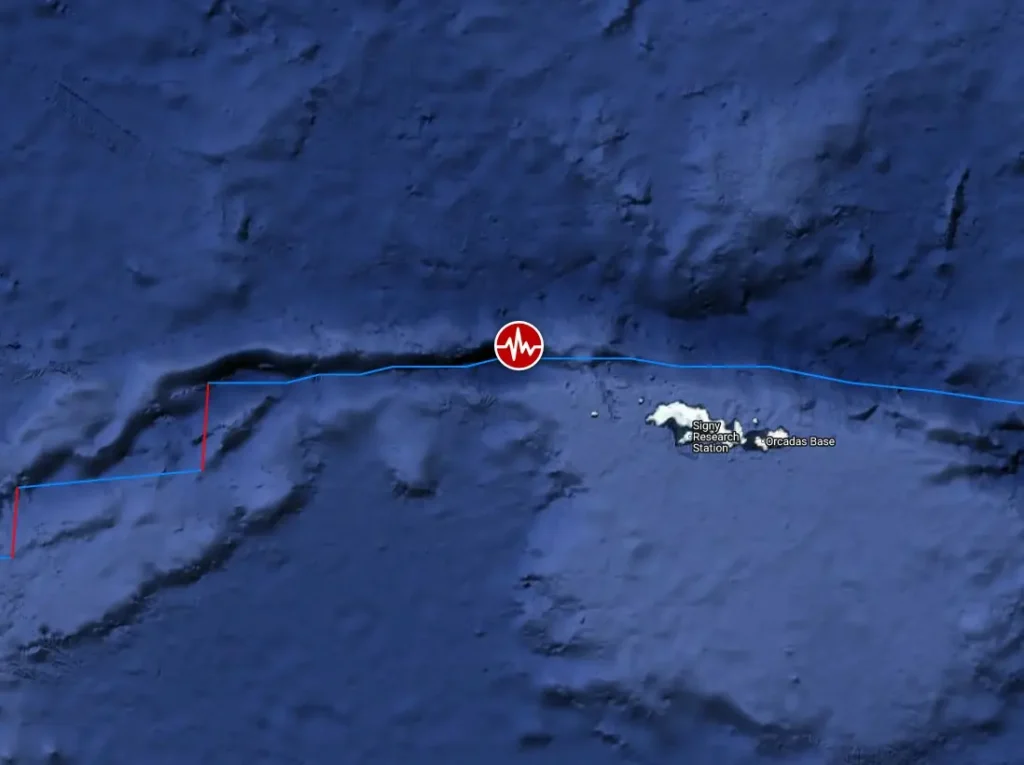
Epicenter of M6.2 earthquake in Scotia Sea on August 22, 2026. Credit: TW/SAM, Google
The epicenter was located 1 330 km (827 miles) ESE of Tolhuin (population 3 000), 1 368 km (850 miles) ESE of Ushuaia (population 56 825), and 1 406 km (874 miles) ESE of Río Grande (population 52 681), Tierra del Fuego, Argentina.
Based on all available data, there is no tsunami threat to Caribbean coasts from this earthquake, NWS PTWC reported at 08:29 UTC.
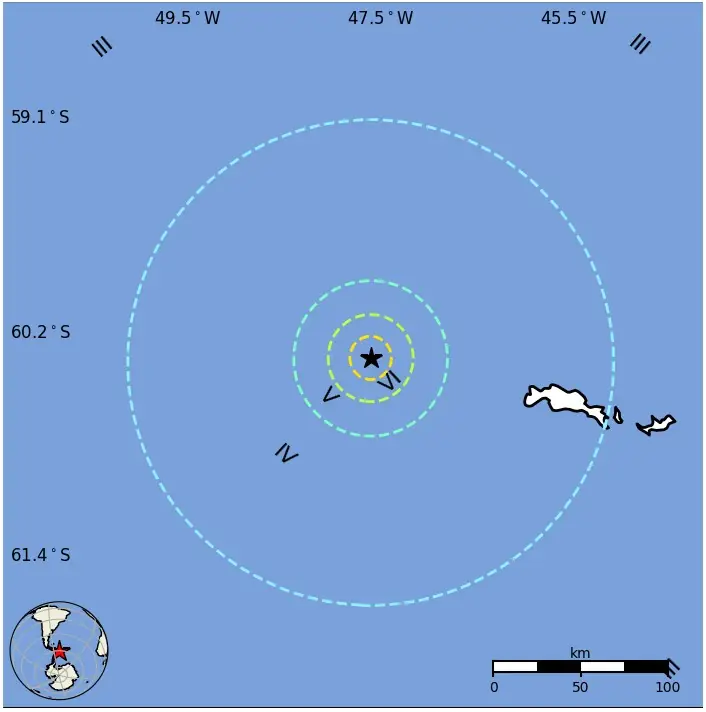
The USGS issued a Green alert for shaking-related fatalities and economic losses. There is a low likelihood of casualties and damage. Overall, the population in this region resides in structures that are resistant to earthquake shaking, though vulnerable structures exist.
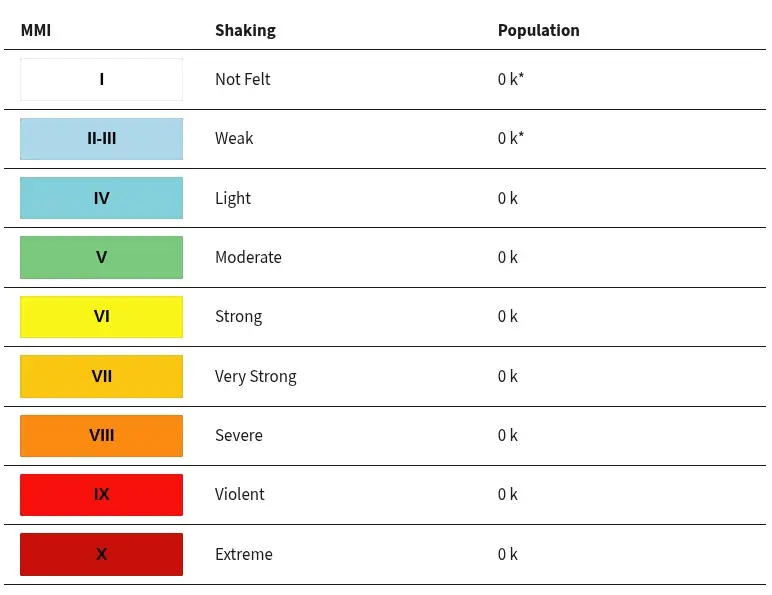
Estimated population exposure to earthquake shaking
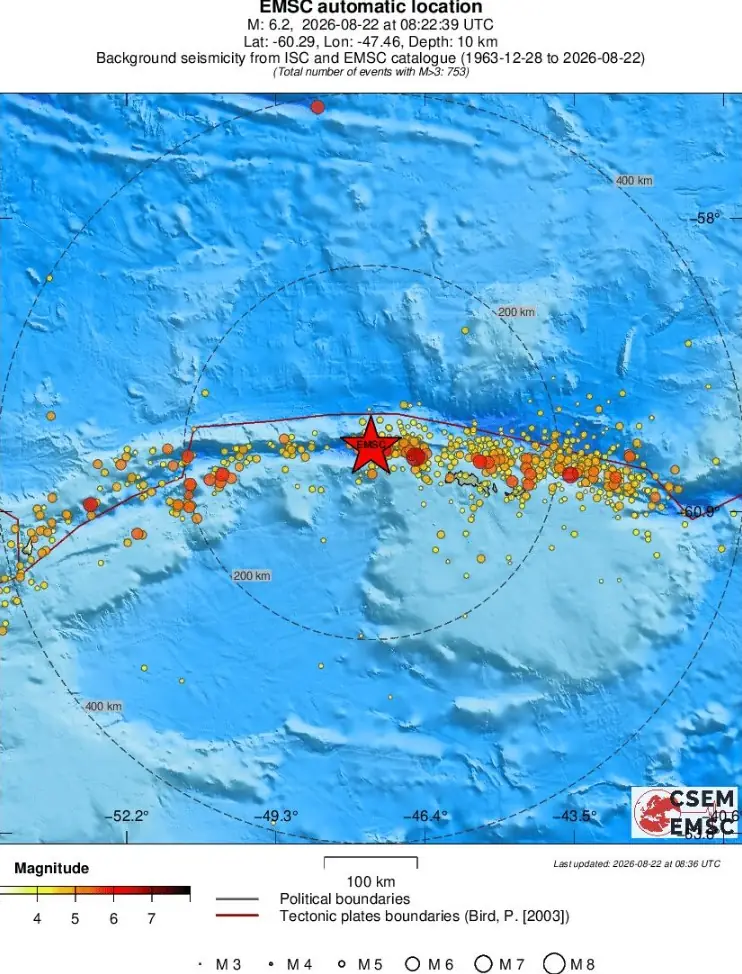
Regional seismicity
References:
1 M6.2 earthquake Scotia Sea – USGS – August 22, 2026
2 M6.2 earthquake Scotia Sea – EMSC – August 22, 2026
3 M6.2 earthquake Scotia Sea – PTWC – August 22, 2026

Teo Blašković founded The Watchers in 2011 and edited it until 2026, covering seismic and volcanic activity, extreme weather, space weather and near-Earth objects. Articles on this page are his archive.
