
Bright daylight fireball over Wisconsin, U.S.
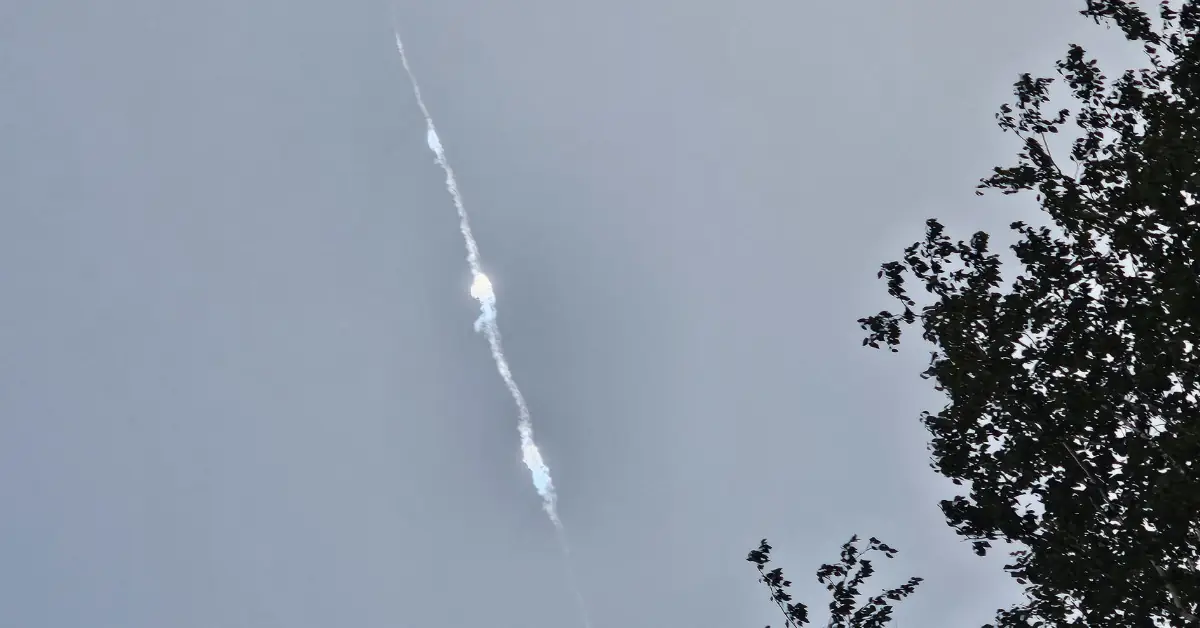
Image credit: Danielle R.
A bright daylight fireball streaked across the sky over Wisconsin at around 11:13 UTC (06:13 LT) on August 23, 2024, capturing the attention of many people. The event took place some 10 hours after a very bright fireball exploded over Kentucky.
The American Meteor Society (AMS) received over 120 reports from Wisconsin, Iowa, Illinois, and Minnesota.
The fireball was first observed at an altitude of 80 km (50 miles) above Fairchild, Wisconsin. It was traveling at a speed of 58 000 km/h (36 000 mph), slightly east of south, according to NASA’s Meteoroid Environment Office (MEO).
The meteor traversed a distance of 63 km (39 miles) through the atmosphere, culminating in a spectacular display as it flared twice before breaking apart 47 km (29 miles) above the town of Shamrock, Wisconsin.
The breakup of the meteor released energy equivalent to 60 tons of TNT, six times more than the Kentucky fireball at 01:43 UTC.
This explosive disintegration was strong enough to be detected by the Geostationary Lightning Mappers on both the GOES-16 and GOES-18 satellites. These satellites, typically used for tracking lightning strikes, recorded the bright flares associated with the fireball.


Based on the available data, MEO experts have determined that the fireball was caused by the atmospheric entry of a small asteroid. The asteroid is estimated to have had a diameter of 1.1 m (3.5 feet) and a mass of approximately 1 814 kg (4 000 pounds).
These dimensions suggest that the asteroid was relatively small, yet its entry into Earth’s atmosphere created a visually stunning and scientifically significant event, especially since it took place early in the morning.
It is important to note that this meteor event over Wisconsin is not related to the meteor sighting that occurred earlier over Kentucky. Despite the temporal proximity of the two events, they were distinct incidents with separate origins.
References:
1 Fireball event 4589-2024 – AMS – August 23, 2024
2 Bright fireball over Wisconsin – NASA/MEO – August 23, 2024

Teo Blašković founded The Watchers in 2011 and edited it until 2026, covering seismic and volcanic activity, extreme weather, space weather and near-Earth objects. Articles on this page are his archive.
Earlier reporting
Nothing on Watchers was published in the last 24 hours. These are older articles.
- 2 atmospheric rivers to bring heavy Sierra snow and California flood risk
- On October 22, 2017, a single flash of lightning stretched 515 miles from eastern Texas to near Kansas City, a distance that takes eight hours to drive, and nobody realized how far it had gone until scientists went back through the satellite data years later Epicenter
- CPC posts a slight risk of heavy rain from the Gulf Coast to the Northeast urban corridor November 25-29, and a moderate risk of West Coast wind and Sierra snow on November 25
- Florida's east coast faces a moderate flash flood risk Wednesday through Friday, with 4 to 8 inches of rain forecast and the St. Johns River near Cocoa already in major flood at 17.13 feet
