
Worst flooding in history of Nebraska, damage surpasses 1.3 billion

Image credit: Gov. Pete Ricketts
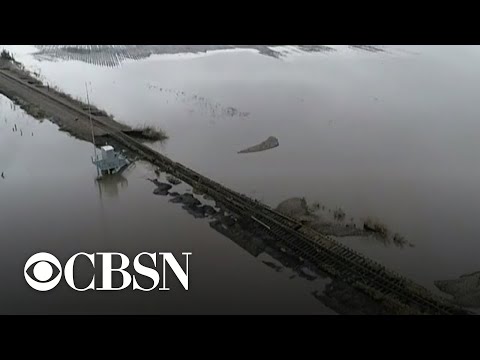
A state of emergency is in effect in Nebraska after massive floods triggered by rapid snowmelt, ice-covered rivers and heavy rain dumped by major late-winter storm. More heavy rain is expected in the region by the end of the week.
The financial impact could be more than $1.3 billion, Nebraska Governor Pete Ricketts said. That includes $449 million in damage to roads, levees and other infrastructure, $440 million in crop losses, and $400 million in cattle losses.
Surveyed flood damage in Plattsmouth and many other southeast Nebraska communities along the Missouri River which is so high it’s almost impossible to see across to the Iowa/Missouri banks in some places.#NebraskaFlood | #NebraskaStrong pic.twitter.com/XPsTBM37or
— Gov. Pete Ricketts (@GovRicketts) March 21, 2019
Gov. Ricketts estimated that more than 2 000 homes and 340 businesses were damaged or destroyed, totaling at least $85 million.
"I don't think there's ever been a disaster this widespread in Nebraska," Ricketts said.
By Sunday morning, March 24, the rain is expected to spread into the lower to mid-Mississippi Valley exacerbating flood problems across the region.
NASA Earth Observatory images by Joshua Stevens, using Landsat data from the U.S. Geological Survey.

The Watchers team and our contributors bring the latest on extreme weather, earthquakes, volcanic eruptions, space weather, and all things science. We're all about making sense of the natural world and keeping you informed on what’s happening. Got a tip or a question? Hit us up using the form at newstips!
Published in the last 24 hours
- NASA built the Opportunity rover to last 90 days on Mars, and Martian winds helped keep it alive for nearly 15 years by blowing dust off its solar panels, until a planet-wide dust storm in 2018 blocked sunlight and silenced the rover Epicenter
- In the winter of 1811–12, earthquakes near New Madrid, Missouri, shook so hard that witnesses saw the Mississippi River flow backward, and the shaking left a brand-new lake in Tennessee Epicenter
- On 28 August 1859 a solar storm shocked telegraph operators and threw sparks on other lines, and on 2 September Boston to Portland clerks unhooked their batteries and kept sending for more than two hours on the aurora's current alone. Epicenter
- In 2019, the Ronald Reagan Presidential Library hired hundreds of goats to eat 13 acres of brush around it; months later the Easy Fire surrounded the library, and the fire break the goats left behind slowed the flames before they reached the building Epicenter
