The Weekly Volcanic Activity Report: September 3–9, 2025
New activity/unrest was reported for 5 volcanoes from September 3 to 9, 2025. During the same period, ongoing activity was reported for 21 volcanoes.

New activity/unrest was reported for 5 volcanoes from September 3 to 9, 2025. During the same period, ongoing activity was reported for 21 volcanoes.

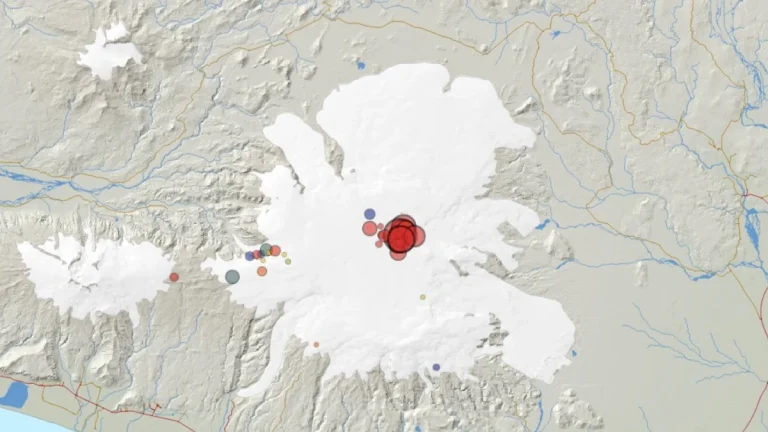
Weak to moderate lahars descended from Fuego volcano, Guatemala, at 19:17 LT on September 10, 2025, moving through Barranca Ceniza and into the Zarco and Mazate rivers, tributaries of the Achíguate River. The National Institute of Seismology, Volcanology, Meteorology and Hydrology (INSIVUMEH) reported that conditions remain favorable for additional lahars on the southwestern flanks.

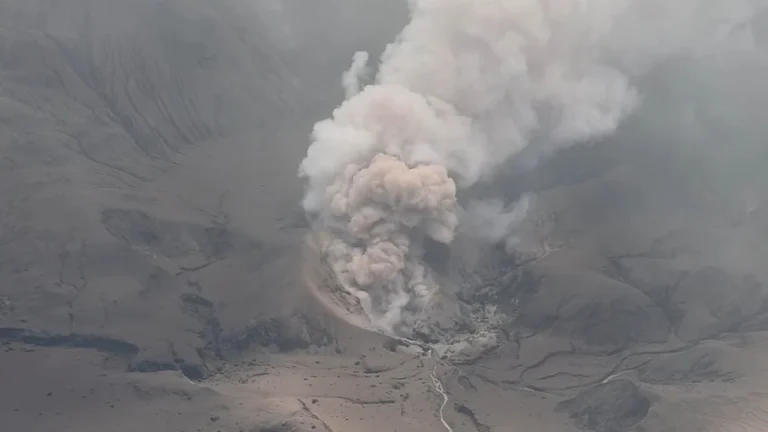
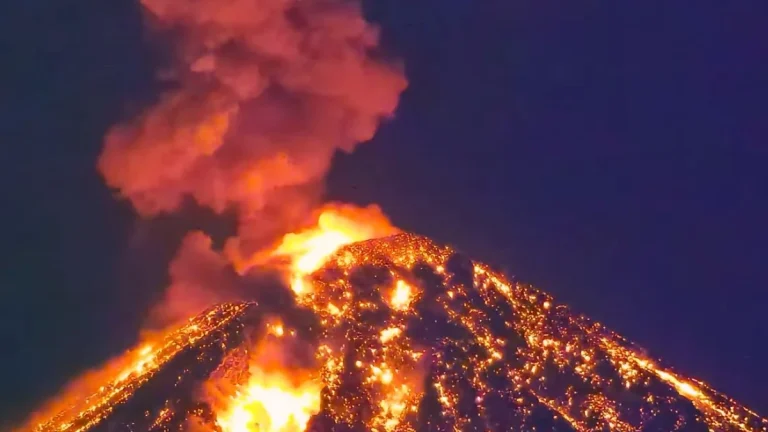
Multiple ash emissions were recorded at Kanlaon volcano, Philippines over the past couple of days, with ash rising up to 750 m (2 460 feet) above the summit. The volcano remains under Alert Level 2.
A large and impressive explosion occurred at Mexico's Colima volcano on Friday, February 3, 2017, producing an ash column that eventually rose up to 7.6 km (25 000 feet). The eruption occurred at 23:35 UTC (17:35 CST) and generated pyroclastic flow on the…
An energetic earthquake swarm was detected under Alaskan Takawangha volcano on January 23, 2017, prompting the Alaska Volcano Observatory to raise Aviation Color Code to Yellow and Alert Level to Advisory on January 24. The last known eruption of this volcano took…
As far as the volcanic activity goes 2012 had lots of interesting moments and Pacific Ring of Fire was focus of almost all of it. 2011 finished with our eyes on the Cleveland volcano, Alaska. Cleveland sent ash 4.5 km in the sky during a single explosion event on
The importance of global and frequent data coverage of volcanoes was highlighted in a recent article published in Science. Satellites are finding that volcanoes previously thought to be dormant are showing signs of unrest.As the 2010 eruption of Eyjafjallajökull in
The electrical phenomenon we call lightning is not well understood. The most common interpretation involves the circulation of water vapor up and down through clouds in a process called convection. Water is heated by the Sun until it evaporates, rising into the air…
Plate tectonics has been on the curriculum for a while now. Most people are fairly familiar with the theory; the Earth's crust – or lithosphere – is broken up into different plates which move around on the very hot, viscous substance beneath.This movement is driven