A G1-class (Kp=5) geomagnetic storm is in progress
High-latitude sky watchers should be alert for auroras. A G1-class (Kp=5) geomagnetic storm is in progress.NOAA Space Weather Scale for Geomagnetic StormsSolar windspeed:
A fast-moving stream of solar wind is buffeting Earth’s magnetic field. The combined effect of this stream plus a CME expected to arrive on June 24th has prompted NOAA forecasters to declare a 30% to 35% chance of geomagnetic storms during the next 24 hours.
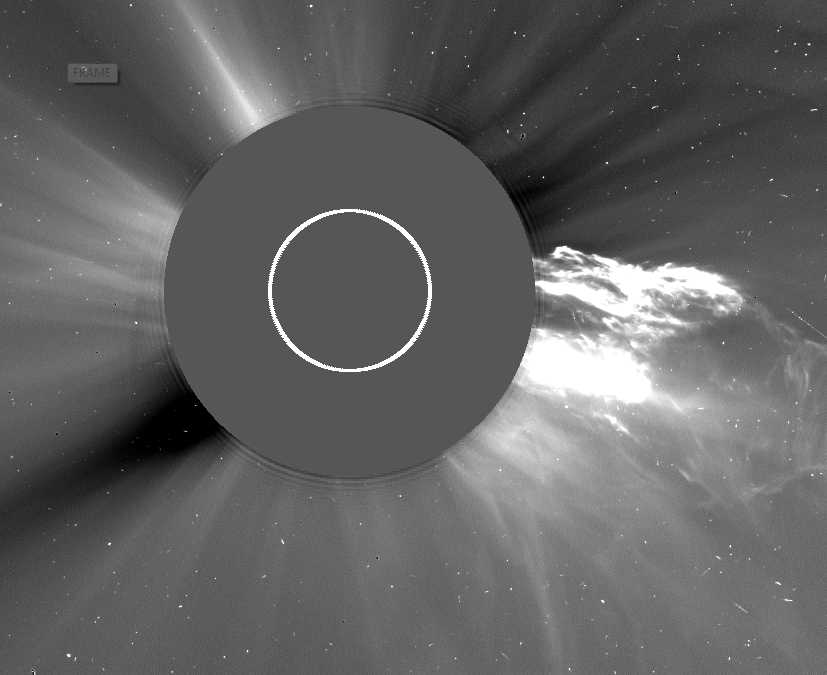
A CME propelled toward Earth by the “solstice solar flare” of June 21st may be moving slower than originally thought. Analysts at the GSFC Space Weather Lab have downgraded the cloud’s probable speed from 800 km/s to 650 km/s. Impact is now expected on June 24th at
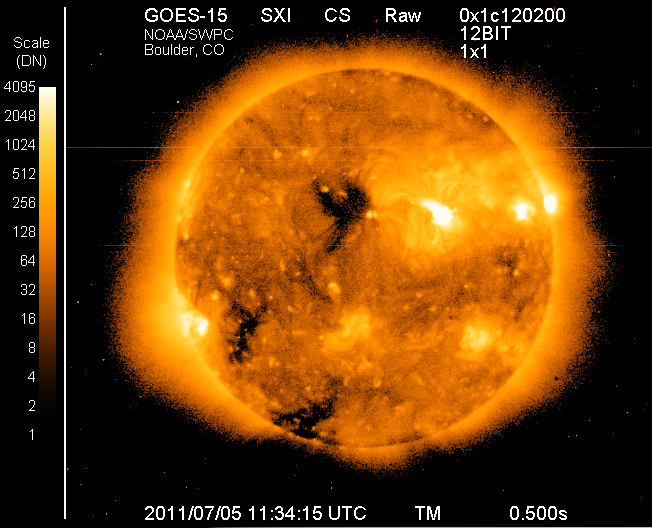
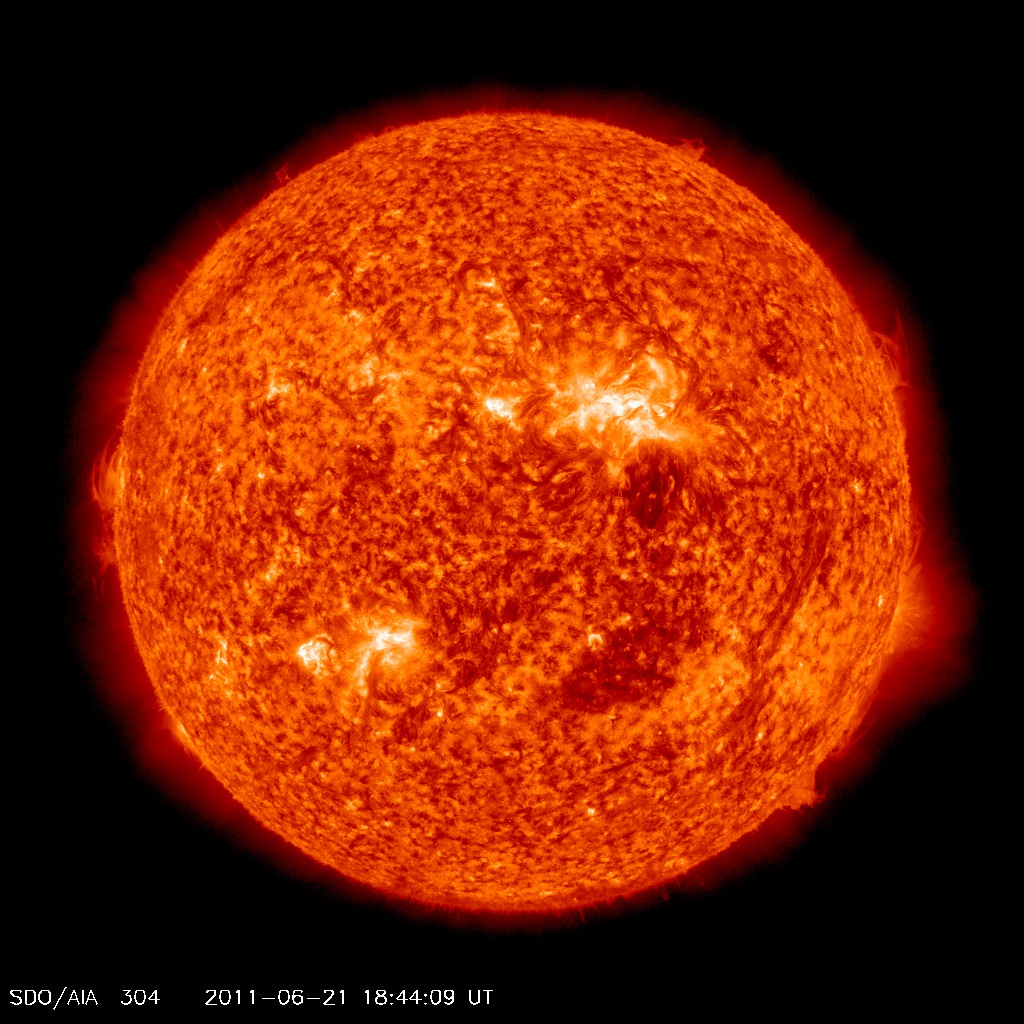
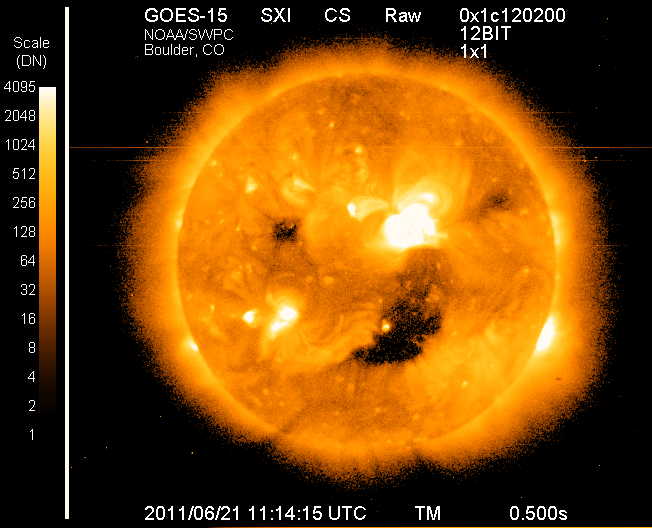
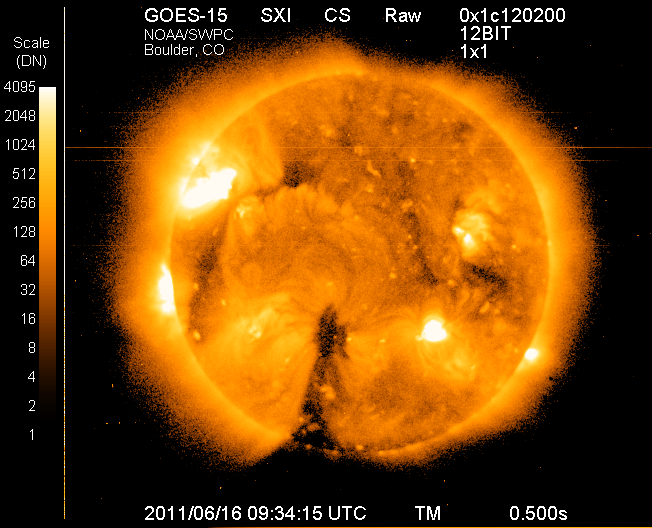
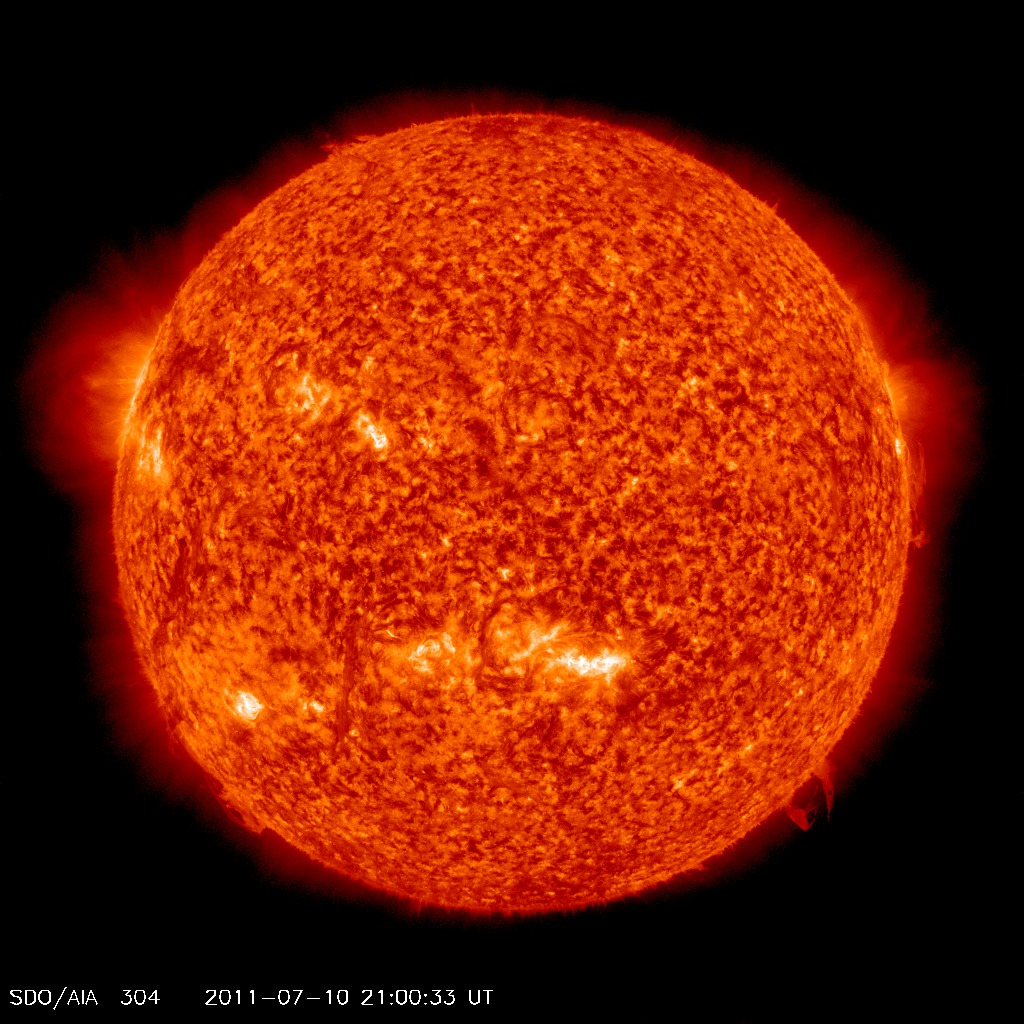
Magnetic fields above sunspot complex 1236 erupted during the early hours of June 21st, producing a C7-class solar flare and a full-halo CME. The expanding cloud appears to be heading almost directly toward
The magnetic field of sunspot 1236 harbors energy for M-class solar flares. NOAA forecasters estimate a 25% chance of such an eruption during the next 24 hrs.
On June 7th at 0641 UT, magnetic fields above sunspot complex 1226-1227 became unstable and erupted. The resulting blast produced an M2-class solar flare, an S1-class radiation storm, and an unbelievable movie:Much of the plasma thrown up by the blast simply fell
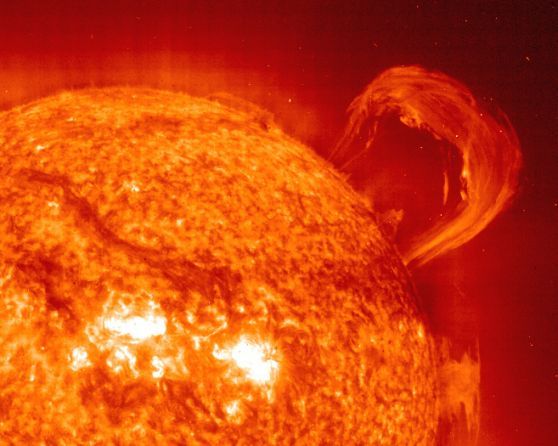
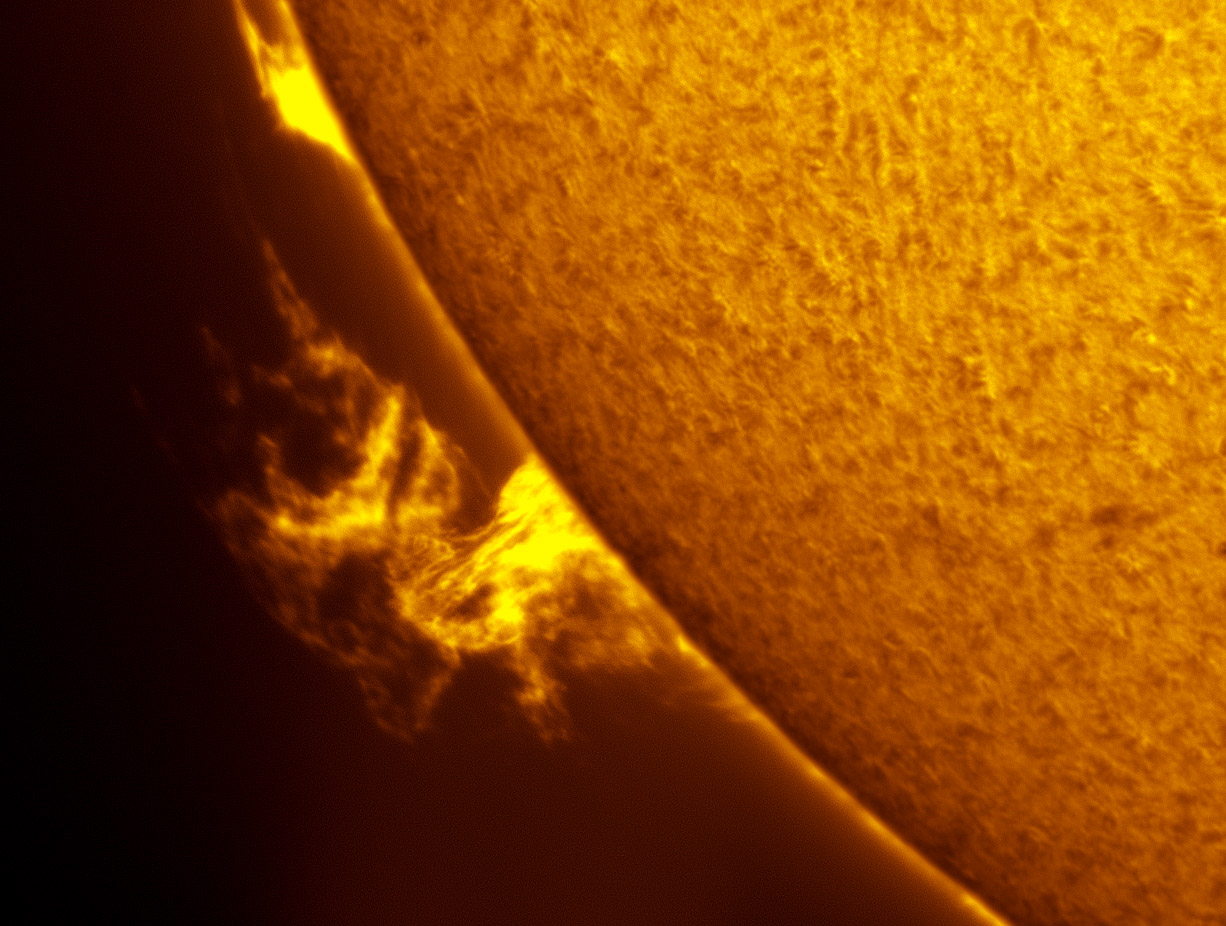
Amateur astronomers around the world are reporting strong activity on the limb of the sun. The prominences on June 4th were gigantic. Prominences are clouds of hot plasma
A sharp gust of solar wind hit Earth's magnetic field at approximately 20:30 UTC on June 4, 2011. High-latitude sky watchers in both hemispheres should be alert for auroras. Solar windspeed: 495.9 km/secdensity: 2.6 protons/cm3 Planetary K-indexNow: Kp= 5…
The quiet sun is waking up. New sunspot 1226 emerging over the sun’s southeastern limb is crackling with strong C-class solar flares. So far none of the blasts has been geoeffective, but this could change in the days ahead as the active region turns toward
Earth is exiting a solar wind stream that has been stirring up geomagnetic storms around Earth’s poles since April 29th. Over the past few nights, observers have seen auroras over the South Pole, Germany, Wisconsin andMichigan. The chances for more auroras are