• Subsiding geomagnetic storm

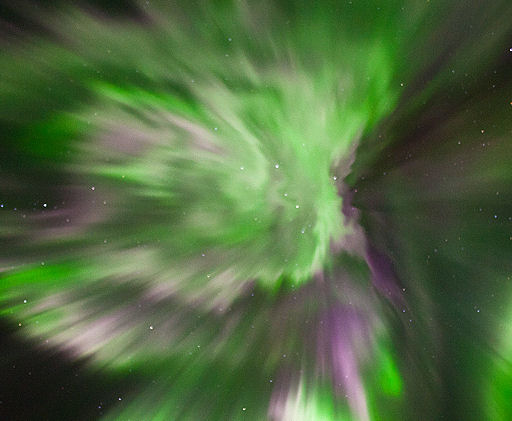
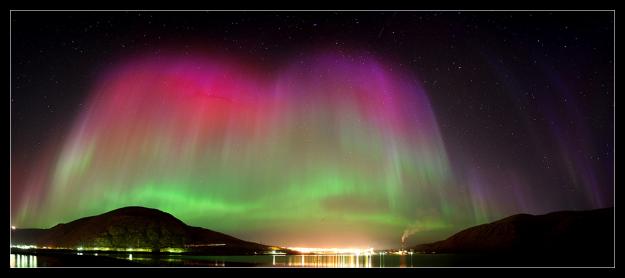
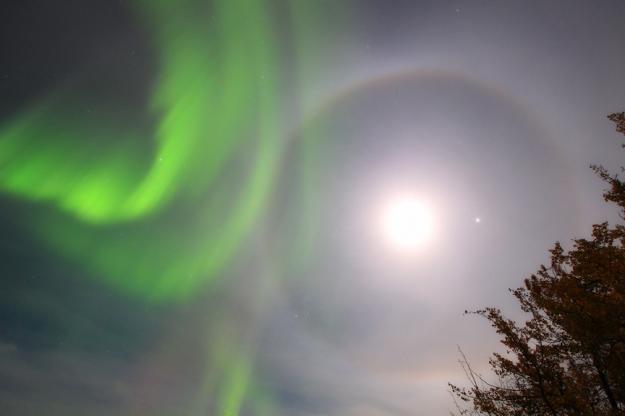
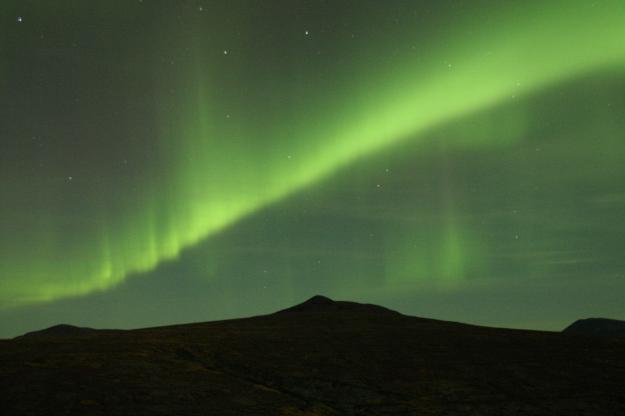
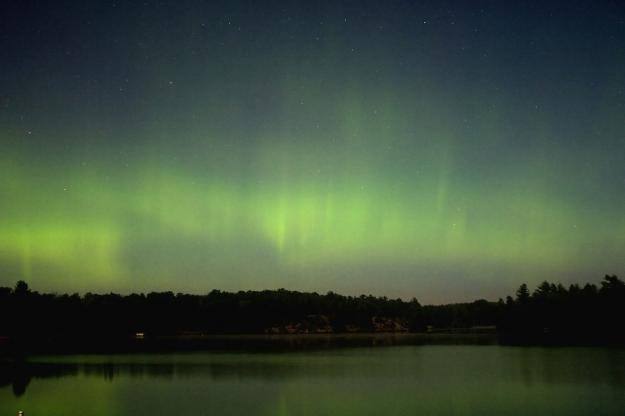
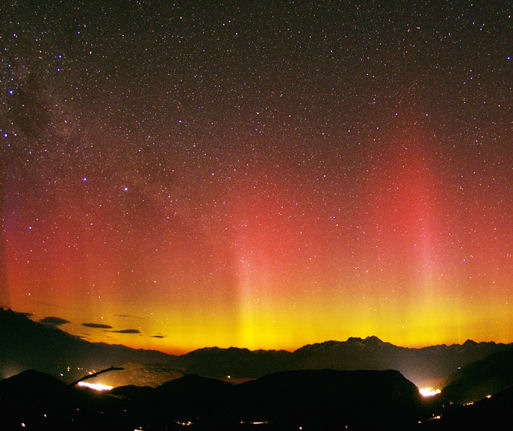
    The intense geomagnetic storm of Oct. 24-25 (described below) has subsided and US skies are returning to normal. If you missed the show, don’t worry. The Northern Lights will be back. For much of the past few years, the sun has been in a quiet state; but solar activity
  • Another level M-Class flare

    Another low level M-Class flare, this time raching M1.3 took place at 13:00 UTC Friday morning. The source of this flare was Sunspot 1319 which is approaching the western limb.Space Weather Prediction Center has just released a new page and tool to help predict

  • Minor geomagnetic storming underway

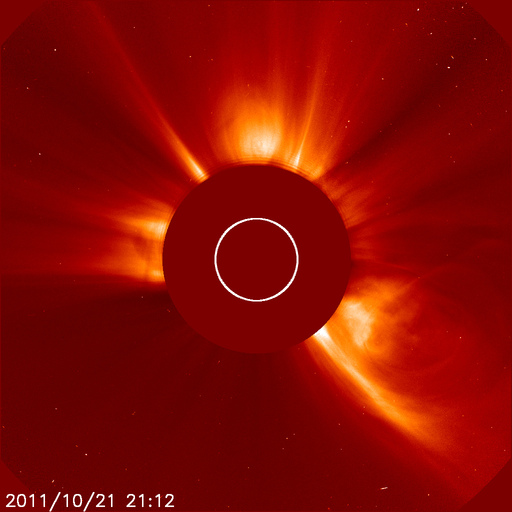
    Minor geomagnetic storming (G1 on the Geomagnetic Storm Scale) is underway following the arrival at Earth of 1 or more Coronal Mass Ejections that erupted from the Sun late last week and into the weekend.  Activity is not expected to strengthen much beyond current

  • Aurora reverberations

    A CME hit Earth’s magnetic field on Sept. 26th, sparking one of the strongest magnetic storms in years. At the peak of the Kp=8 disturbance, auroras were sighted around both poles and more than half a dozen US states. Magnetic reverberations continued for more than 48

  • Severe geomagnetic storm subsiding

    A severe geomagnetic storm (Kp=7 to 8) that began yesterday when a CME hit Earth's magnetic field is subsiding.At the peak of the disturbance, auroras were sighted around both poles and in more than six US states including Michigan, New York, South Dakota, Maine, Ma

  • Subsiding geomagnetic storm

    A coronal mass ejection (CME) hit Earth’s magnetic field on Sept 17th, sparking a moderate geomagnetic storm and auroras around the Arctic Circle. The view from Siberia was exquisite:The storm is subsiding now. Nevertheless, high-latitude sky watchers should remain

  • Geomagnetic storm in progress

    As predicted by analysts at the Goddard Space Weather Lab, a coronal mass ejection (CME) hit Earth's magnetic field at ~03:30 UT on Sept 17th. The impact sparked a moderate geomagnetic storm (in progress) and auroras around the Arctic Circle. High-latitude sky watch

  • Incoming coronal mass ejection

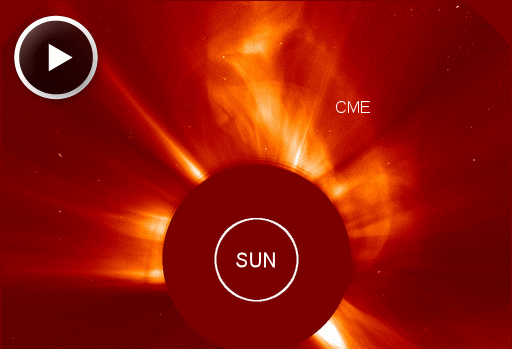
    As predicted by analysts at the Goddard Space Weather Lab, a coronal mass ejection (CME) hit Earth’s magnetic field at ~03:30 UT on Sept 17th. The impact was not strong. Nevertheless, the arrival of the CME could spark geomagnetic activity around the Arctic Circle.

  • Geomagnetic storm continues

    New sunspot AR1295 is emerging over the sun’s northeastern limb and crackling with solar flares. The strongest so far, a C9.9-category blast, did something remarkable. Click on the arrow to watch an extreme ultraviolet movie from NASA’s Solar Dynamics

  • Geomagnetic storm subsiding, expecting more CMEs

    The first of several CMEs en route to Earth struck our planet’s magnetic field on Sept. 9th around 1130UT. The impact sparked a strong (Kp=7) geomagnetic storm, which is now subsiding. Last night Northern Lights were spotted in the United States as far south