
Transformative recovery reframes rebuilding as long-term disaster risk reduction
Rebuilding quickly after a natural disaster can restore the same exposures and inequities that contributed to earlier losses. A Comment published in Nature Reviews Earth & Environment argues that recovery should instead become a long-term process linking reconstruction with adaptation, preparedness, equity and resilience so that rebuilding changes the conditions shaping future disasters rather than simply recreating them.
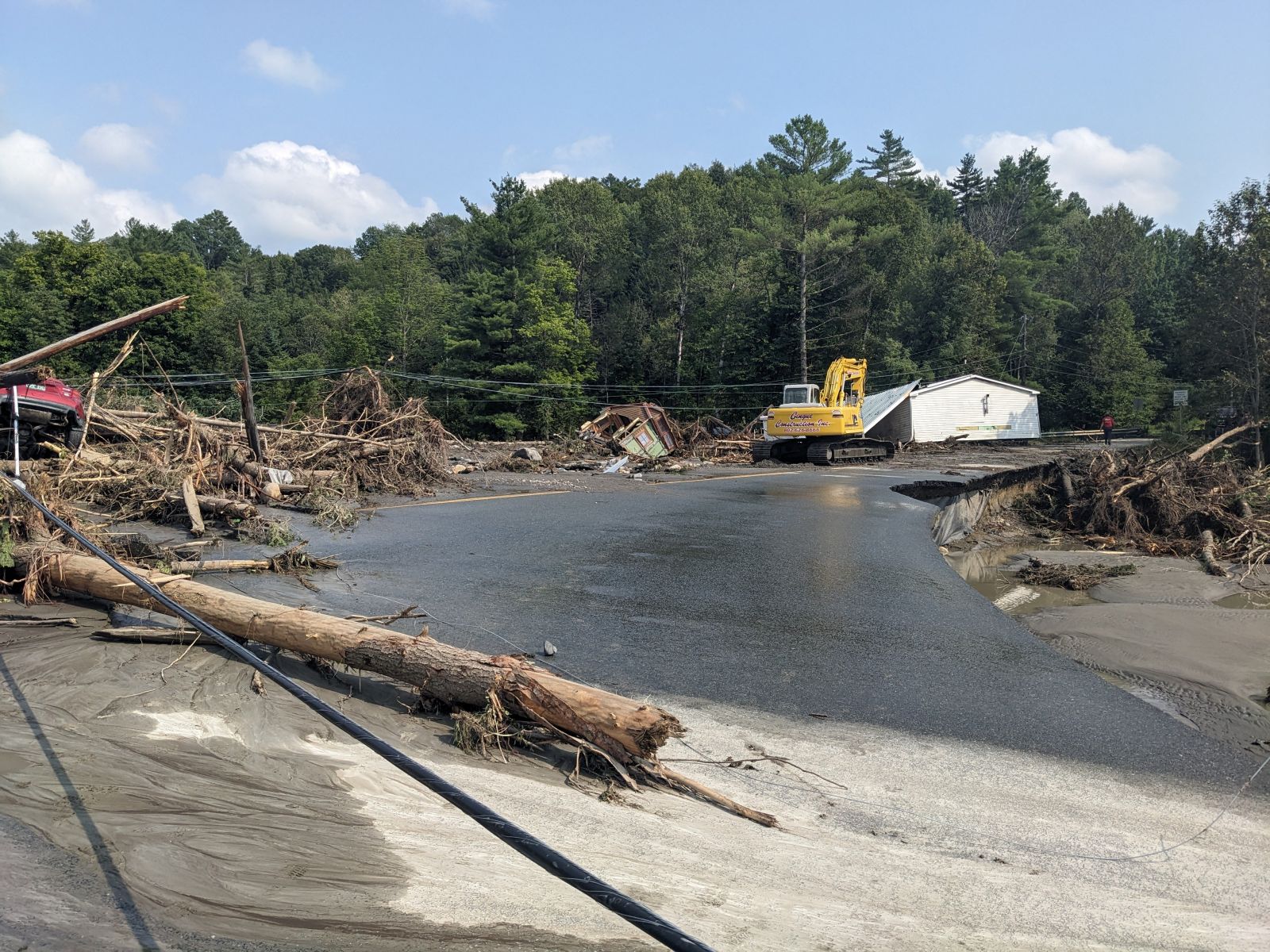
Flood damage in Lyndon, Vermont, after the July 30, 2024 extreme rainfall event, illustrating the reconstruction challenges facing affected communities. Credit: NWS Burlington
Wong-Parodi and colleagues describe the alternative as transformative recovery. Their framework places transformation, adaptation, recovery, absorption and preparedness within a connected process, with decisions made after one disaster affecting the exposure and resilience that communities carry into the next.
The distinction matters because restoring buildings, services and infrastructure does not by itself establish that disaster risk has been reduced. Recovery can reproduce settlement patterns, institutional constraints and social vulnerabilities that existed before an event. The authors argue that recovery should therefore be assessed partly by whether future exposure and cumulative risk decline, not only by how quickly damaged systems return to operation.
“Recovery systems must aim to reduce future risk, centre equity, and integrate physical, social, economic, and environmental resilience.”
Wong-Parodi et al. (2026)
The concept develops an established principle in disaster-risk management rather than replacing it. The United Nations Office for Disaster Risk Reduction defines “Build Back Better” as using recovery, rehabilitation and reconstruction to increase resilience by integrating disaster-risk-reduction measures into restored physical infrastructure, societal systems, livelihoods, economies and the environment.
Transformative recovery extends that logic by placing longer-term changes in systems, institutions, knowledge, technology and empowerment inside the recovery process itself. The Nature framework contrasts that pathway with one that primarily reinstates pre-disaster conditions.
What does “transformative recovery” mean in this framework?
The proposed pathway integrates transformation, adaptation, recovery, absorption and preparedness. Its intended outcomes include greater physical, social, economic and environmental resilience, less disaster exposure, lower cumulative risk and more equitable distribution of resources. The framework places climate change and equity above both the transformative and traditional recovery pathways.

Evidence cited by Wong-Parodi and colleagues shows why physical reconstruction and long-term recovery cannot always be treated as the same outcome. One study examined residents of Shichigahama Town in Miyagi Prefecture five years after the March 11, 2011 Great East Japan Earthquake and tsunami, comparing psychosocial conditions across four forms of reconstructed housing.
Suzuki et al. analyzed 1 071 adults whose homes had been destroyed by the tsunami. Of those participants, 361 rebuilt on the same site, 118 moved into disaster-recovery public condominiums, 289 relocated collectively to higher ground with neighbors and 303 moved privately to other areas.
Residents of disaster-recovery public condominiums recorded significantly poorer scores on the Lubben Social Network Scale-6, which measures social networks, and significantly higher scores on the Center for Epidemiologic Studies Depression Scale. Both comparisons had p-values below 0.0001.
Scores on the Kessler Psychological Distress Scale and the Impact of Event Scale-Revised were also somewhat worse in the public-condominium group, with p-values of 0.0345 and 0.0281 respectively. The researchers set statistical significance at p < 0.01 because multiple comparisons were performed, so those two differences did not meet their prespecified threshold. Athens Insomnia Scale scores did not differ significantly among the four housing types.
How strong is the Japan evidence?
The study establishes an association rather than proof that housing type caused the psychosocial differences. It was a questionnaire-based cross-sectional observational survey conducted in November 2016. The researchers also identified possible confounding factors, including socio-economic circumstances that could influence both housing choice and mental-health outcomes.
The result is important because the reconstructed residences were not associated with identical social outcomes five years after the tsunami. Physical replacement of housing had occurred, but social interaction and depressive symptoms still differed across reconstruction arrangements.
| Evidence | What was examined | Main result | Important limitation |
|---|---|---|---|
| Nature Comment | Conceptual recovery framework | Recovery should integrate risk reduction, resilience, preparedness and equity over longer timescales | Not a controlled test of a defined recovery intervention |
| Japan | 1 071 adults across four reconstructed residence types | Public-condominium residents had poorer social-network and depression scores | Cross-sectional observational study; causality cannot be established |
| Bangladesh | 863 household questionnaires and 12 focus groups | Repeated coping with floods and erosion coincided with long-term economic losses and incomplete recovery | Retrospective household histories introduce recall uncertainty |
A second study cited in the Nature Comment examined communities exposed to recurrent flooding and riverbank erosion along a 30 km (18.6 mile) reach of the Jamuna River in northern Bangladesh. Ferdous et al. studied an area of about 500 km² (193 mi²) across parts of Gaibandha and Jamalpur districts and separated it into three socio-hydrological spaces with different flood-protection and riverbank-erosion conditions.
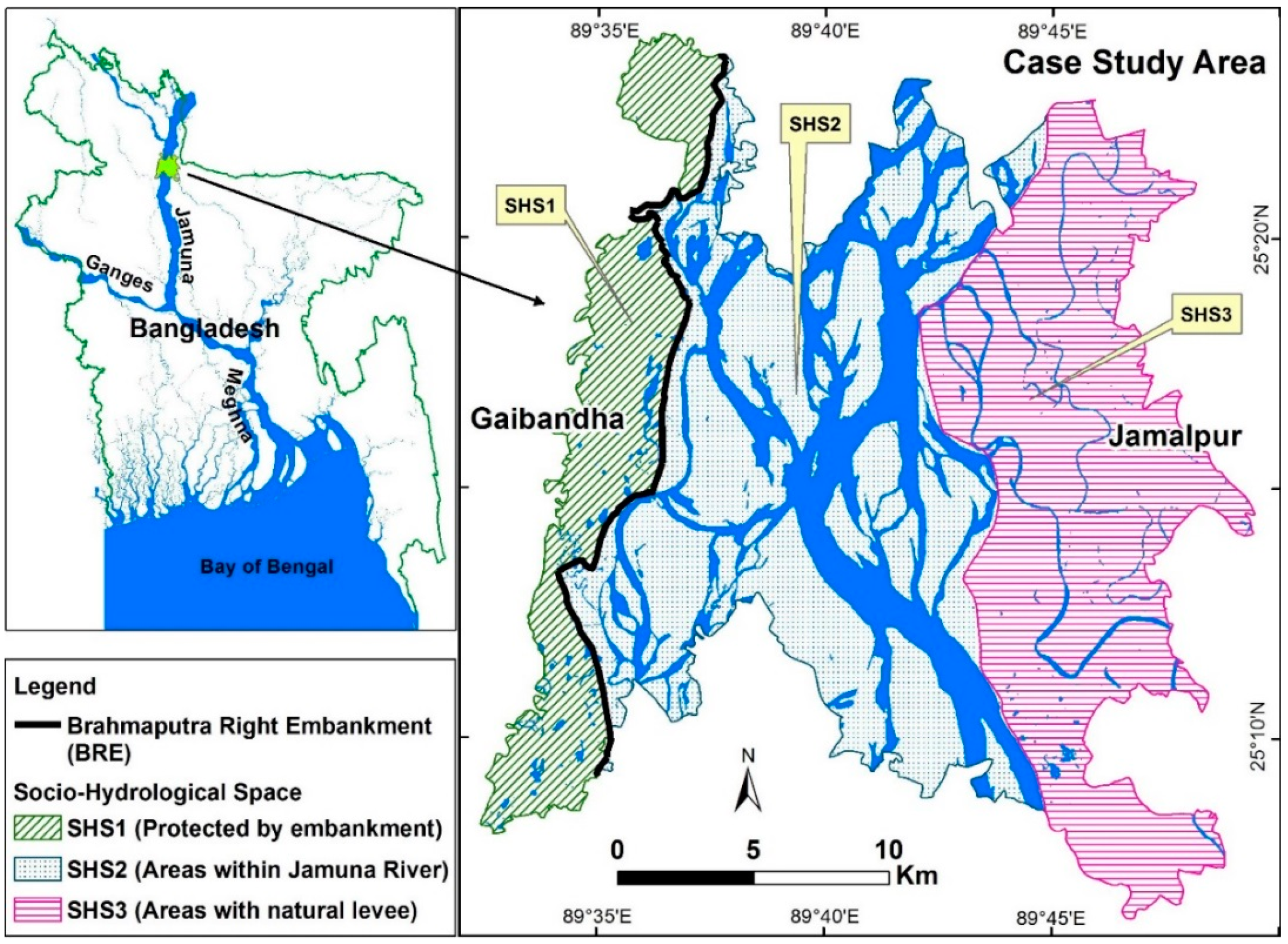
The researchers collected 863 household questionnaires during the dry seasons of 2015 and 2016 and conducted 12 focus-group discussions to validate and contextualize the survey information. Respondents supplied data on flood experience, erosion, income, expenditure, assets, migration and household adjustments, with parts of their reconstructed household histories extending back to 1960.
That retrospective design introduces uncertainty. Participants recalled recent floods more confidently than events before the 1980s. The research team used other family members, historical reference points, government information and published studies to check the reliability of reconstructed flood histories.
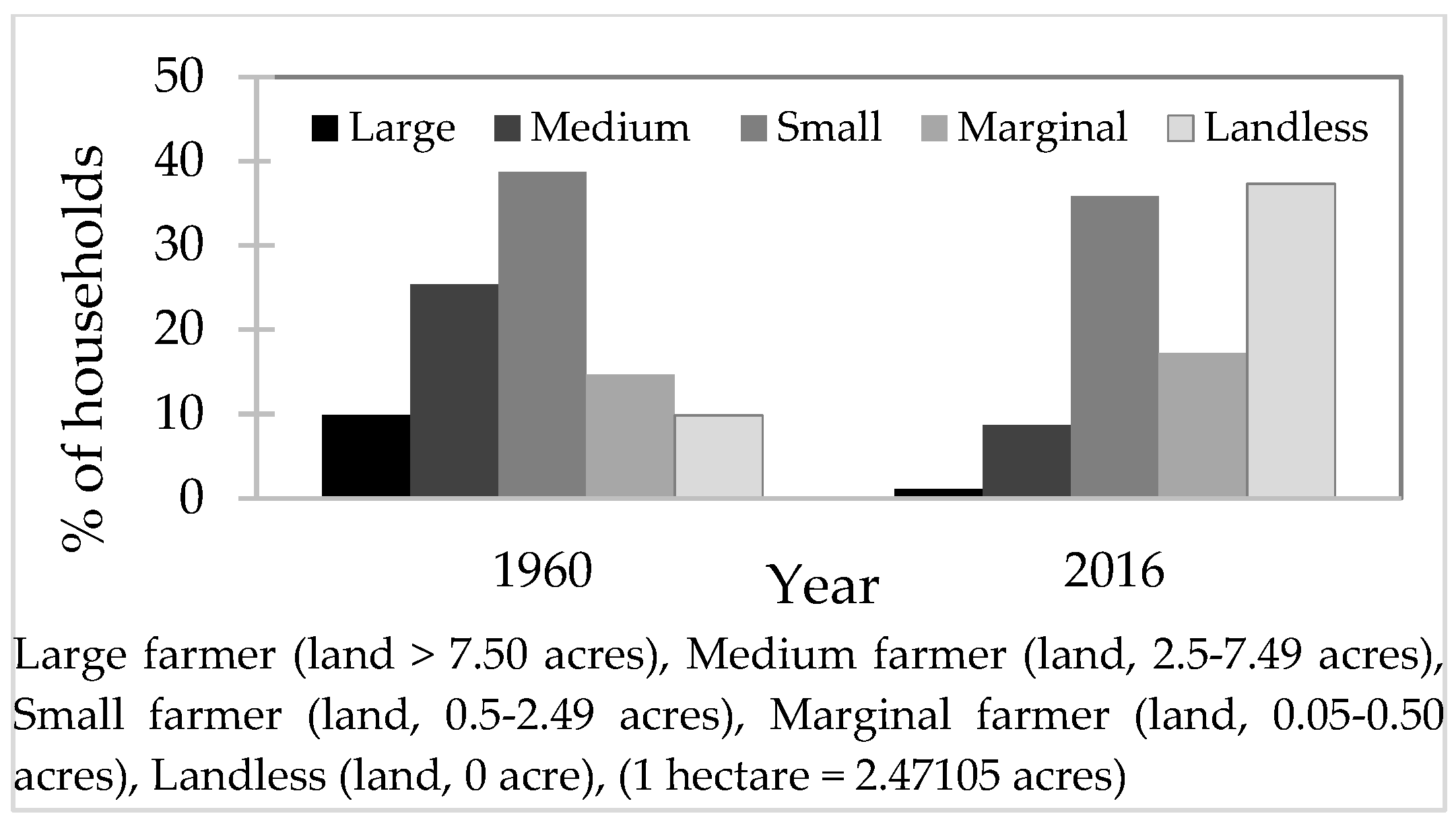
Permanent relocation was strongly associated with riverbank erosion. About 49% of surveyed households reported relocating during 1962–2016, and more than 95% of households that relocated identified riverbank erosion as the main reason. More than 90% moved within 5 km (3.1 miles) of their previous location.
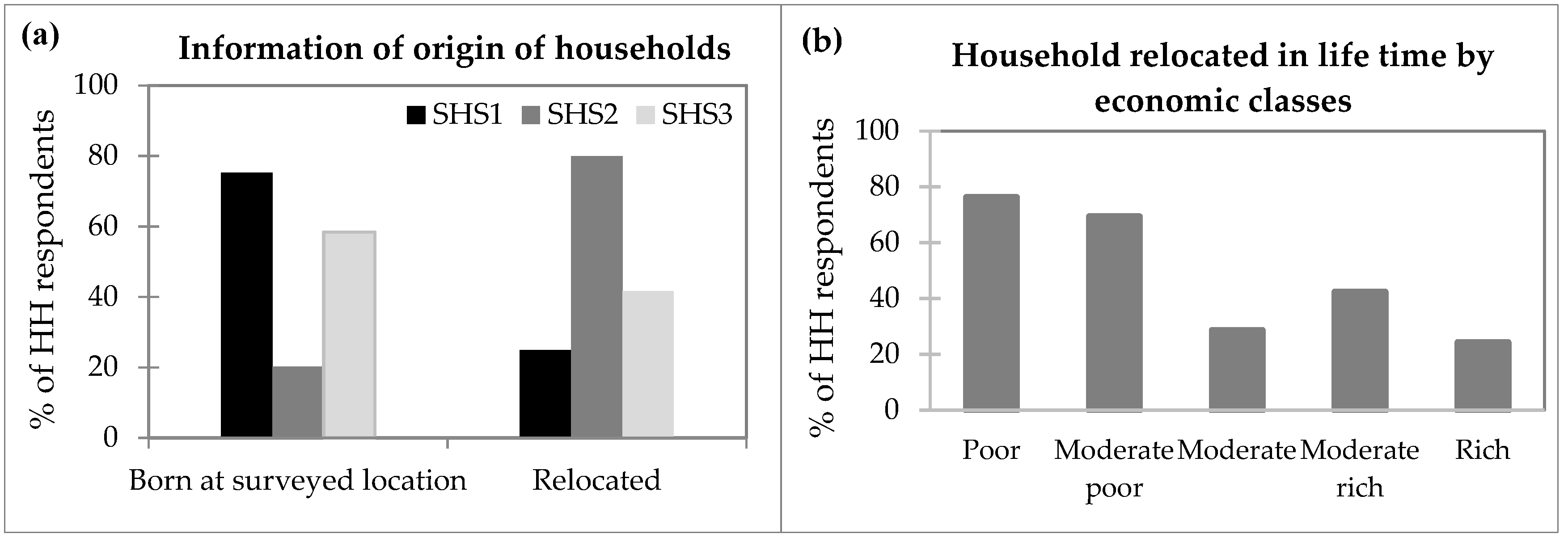
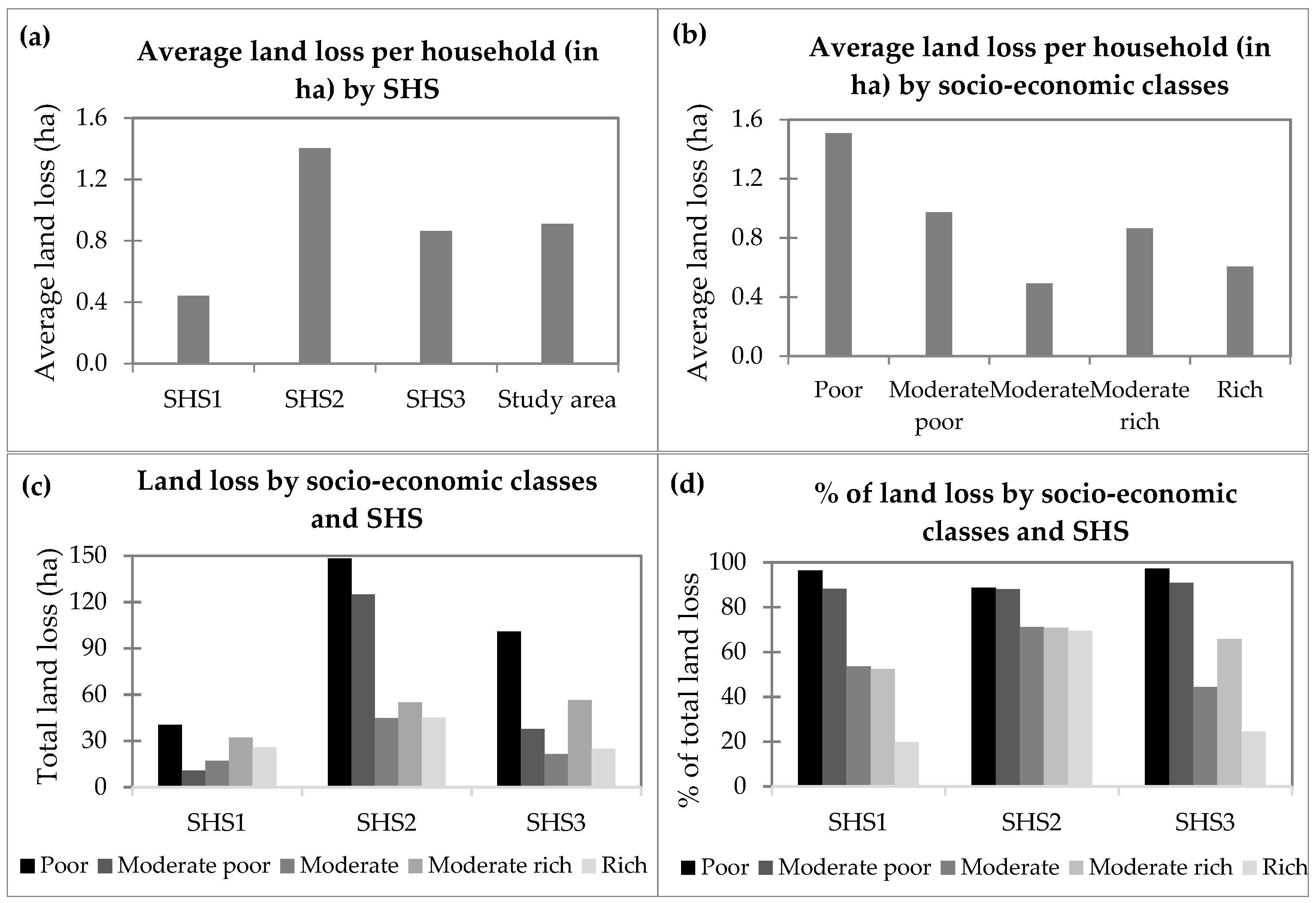
Land losses accumulated over decades. On average, surveyed households lost 0.9 ha (2.2 acres) between 1962 and 2016. Households in SHS2, the river-island zone with the highest exposure to erosion, lost an average of 1.4 ha (3.5 acres). Poor households averaged losses of 1.5 ha (3.7 acres).
About 10% of households lost all of their land during the period examined, while 20% lost more than 80% of it. The differences in land loss between the socio-hydrological spaces and economic groups were statistically significant at the study’s α = 0.05 level.
Income losses added another layer of pressure. About 98% of households reported a decrease in income during floods, and respondents said severe floods cost them about 89% of monthly income across the study area. Seventy-one percent reported increased monthly expenses during floods, with the average increase equivalent to about 62% of monthly income.
Those figures describe reported household experience rather than independently audited financial records. Ferdous et al. used the survey data to examine cumulative livelihood effects and explicitly noted that repeated flooding and erosion were not the only processes capable of contributing to poverty.
Keep reading
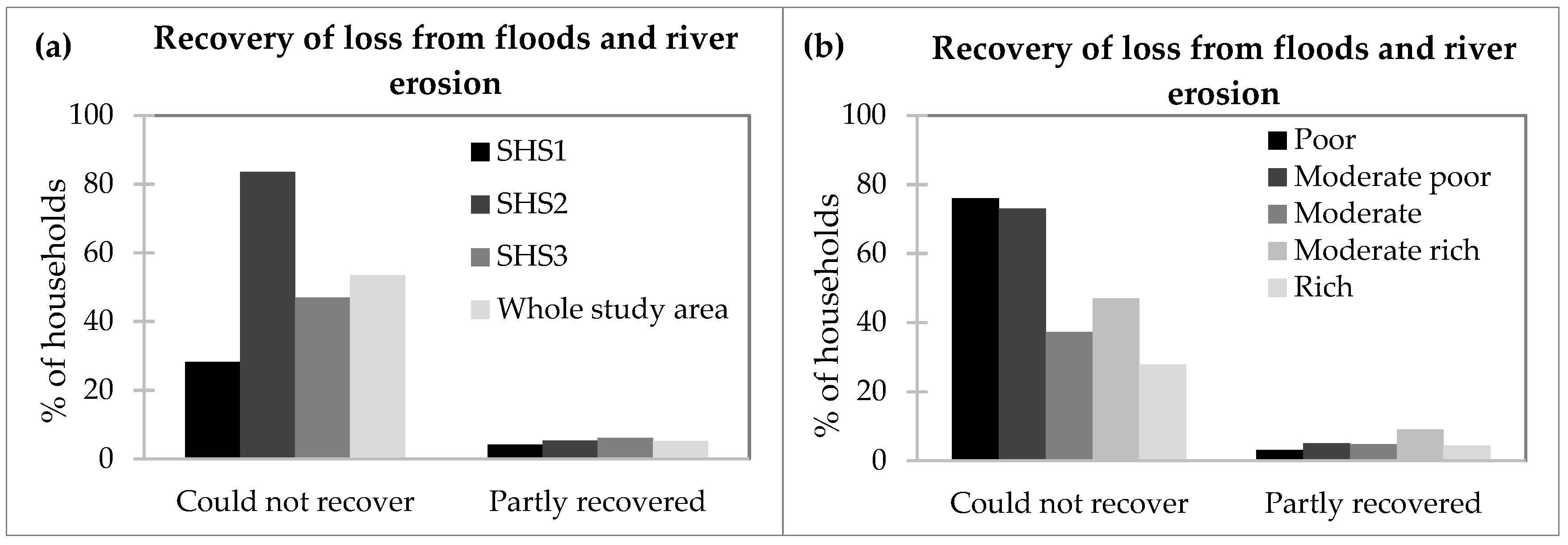
Recovery remained limited for many of the households. About 53% of respondents said they had not recovered at all from the combined losses associated with flooding and riverbank erosion. Only 5% reported partial recovery that remained insufficient to restore their previous position. In SHS2, more than 80% of households reported no recovery.
Ferdous et al. used long-term household outcomes to distinguish coping from adaptation. Coping can include measures that allow families to continue through repeated floods while their socio-economic position declines. Adaptation, under the study’s definition, means that households remain as well off as before or improve their capacity to manage future events.
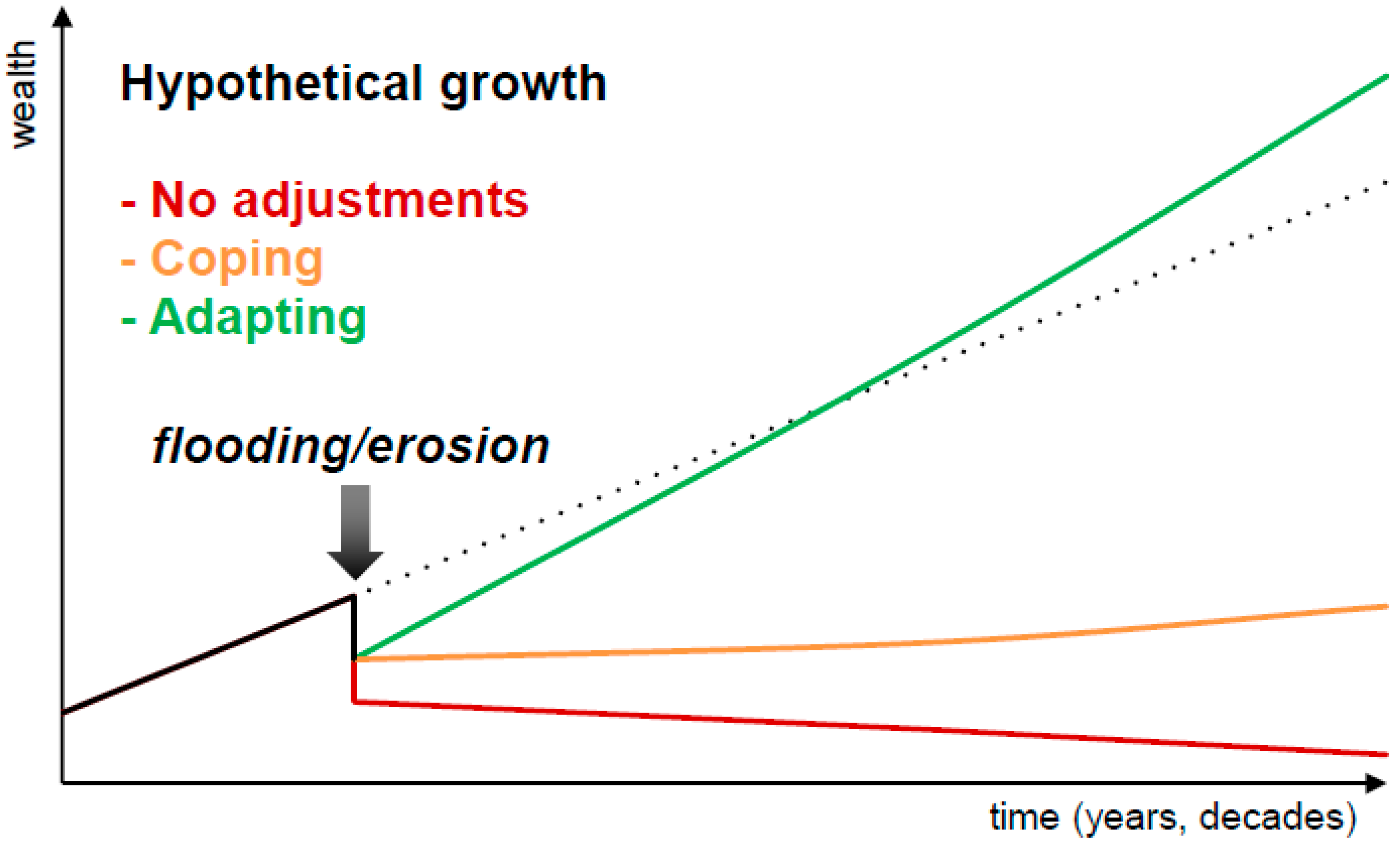
The researchers concluded that households in the study area were largely coping rather than adapting because the net result of repeated adjustments was a decline in socio-economic conditions. They also identified other possible contributors to impoverishment, including limited opportunities for alternative employment.
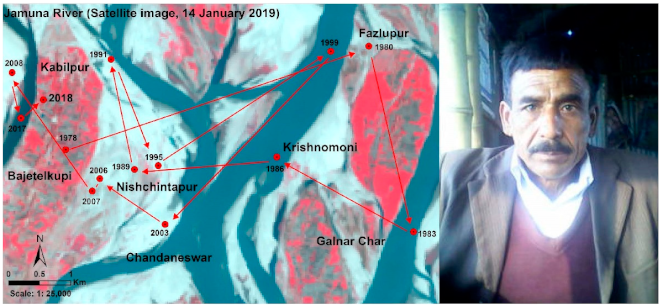
An individual case documented in the same study shows how those aggregate processes can unfold across decades. Abdul Baki Khan, a farmer living on a Jamuna River char, reported that his family had moved 13 times between 1978 and 2018 as channels shifted and land eroded. The authors identified his experience as typical in some respects for char residents, although the number of relocations was exceptional within their sample.

The Japan and Bangladesh studies address different hazards, populations and outcomes, and neither directly tests the transformative-recovery framework proposed in 2026. Their value in the Nature Comment is narrower: each shows how an apparently completed stage of recovery can coexist with longer-term vulnerabilities.
In Japan, reconstructed housing arrangements remained associated with differences in social interaction and depressive symptoms five years after the tsunami. Along the Jamuna River, repeated adjustments allowed households to continue living with floods and erosion while many reported cumulative losses and incomplete economic recovery.
Wong-Parodi and colleagues therefore argue against treating recovery as a short interval between disaster and restoration. Their framework spans decades and links reconstruction with future exposure, institutional change, adaptation and preparedness.
Equity occupies a central position in that argument because the ability to rebuild, relocate, absorb losses or invest in future protection is unevenly distributed. Infrastructure can be restored while the people most exposed to the next hazard remain without the resources needed to reduce their vulnerability.
What the framework does not prove
The Nature publication is a Comment rather than a controlled evaluation of a defined recovery program. It does not report a universal effect size, a randomized intervention or a quantitative threshold at which recovery becomes “transformative.” The framework organizes existing research and proposes how recovery systems should be evaluated over longer periods.
The unresolved challenge is measurement. Physical reconstruction can be counted in homes, roads and services restored, but changes in exposure, social resilience, institutional capacity and access to resources occur on different timescales and cannot be reduced to a single rebuilding statistic.
Testing transformative recovery therefore requires long-term evidence that follows communities beyond the point at which reconstruction projects officially close. The central question is not only whether what was lost has been replaced, but whether the conditions carried into the next disaster have actually changed.
References:
1 Wong-Parodi, G., Ardoin, N. M., Best, K., Herbert, N., Ng, M., & Reilly, A. C. (2026). Achieving transformative recovery following natural disasters. Nature Reviews Earth & Environment. DOI: 10.1038/s43017-026-00863-2
2 Suzuki, T., Akaishi, T., Nemoto, H., Utsumi, Y., Seto, M., Usukura, H., Kunii, Y., Sugawara, Y., Nakaya, N., Nakamura, T., Tsuchiya, N., Narita, A., Kogure, M., Hozawa, A., Tsuji, I., Ishii, T., & Tomita, H. (2021). Impact of type of reconstructed residence on social participation and mental health of population displaced by disasters. Scientific Reports, 11, 21465. DOI: 10.1038/s41598-021-00913-3
3 Ferdous, M. R., Wesselink, A., Brandimarte, L., Slager, K., Zwarteveen, M., & Di Baldassarre, G. (2019). The costs of living with floods in the Jamuna floodplain in Bangladesh. Water, 11(6), 1238. DOI: 10.3390/w11061238
4 Build back better – United Nations Office for Disaster Risk Reduction – Sendai Framework Terminology on Disaster Risk Reduction, 2017
5 Recovery – United Nations Office for Disaster Risk Reduction – Sendai Framework Terminology on Disaster Risk Reduction, 2017
6 Reconstruction – United Nations Office for Disaster Risk Reduction – Sendai Framework Terminology on Disaster Risk Reduction, 2017

Rishav Kothari is Editor-in-Chief of The Watchers, where he runs the newsroom and covers earthquakes, volcanoes, severe weather and space weather.
More reporting
- Avalanche forecasts are getting more local, but snow stability remains a scale problem
- Warming slows deep bedrock water renewal beneath Idaho headwaters
- A 30-year-old scientist monitoring Mount St. Helens radioed “Vancouver! Vancouver! This is it!” before the 1980 lateral blast overran his post
- A 1950 blizzard was so bad that Michigan beat Ohio State with just 27 yards of total offense
