Very bright fireball over downtown Beijing, China
A very bright fireball was observed in the skies over downtown Beijing, China at 11:40 UTC (19:40 local time) on Monday, January 29, 2024, creating a spectacular sight for residents and visitors.

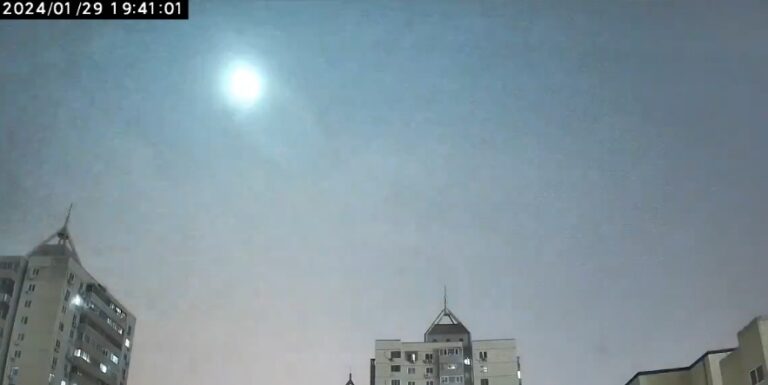
A very bright fireball was observed in the skies over downtown Beijing, China at 11:40 UTC (19:40 local time) on Monday, January 29, 2024, creating a spectacular sight for residents and visitors.
A very bright fireball streaked through the night sky over Spain and Portugal at 20:03 UTC on January 21, 2024. This event took place some 19 hours after asteroid 2024 BX1 impacted Earth’s atmosphere over Berlin, Germany, as the 8th asteroid on record to be discovered before impacting Earth.

A small asteroid designated 2024 BX1 (temporary designation Sar2736) impacted Earth’s atmosphere near Berlin, Germany at 01:32 UTC on January 21, 2024. This asteroid was discovered about 3 hours before impact, making it the 8th asteroid to be discovered before impacting Earth.

A very bright meteor was seen streaking through the early morning sky over France and Spain at 06:46 UTC on January 16, 2024.

A bright daylight meteor was recorded over Japan’ Kanto Region at 06:55 JST on January 15, 2024. The event was accompanied by a sonic boom.

The XRISM (X-ray Imaging and Spectroscopy Mission), a Japan-led observatory with collaboration from NASA and ESA, has released its first look at the detailed X-ray universe, showcasing unprecedented data collection capabilities ahead of its full science operations later this year.

Recent research led by Professor Patrick Irwin from the University of Oxford has unveiled that Neptune and Uranus, traditionally thought to be distinctly blue and green respectively, are in fact much closer in color – both portraying shades of greenish blue.

A team of researchers utilizing data provided by NASA’s InSight mission has confirmed two new seismic events caused by meteoroid impacts on Mars, bringing the total number to 8. The study, employing a combination of seismic data and orbital imagery, has successfully pinpointed fresh impact craters, enhancing our understanding of Martian surface and atmospheric interactions.
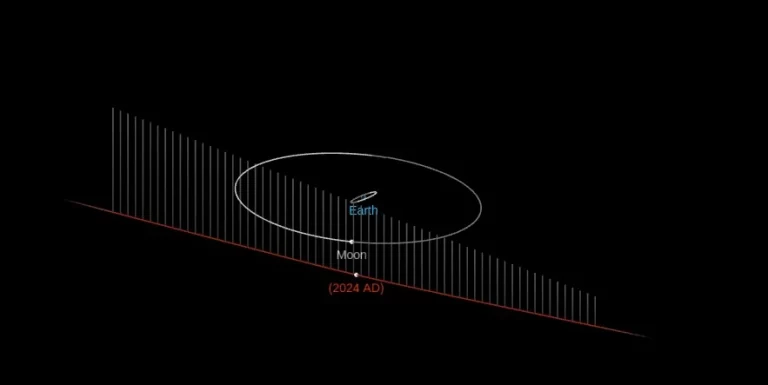
A newly-discovered asteroid designated 2024 AD will fly past Earth at a distance of 0.6 LD / 0.00162 AU (242 647 km / 150 791 miles) from the center of our planet at 18:15 UTC on January 4, 2024.
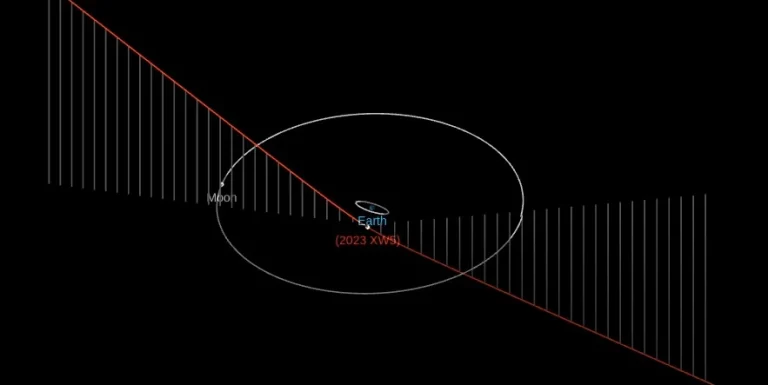
A newly-discovered asteroid designated 2023 XW5 flew past Earth at 0.19 LD / 0.00050 AU (74 189 km / 46 099 miles) from the center of our planet at 02:10 UTC on December 9, 2023.
