Big comet makes close approach to the Sun
A new comet made what appears its final approach towards the Sun from December 10 – 12, 2023.


A new comet made what appears its final approach towards the Sun from December 10 – 12, 2023.
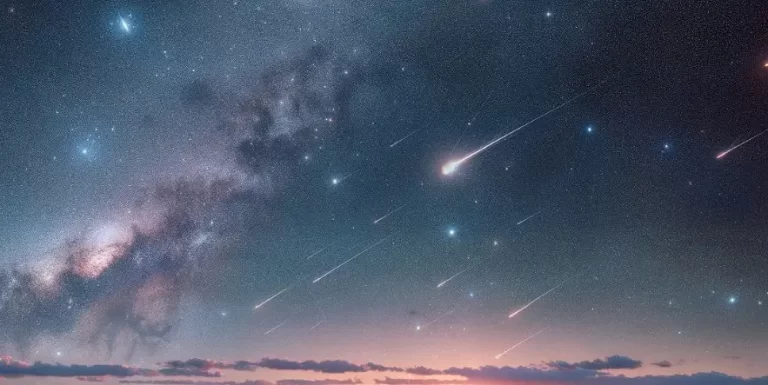
Meteor watchers are gearing up for the birth of a new meteor shower, the λ-Sculptorids, on December 12, 2023, with prime viewing from Eastern Australia, New Zealand, and Indonesia.

An extremely rare celestial event will unfold at the beginning of next week as the main belt asteroid Leona transits in front of Betelgeuse, the famed red supergiant in the Orion constellation. This rare astronomical occurrence, observable from regions stretching from South Florida to Italy and Greece, will offer a unique spectacle where the luminous Betelgeuse may temporarily dim or even vanish from the night sky.

A newly-discovered asteroid designated 2023 XJ1 will fly past Earth at a distance of 0.27 LD / 0.00066 AU (98 242 km / 61 045 miles) from the center of our planet at 18:57 UTC on December 6, 2023.
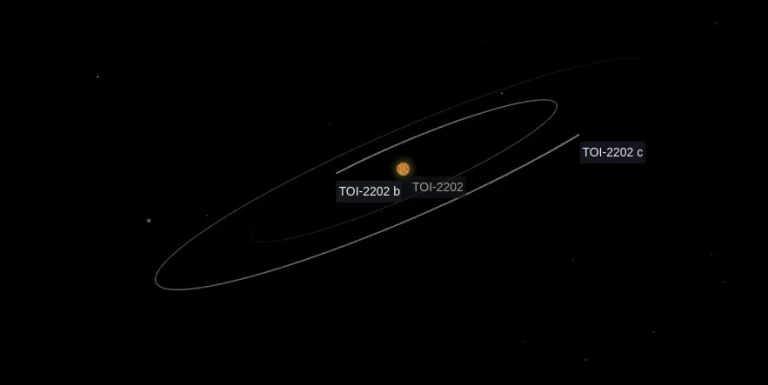
A new study spearheaded by Yale astronomer Malena Rice and published in The Astronomical Journal has made a significant discovery about the orbital tilt of planets in pristine solar systems. Contrary to previous assumptions that slanted orbits result from cosmic disturbances, this research suggests that even in stable solar systems, planets can exhibit an orbital tilt of up to 20 degrees.
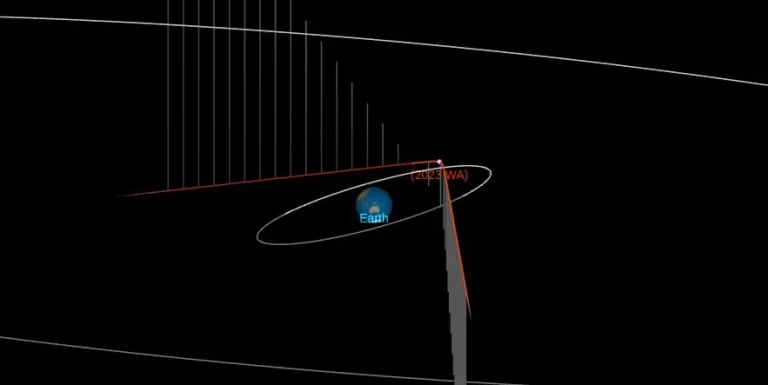
A newly-discovered asteroid designated 2023 WA will fly past Earth at a distance of just 0.071 LD / 0.00018 AU (27 379 km / 17 012 miles) from the center of our planet at 03:41 UTC on November 17, 2023.
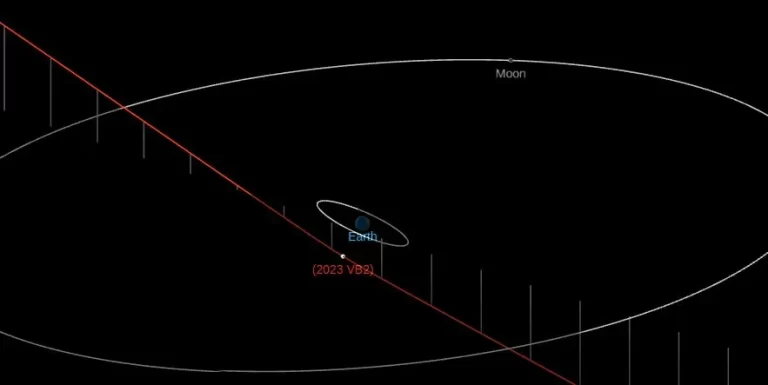
A newly-discovered asteroid designated 2023 VB2 flew past Earth at a distance of 0.085 LD / 0.00022 AU (32 769 km / 20 362 miles) from the center of our planet at 07:00 UTC on November 7, 2023. This is one of 3 asteroids to fly past Earth within 1 lunar distance today — the others are 2023 VS at 01:18 UTC and 2023 VD2 at 12:53 UTC.
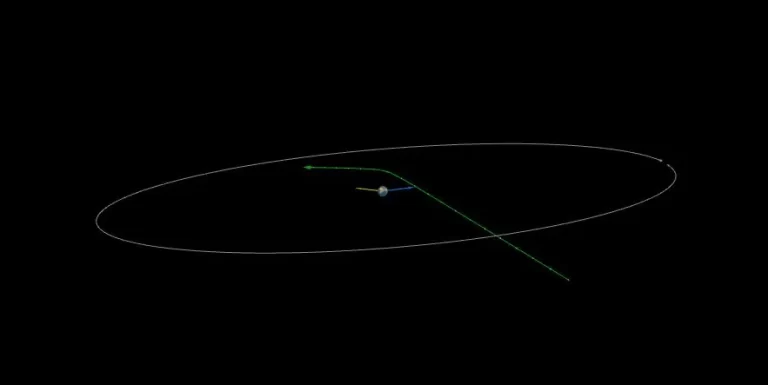
A newly-discovered asteroid designated 2023 VA flew past Earth at a distance of 0.07 LD / 0.00018 AU (26 760 km / 16 628 miles) from the center of our planet at 05:37 UTC on November 2, 2023.
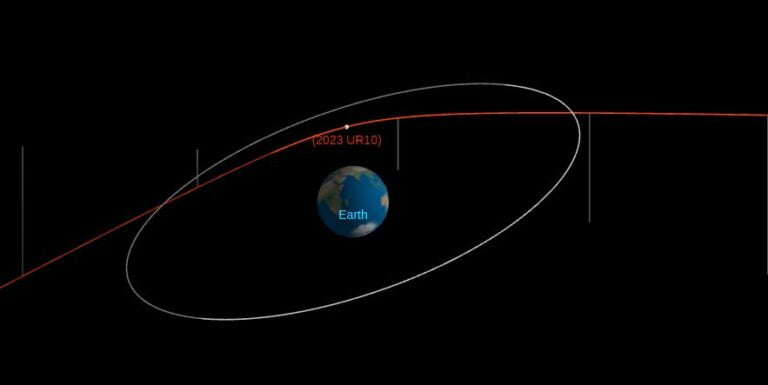
A newly-discovered asteroid designated 2023 UR10 flew past Earth at just 0.036 LD / 0.00009 AU (13 951 km / 8 669 miles) from the center of our planet at 04:27 UTC on October 20, 2023. This is about 7 580 km (4 709 miles) from the surface.

In December 2021, astronomers observed unprecedented fluctuations in the light of a star identified as ASASSN-21qj, located 1 800 light years away from Earth. Now, a study published in Nature suggests these fluctuations were the result of a colossal collision between two giant planets, potentially providing a rare opportunity to witness the birth of a new planet.
