Large fireball over Brazil captured by webcams and GOES-East satellite
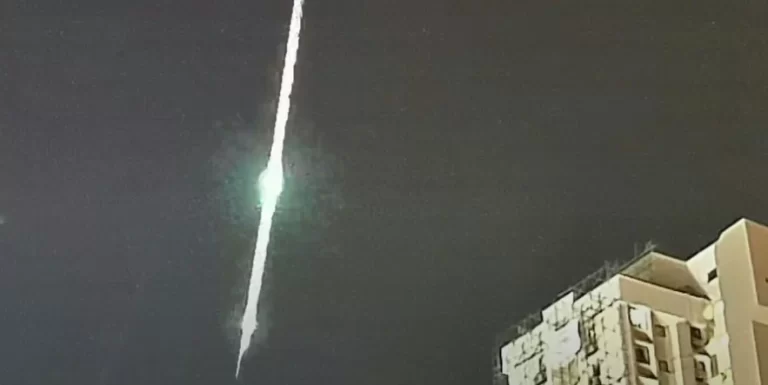
A large fireball was recorded over Recife, Brazil at 01:49 UTC on February 28, 2024 (22:59 LT, February 27). The event was captured by webcams and NOAA’s GOES-East satellite.

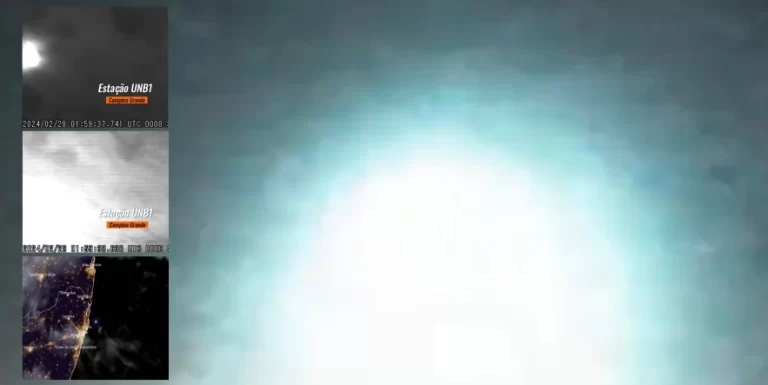
A large fireball was recorded over Recife, Brazil at 01:49 UTC on February 28, 2024 (22:59 LT, February 27). The event was captured by webcams and NOAA’s GOES-East satellite.

The International Astronomical Union’s Minor Planet Center announced the discovery of three new moons, marking the first Uranian moon found in over 20 years and two additional satellites orbiting Neptune, one being the faintest moon ever detected by ground-based telescopes.

On February 2, NASA utilized the Deep Space Network’s Goldstone Solar System Radar to capture the first detailed images of asteroid 2008 OS7 during its close approach to Earth. The asteroid, measuring between 150 to 200 m (500 – 650 feet) wide, passed at a safe distance of approximately 2.9 million km (1.8 million miles), allowing scientists to refine its size, rotation, and orbital path, improving predictions of its future trajectories.

A bright fireball streaked through the night sky over Pennsylvania, U.S. at around 23:48 UTC on February 21, 2024. Hundreds of people reported the event despite significant cloud cover.

The European Space Agency’s (ESA) Earth observation satellite, ERS-2, is scheduled for atmospheric reentry on February 21, 2024. Launched in April 1995, ERS-2 has been instrumental in monitoring Earth’s surface and natural disasters for nearly 30 years.
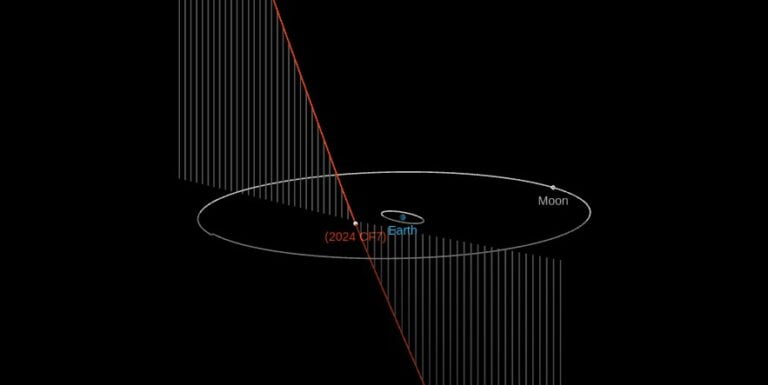
A newly-discovered asteroid designated 2024 CF7 will fly past Earth at a distance of 0.28 LD / 0.00071 AU (105 880 km / 65 791 miles) at 05:12 UTC on February 17, 2024.
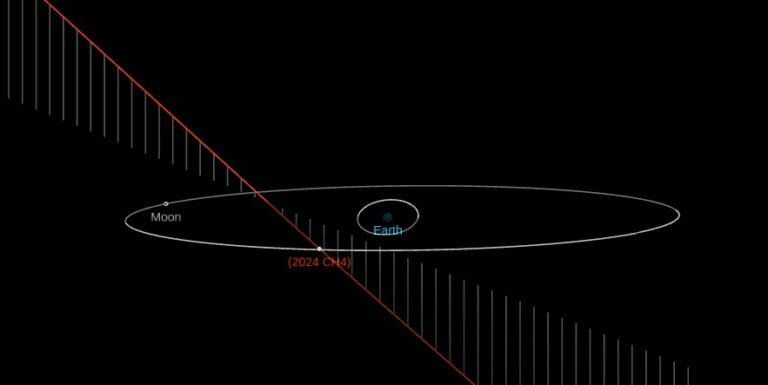
A newly-discovered asteroid designated 2024 CH4 flew past Earth at a distance of 0.28 LD / 0.0007 AU (109 004 km / 67 732 miles) at 06:10 UTC on February 11, 2024.
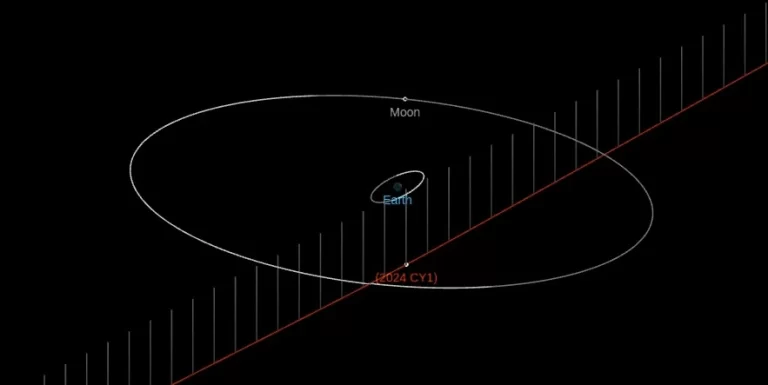
A newly-discovered asteroid designated 2024 CY1 flew past Earth at 07:24 UTC on February 12, 2024, at a distance of 0.31 LD / 0.00081 AU (121 148 km / 75 278 miles).

Initial investigations of meteorites from the strewn field of asteroid 2024 BX1, which entered the Earth’s atmosphere on January 21, 2024, near Ribbeck, northwest of Berlin, have identified them as rare aubrite achondrites. The findings were submitted to the Meteoritical Society’s Nomenclature Committee on February 2, 2024, for official examination.
A very bright fireball was recorded over Mumbai, India at 15:46 UTC (23:46 IST) on February 3, 2024.
