Bright green fireball over Spain, meteorites expected
A bright green fireball streaked through the night sky over Spain at 01:54 UTC on March 16, 2024. The event was seen as brighter than the full moon.


A bright green fireball streaked through the night sky over Spain at 01:54 UTC on March 16, 2024. The event was seen as brighter than the full moon.

Scientists at the 55th Lunar and Planetary Science Conference in The Woodlands, Texas, announced the discovery of a vast volcano and a potential glacier ice sheet in Mars’ Tharsis volcanic province, near the equator. The finding, based on images from spacecraft orbiting Mars since 1971, highlights a volcano provisionally named “Noctis” and suggests the presence of glacier ice beneath a volcanic deposit. This discovery opens new avenues for studying Mars’ geological evolution and future exploration.
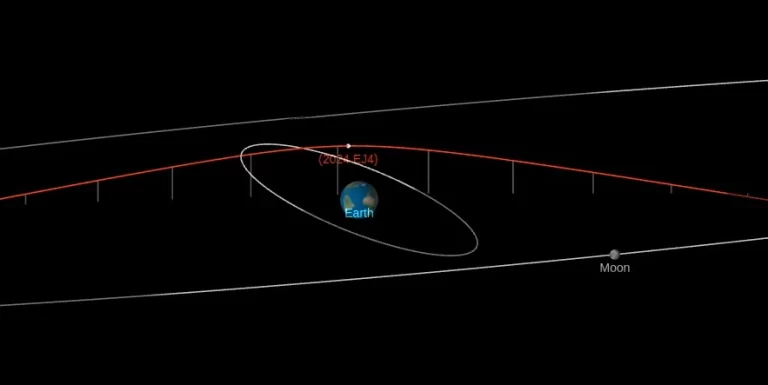
A newly-discovered asteroid designated 2024 EJ4 flew past Earth at a distance of just 0.07 LD / 0.00018 AU (26 246 km / 16 308 miles) from the center of our planet at 17:22 UTC on March 13, 2024.
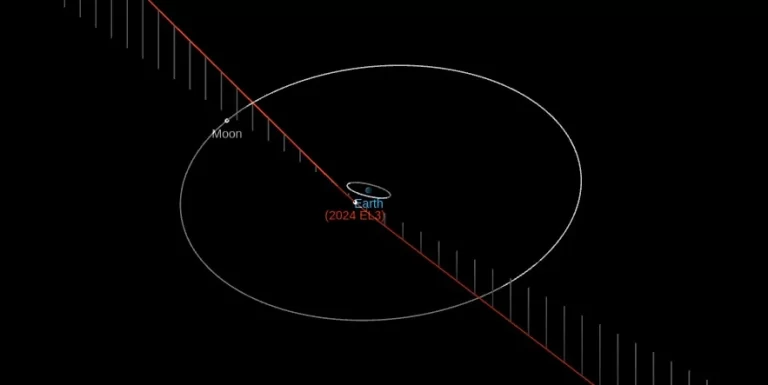
A newly-discovered asteroid designated 2023 EL3 flew past Earth at a distance of just 0.09 LD / 0.00024 AU (36 040 km / 22 394 miles) from the center of our planet at 10:31 UTC on March 11, 2024.
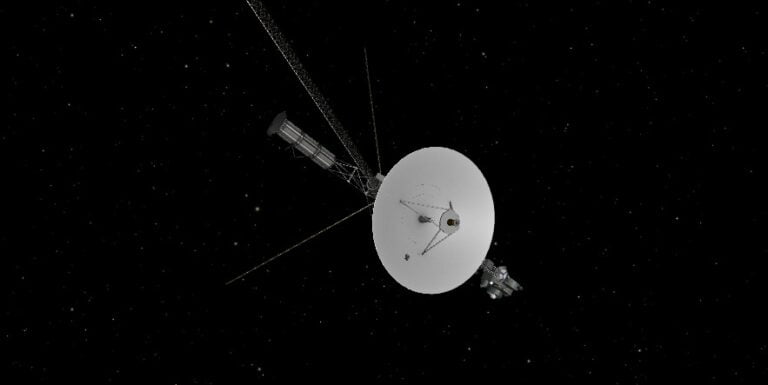
Over four decades after its launch, Voyager 1’s journey takes a mysterious turn as it sends back incomprehensible signals from the edge of the solar system, sparking concern and curiosity among the team at NASA.

The International Space Station’s (ISS) largest-ever discarded object, a hefty equipment pallet weighing 2.9 tons, is anticipated to make an uncontrolled descent back to Earth between March 8 and 9, 2024. Launched into space for a critical ISS power system upgrade, this pallet, loaded with nine old station batteries, will not fully disintegrate upon reentry, with predictions indicating about half a ton of debris could survive the descent and impact the planet’s surface.
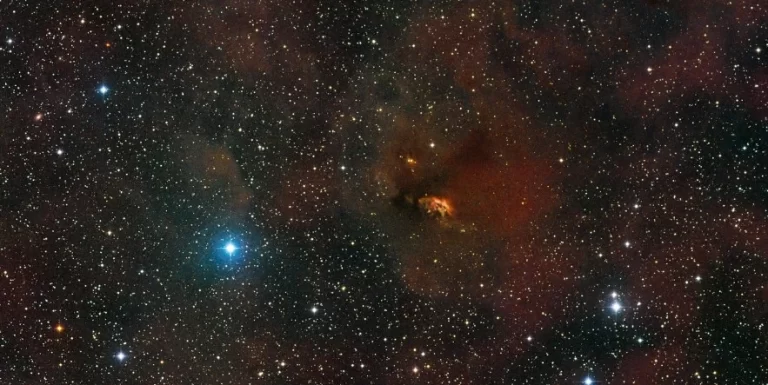
Astronomers using the Atacama Large Millimeter/submillimeter Array (ALMA) have discovered vast reservoirs of water vapor in the disc around HL Tauri, a young star 450 light-years away from Earth, unveiling processes that may lead to the birth of planets rich in water and redefining our search for life in the universe.
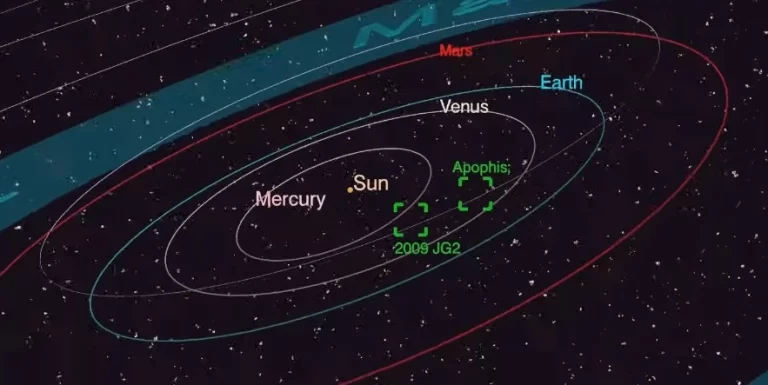
A comprehensive study by astronomers from Western University calculated the paths of all known asteroids and found there is no risk of the notorious asteroid Apophis colliding with another space object and altering its course toward Earth, further dispelling fears of a potentially catastrophic impact in April 2029. Apophis is named for the demon serpent, who personified evil and chaos in ancient Egyptian mythology.
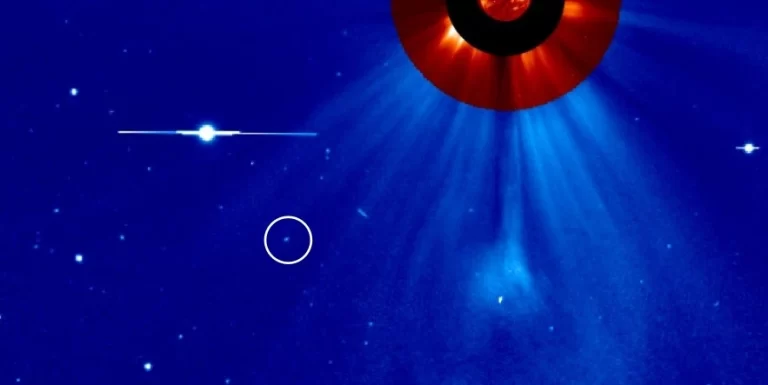
A new sun-diving comet appeared in LASCO C3 coronagraph imagery at around 11:54 UTC on March 2, 2024, and continued moving toward the Sun until it disintegrated by 05:42 UTC on March 3.

A newly-discovered asteroid designated 2024 EF will fly past Earth at a distance of just 0.15 LD / 0.00039 AU (57 668 km / 35 833 miles) from the center of our planet at 07:02 UTC on March 4, 2024.
