• Organic molecules crucial for life found in Rosetta’s comet

    Scientists analyzing data acquired by ESA's comet chaser Rosetta while orbiting comet 67P/Churyumov–Gerasimenko have discovered organic molecules regarded as crucial for the origin of life on Earth. The ingredients include the amino acid glycine (C2H5NO2),…

  • Ice age confirmed at the north pole of Mars

    A team of scientists led by experts from the Southwest Research Institute (SwRI), Texas has utilized the radar data collected by NASA's Mars Reconnaissance Orbiter to discover the evidence of an ice age at the Martian north pole. According to researchers, the…

  • Bright fireball accompanied by sonic boom over central Mexico

    A bright fireball was observed and recorded over central Mexico at 06:47 UTC on May 21, 2016. The event was accompanied by a sonic boom as the meteor disintegrated in the atmosphere. Several witnesses from Mexico City, Puebla, and Tlaxcala said a green and white…

  • ISS makes 100 000 orbits around Earth

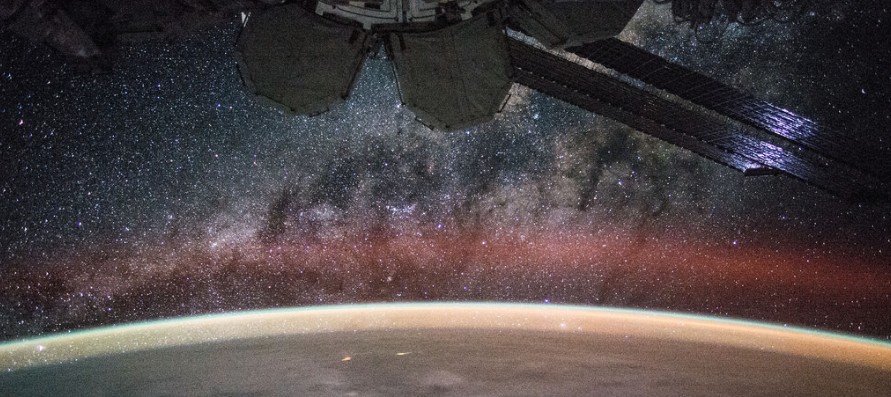
    As it passed Earth's equator at 06:10 UTC on May 16, 2016, the International Space Station (ISS) started its 100 000th orbit around Earth. It took 17 years for ISS to reach this important milestone. During the 100 000 orbits since the first component of the…

  • Very bright fireball over Northeastern US, ground shaking reported

    A very bright fireball was observed over the Northeastern US at around 04:50 UTC on May 17, 2016. The event lasted between 3 and 8 seconds and was accompanied by fragmentation and sonic boom. The American Meteor Society received 144 reports by 09:30 UTC. The…

  • X-ray observatory captures expanding debris from a stellar explosion

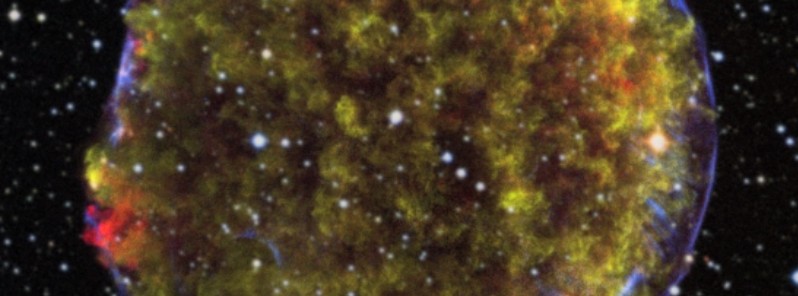
    Using data from NASA's Chandra X-ray Observatory, the NSF’s Karl G. Jansky Very Large Array (VLA) and many other telescopes astronomers are observing the debris field from supernova explosion first extensively observed and written about by Danish…

  • Mercury’s rich topography revealed for the first time

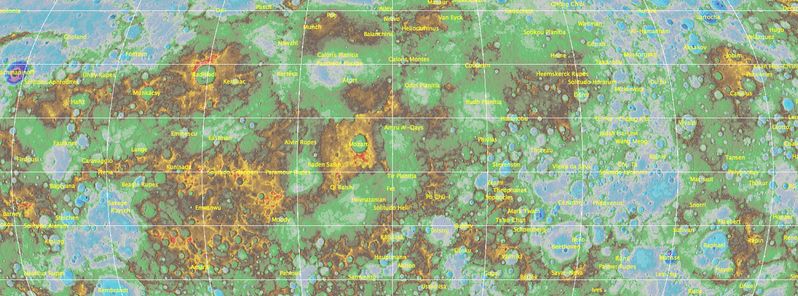
    A team of scientists from the US Geological Survey (USGS), the Arizona State University, Carnegie Institute of Washington, Johns Hopkins University Applied Physics Laboratory and NASA have produced a first comprehensive, high-resolution topographic map of…

  • Flying through explosive magnetic phenomenon to understand space weather

    Analyzing data obtained by four identical spacecraft that passed directly through a magnetic reconnection site on the boundary between the solar wind and Earth's magnetosphere, researchers have observed how this explosive physical process converts stored…

  • Earth’s magnetic field changes mapped in detail

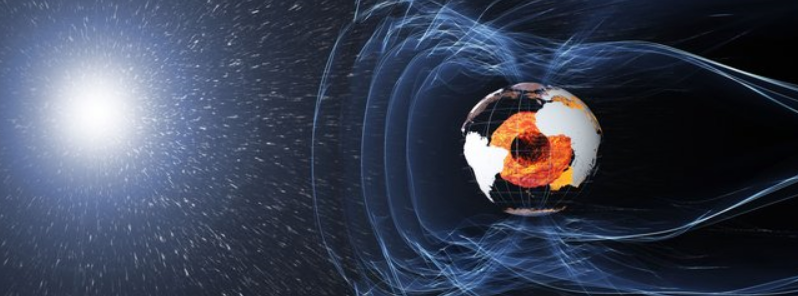
    A group of experts utilized the data collected by the ESA's SWARM satellites to show how the magnetic field is pulsating, where it's weakening and strengthening, and how fast these changes occur. For the first time, experts have mapped both the changes…

  • Kepler mission announces largest collection of planets ever discovered

    Kepler mission announced today it has verified 1 284 new planets – the single largest finding of planets to date. "This announcement more than doubles the number of confirmed planets from Kepler and gives us hope that somewhere out there, around a star…