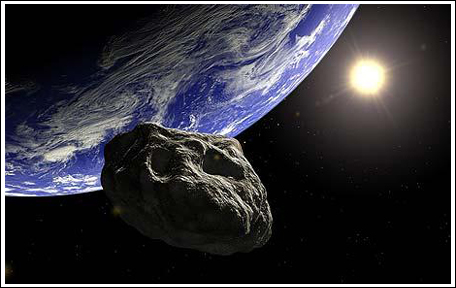
• 2005 YU55 flyby – “The Day the Earth Stood Still”

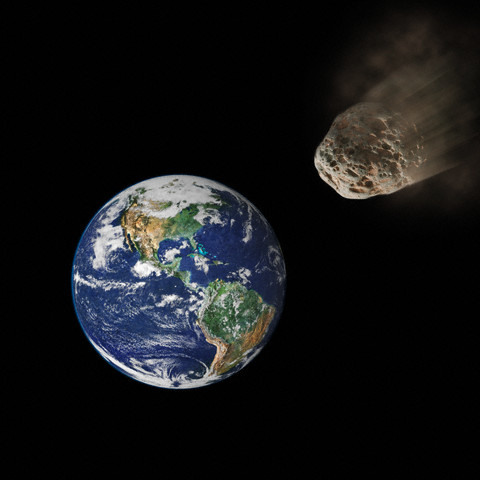
    The asteroid 2005 YU55, which is about 400 meters (1,300 feet) in diameter, will make its closest approach to Earth at 23:28 UTC (23:28 GMT, 6:28 p.m. EST, 3:28 PST) today. At that point, the space rock will be traveling at about 46,671 km (29,000 mph) with distance
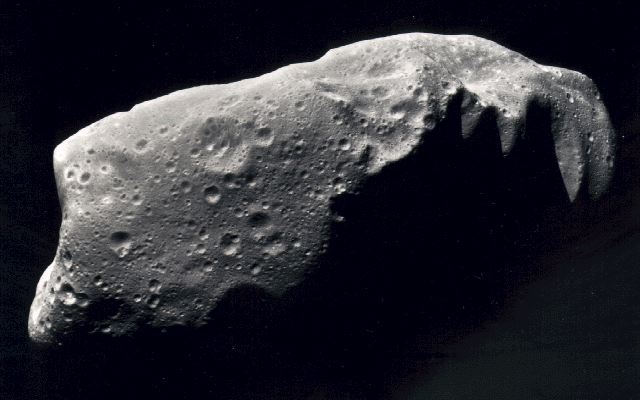
  • Asteroid 2005 YU55, The Moon, Taurids and drills

    Discovered nearly six years ago by Robert McMillan at Steward Observatory’s Spacewatch Telescope in Arizona, 2005 YU55 has been this way before. In April 2010 it passed close enough for detailed radar probing by the giant radio dish at Arecibo, Puerto Rico. It

  • JPL movie shows flyby calculation of Asteroid 2005 YU55

    NASA radars are monitoring 2005 YU55, an asteroid the size of an aircraft carrier, as it heads for a Nov. 8th flyby of the Earth-Moon system. There is no danger to our planet. At closest approach on Tuesday at 3:28 pm PST, the 400m-wide space rock will be 324,600

  • Asteroid 2005 YU55 facts & figures

    Ok, people. We survived flyby of most popular "doomsday" Comet Elenin, now we facing another potential threat. Scientists assure us that we have nothing to worry about. Asteroid 2005 YU55 is the third close fly-by of a large asteroid to the Earth this year.

  • Remains of Comet Elenin maybe spotted

    Comet Elenin, one of the most famous comets, disintegrated as it approached the Sun last month. Three days of darkness and Earth passing through it's tail never happened. Astronomers are having a hard time trying to spot the Elenin. Over the Italian astronomer

  • ROSAT Satellite: Uncontrolled Re-Entry on Oct. 22 or 23

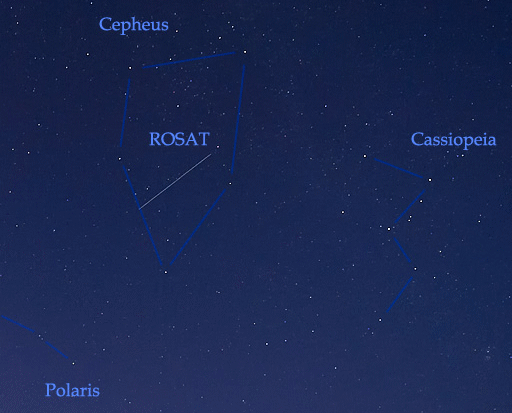
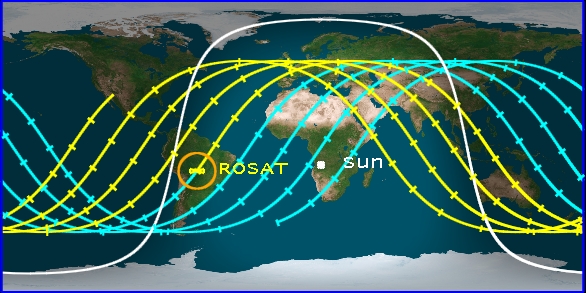
    Another huge piece of space debris, a 2.6-ton, defunct German telescope called the Roentgen Satellite (ROSAT), will crash back to Earth Saturday or Sunday (Oct. 22 or 23), and the chances it will hit someone are even greater this time around. The odds are 1-in-2,000

  • All-sky camera captures mysterious flashes

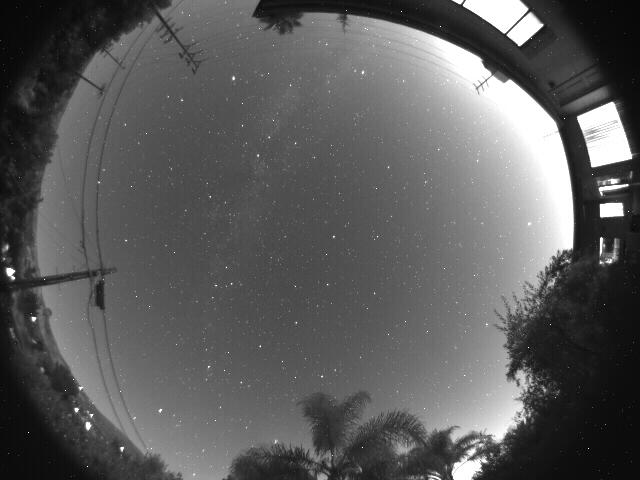
    All-sky camera (ASC) often records strange flashes. What could it be?“They are not iridium flares because they are stationary,” said James Beauchamp, an amateur astronomer who hosts the meteor camera for Sandia National Labs and New Mexico State University, and