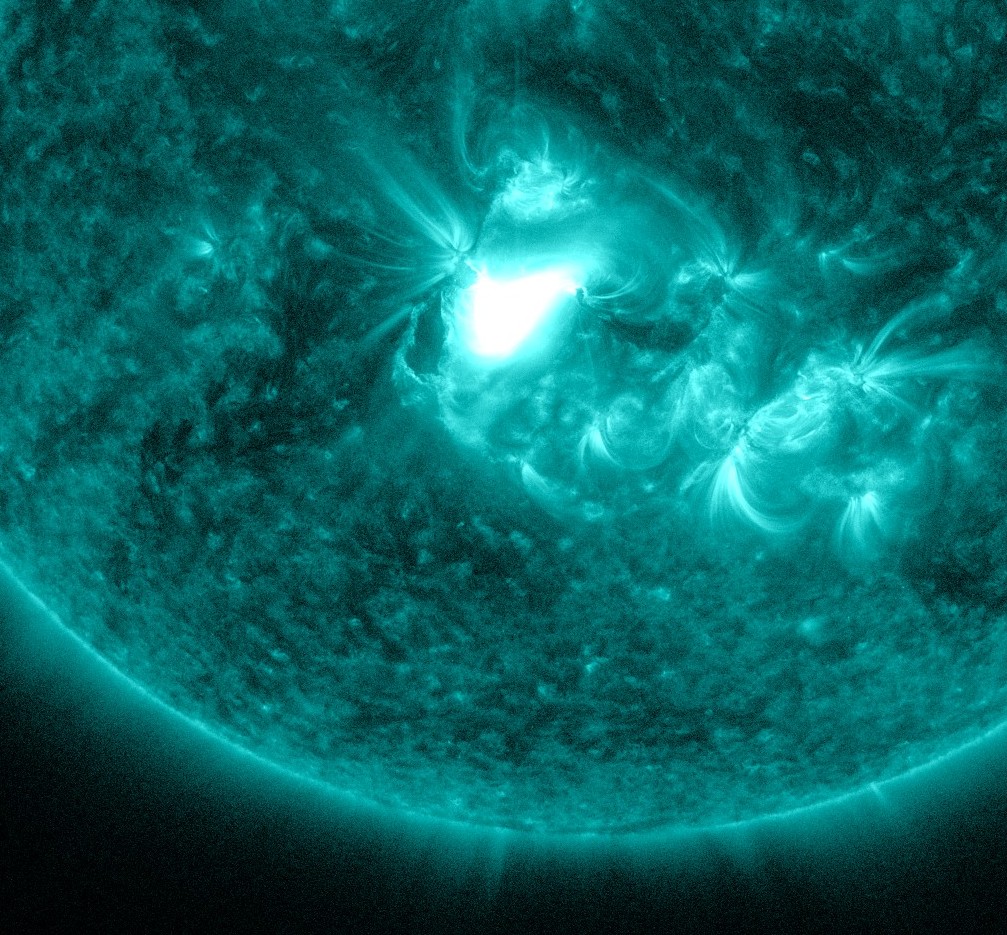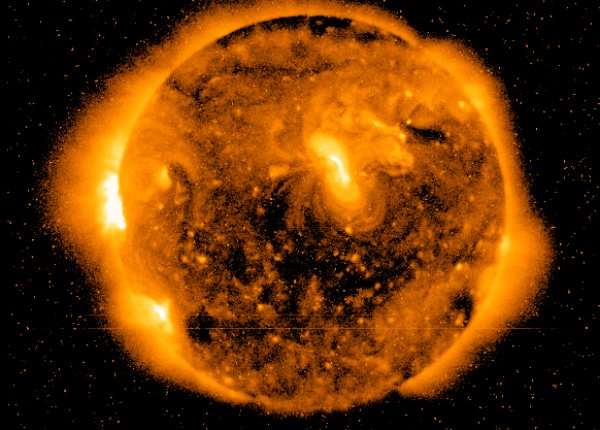
• Sunspot 1513 generated M1.0 solar flare

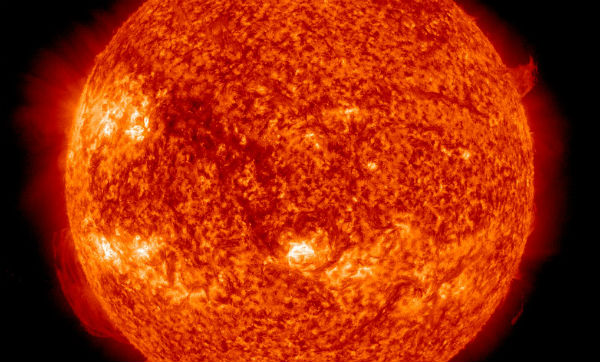
    Sunspot 1513 produced a quick M1.0 solar flare at 12:52 UTC on June 30. Sunspots 1513 and 1515 have Beta-Gamma magnetic configurations that harbors energy for strong solar flares. NOAA forecasters estimate a 40% chance of continued M-flares during the next 24 hours
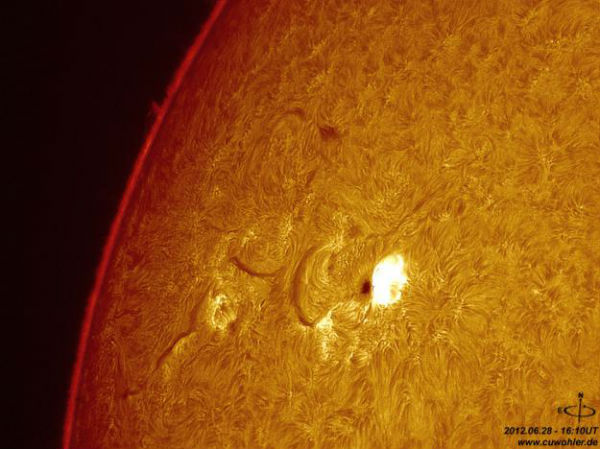
  • Sunspot 1513 released M2.4 solar flare

    Solar activity is now at moderate levels with a short duration M2.4 Solar Flare around Sunspot 1513 located in the northeast quadrant on June 28. This region continues to show signs of growth. No Earth-directed coronal mass ejections was released. There is R1 Radio

  • Timelapse: Aurora Australis on June 19 2012

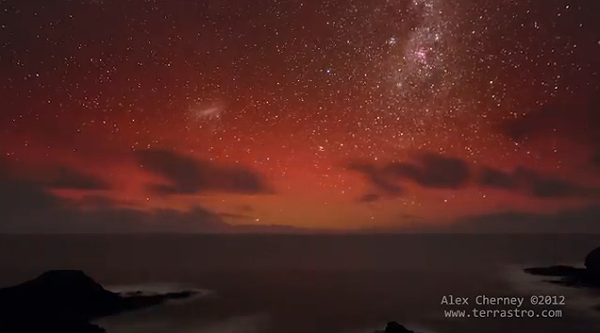
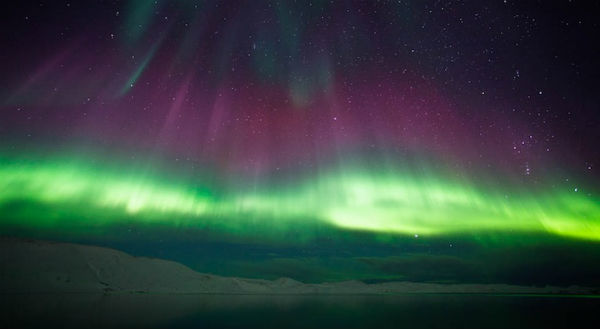
    Skywatchers in Australia were treated to unexpected beautiful views of the Aurora Australis. This timelapse is by Alex Cherney in Flinders Victroia, Australia who captured auroral views on June 19th 2012 in between clouds and rain. CME generated geomagnetic storming

  • Subsiding geomagnetc storm lit up both poles with bright auroras

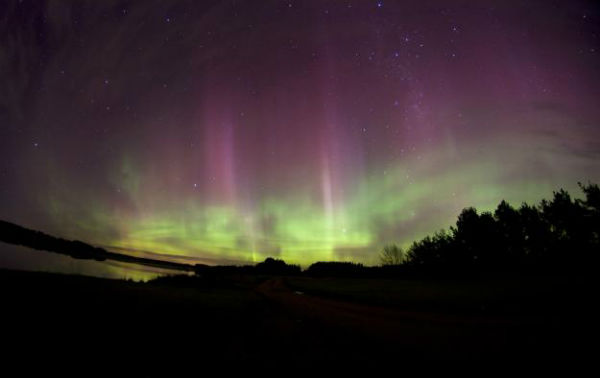
    The Kp index dropped below the Minor Geomagnetic Storm threshold (Kp=4). Minor storm flareups at high latitudes could still take place for the remainder of the day. Geomagnetic Storming continued during the day at very high latitudes as effects from an incoming CME

  • Double CME targets Earth

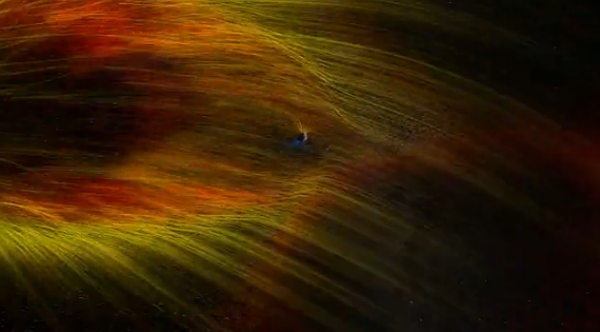
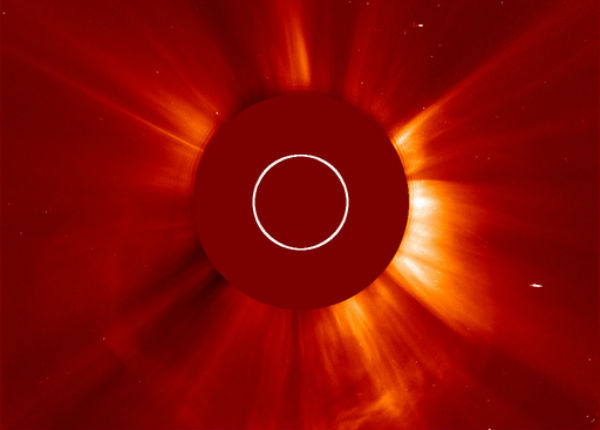
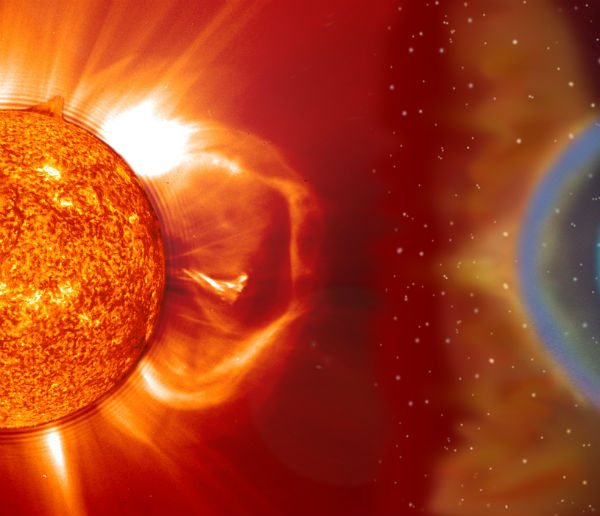
    A fast-moving CME that left the Sun on June 14th is expected to scoop up another CME already en route and deliver a double-blow to Earth’s magnetic field on June 16th. Weak-to-moderate geomagnetic storms are possible when the clouds arrive.A long duration solar

  • CME cloud is about to affect Venus, Earth and Mars

    Sunspot 1504 poses a growing threat for Earth-directed M-class solar flares and continues to expand into a large-sized sunspot cluster. Now spans the size of at least 4 planet Earths.It erupted in southern hemisphere on June 13th at 13:19 UTC, producing a