• Sunspot 1363 subsiding, solar activity remains low

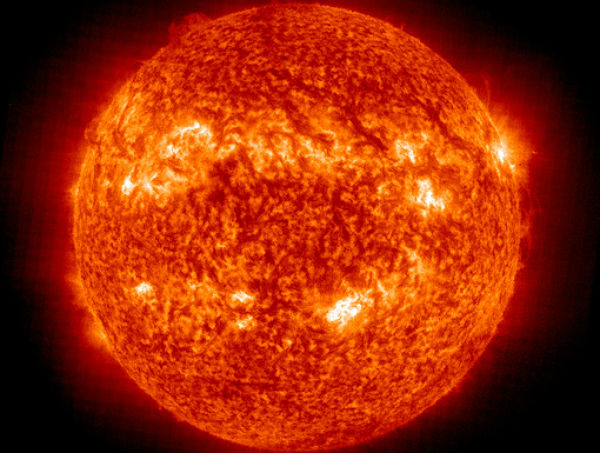
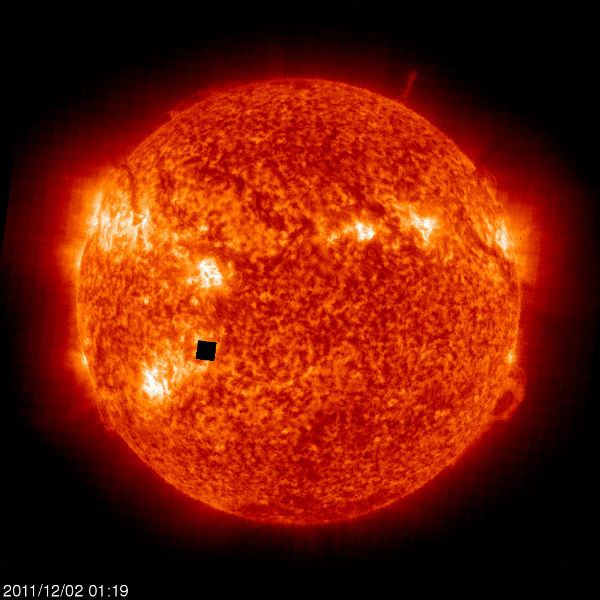
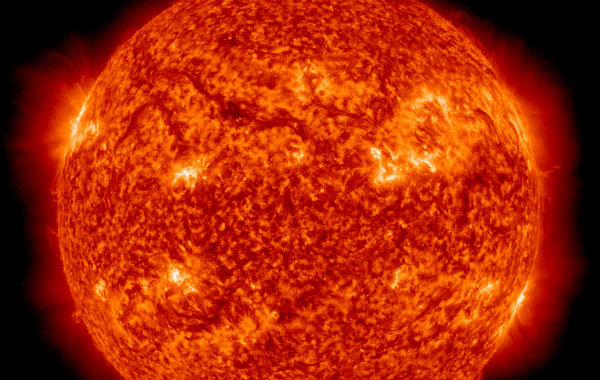
    After three days of meteoric growth, sunspot AR1363 has reversed course and is beginning to decay. As its magnetic field relaxes, the active region poses a subsiding threat for strong flares. It’s not dead yet, though, as this snapshot shows: There is still a slim

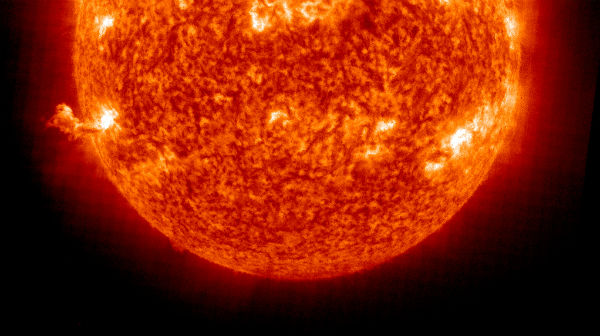
  • Large solar prominence off northwest limb today

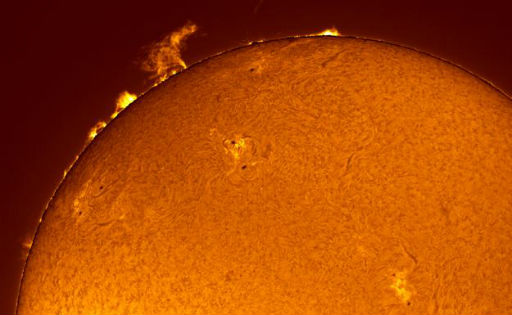
    A magnetic filament rapidly erupted on the sun today. Between 10:30 and 11:30 UTC, observers in Europe watched tendrils of hot plasma rocket away from the sun’s NW limb. Debris from the explosion is not expected to hit Earth according to SpaceWeather. Solar

  • Solar activity at start of December

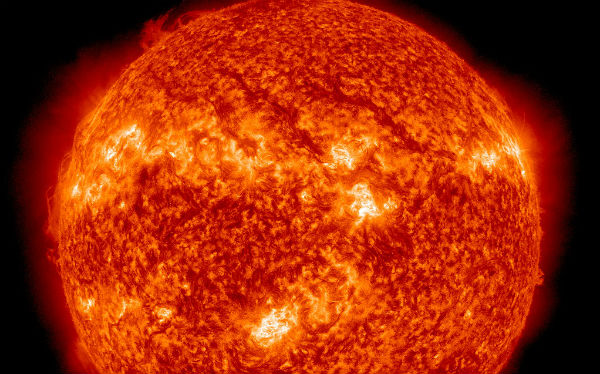
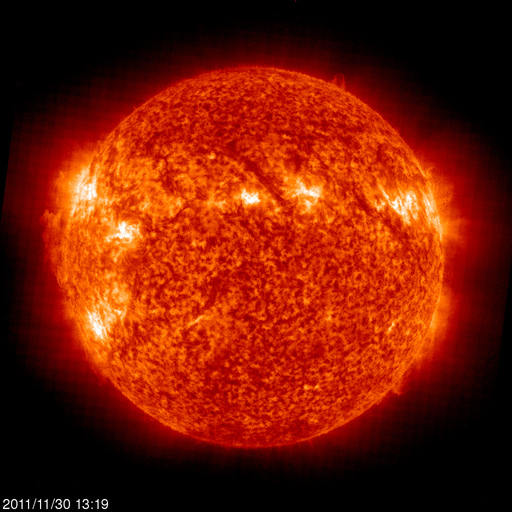
    With no strong flares this week, the sun’s x-ray output has nearly flatlined. The solar activity is quiet and is expected to continue for another 24+ hours. NOAA forecasters estimate a mere 20% chance of M-class solar flares.C-Class flares continue to be detected

  • Earth currents in Norway caused by solar wind stream

    A solar wind stream is buffeting Earth’s magnetic field and this is causing electrical currents to flow in the Earth itself at high latitudes.Rob Stammes sends this report from the Polar Light Center in Lofoten, Norway to SpaceWeather.com “Today, a magnetic

  • Subsiding solar activity, small chances for M-class flares

    Two new regions rotated into view on the eastern limb and were numbered 1363 and 1364 on Tuesday. Numerous low level C-Class flares have been detected within the past 24 hours around Sunspot 1362 and new Sunspot 1363.Region 1361 in the northern hemisphere is now

  • Sunspots connected by sinuos filaments of magnetism

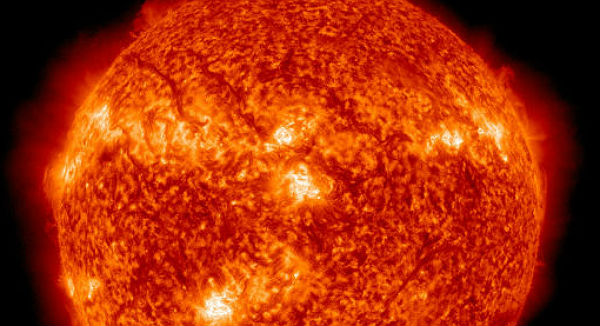
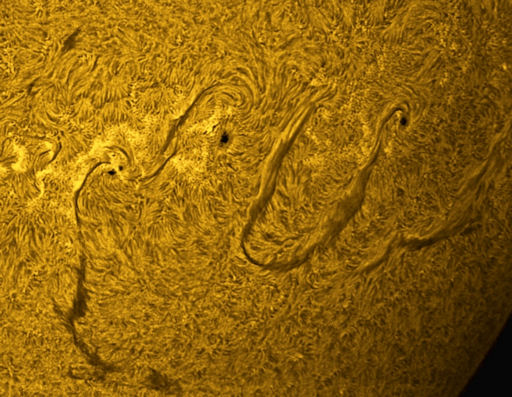
    A line of sunspots stretching across the sun’s northern hemisphere appears to be an independent sequence of dark cores. A telescope tuned to the red glow of solar hydrogen, however, reveals something different. The sunspots are connected by sinuous filaments of

  • CME impact generates wonderful auroras

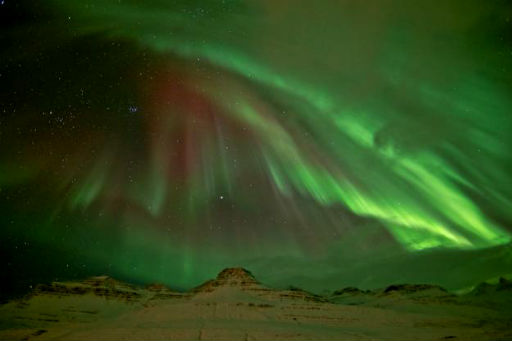
    As predicted by analysts at the Goddard Space Weather Lab, a coronal mass ejection (CME) hit Earth's magnetic field at approximately 2145 UT on Nov. 28th. The impact was weaker than expected, but it still produced bright auroras around the Arctic Circle.Planetary K-