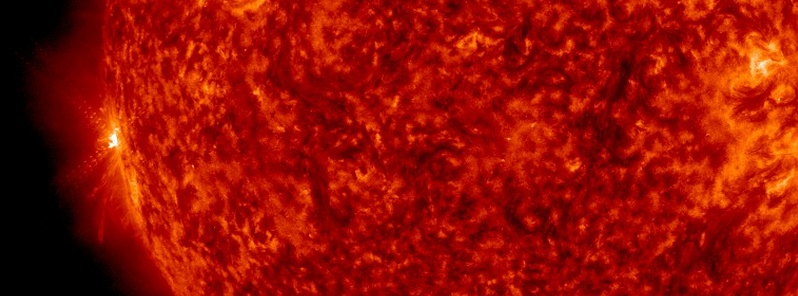
• Moderately strong M2.1 solar flare erupts from Region 2268

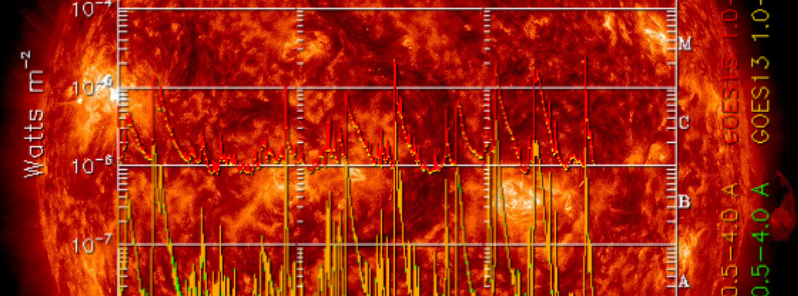
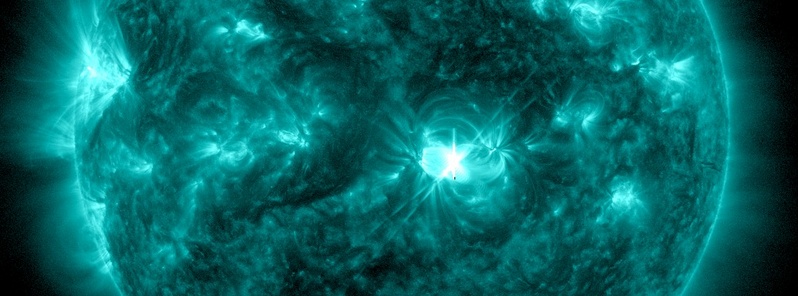
    A moderately strong solar flare reaching M2.1 at its peak time erupted from Region 2268 on January 29, 2015. The event started at 11:32, peaked at 11:42 and ended at 11:52 UTC.As with all the previous M-class flares from this region in the past few days, this latest eve

  • Moderate M1.4 solar flare erupts from Region 2268

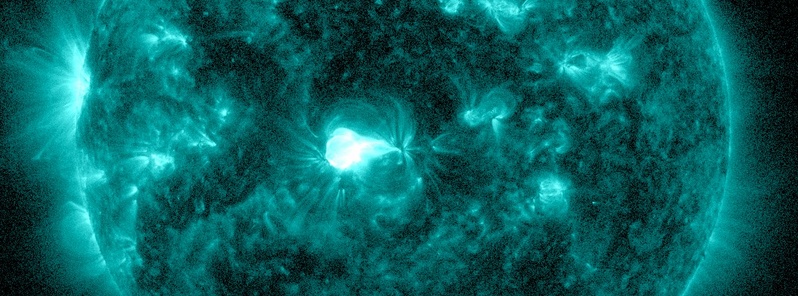
    A moderate solar flare measuring M1.4 at its peak time erupted from Region 2268 on January 28, 2015. The event started at 04:21, peaked at 04:41 and ended at 04:55 UTC.Coronal Mass Ejection (CME) was not produced.Region 2268 ('beta-gamma') is currently the large

  • Moderate M1.1 solar flare erupts from Region 2268

    A moderate solar flare measuring M1.1 (R1 Minor Radio Blackout) at its peak time erupted from growing Region 2268 on January 26, 2015. The event started at 16:46, peaked at 16:53 and ended at 16:58 UTC.There were no signatures that would suggest a Coronal Mass Ejection

  • Newly numbered Region 2268 produced a moderate M1.4 solar flare

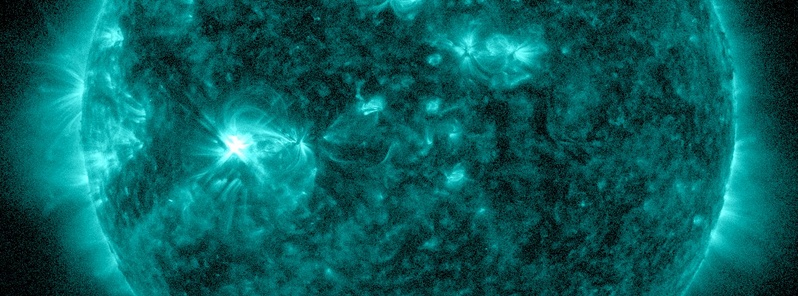
    Newly numbered Region 2268 (S10E72, Hax/alpha) produced a moderate M1.4 solar flare on January 22, 2015, just as it began rotating onto the Southeast limb.The event started at 04:43, peaked at 04:52 and ended at 05:02 UTC.There were no signatures that would suggest a Co

  • Departing Region 2257 erupts with moderate M2.2 solar flare

    A moderate solar flare measuring M2.2 at its peak time erupted from a departing Region 2257 ('beta-gamma') on January 14, 2015. The event started at 12:30, peaked at 12:58 and ended at 13:08 UTC.This region was responsible for two M-class solar flares yesterday

  • Strong M5.6 solar flare erupts from Region 2257

    A strong solar flare measuring M5.6 (R2 – Moderate radio blackout) erupted from Active Region 2257 at 04:24 UTC on January 13, 2015. The event started at 04:13 and ended at 04:38 UTC.A 10cm Radio Burst lasting 4 minutes, with peak flux of 290 sfu, was associated with th

  • Unanticipated CME hit causes G3 – Strong geomagnetic storm

    Our planet is still under the influence of coronal hole high speed solar wind speed (CH HSS) which is fueling geomagnetic storming around the poles. Additionally, an unanticipated Coronal Mass Ejection (CME) passed the ACE spacecraft and Earth around 05:30 UTC today

  • Earth under the influence of high speed solar wind stream

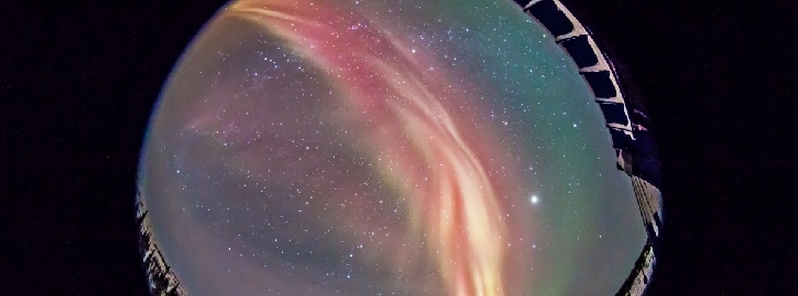
    Earth is currently under the influence of a high speed solar wind stream originating in large southern coronal hole. Although the bulk of this stream is headed south of our planet, we have already experienced severe geomagnetic storm periods at high latitudes.Geomagneti

  • G1 (Minor) geomagnetic storm underway

    Earth is currently under the influence of a coronal hole high speed solar wind stream (CH HSS) which is causing geomagnetic storming around the poles.K-index of 5 (G1-Minor) threshold was reached at 17:18 UTC today. Area of impact is primarily poleward of 60 degrees Geo