• Two new studies offer new clues to Ceres’ bright spots and origins

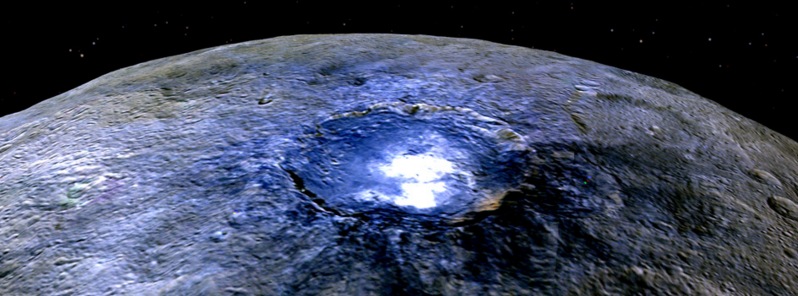
    Two new studies reveal some of Ceres' well-kept secrets, including highly anticipated insights about mysterious bright features found all over the dwarf planet's surface. In one study, scientists identify this bright material as a kind of salt, while the…

  • Black hole magnetic field engines detected for the first time

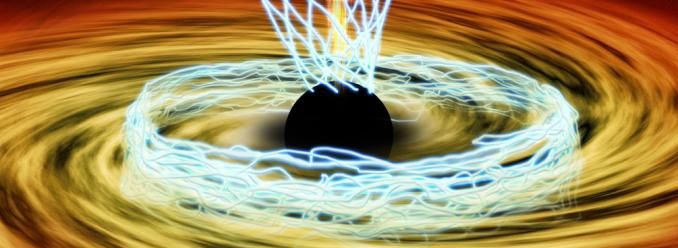
    Astronomers have detected magnetic fields outside the black hole horizon at the center of Milky Way for the firs time, Harvard Smithsonian Center for Astrophysics (CfA) announced on December 3, 2015. Magnetic fields of this type have long been considered to serve as…

  • How solar flares accelerate charged particles into super high speeds

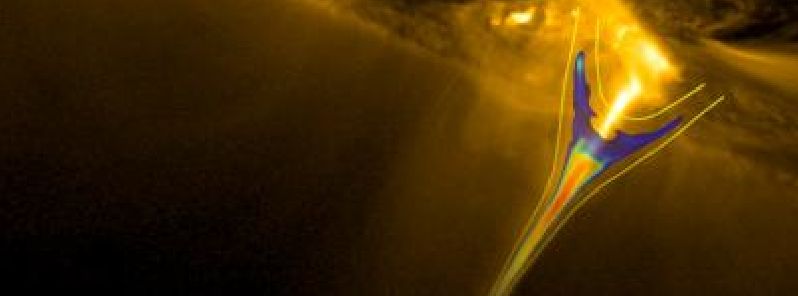
    Scientists have made another step toward determining how solar flares accelerate charged particles like electrons and protons to speeds of almost the order of light. The new capabilities of the National Science Foundation's Karl G. Jansky Very Large Array (VLA)…

  • Earth’s complex life origins revealed by single event

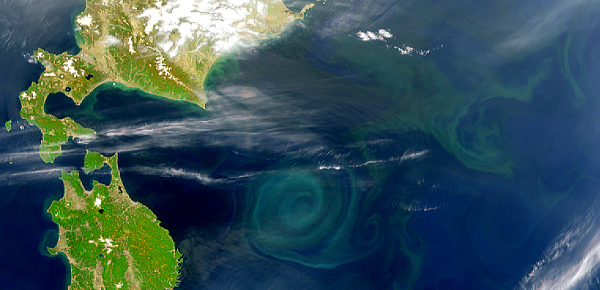
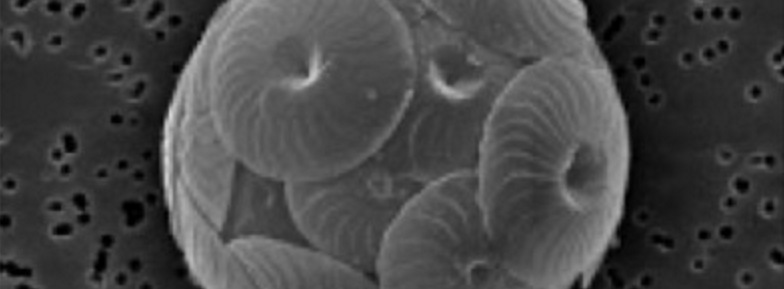
    University of Bristol researcher Patricia Sanchez-Baracaldo has identified the catalyst that allowed the evolution of complex life on Earth. Up to 800 million years ago, oceans had almost no oxygen at all, but it was the work of microorganisms, called phytoplankton,…

  • Why Europe will soon be cold?

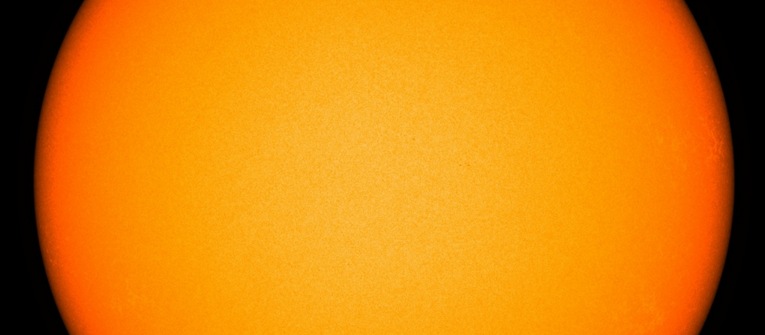
    Russian scientists regained solar activity over the past thousand years and made the forecast to the year 3200. What is the climate waiting for Russia and Europe in 15 – 20 years? Will be there weather abnormalities in the coming decades? Will some areas experience…

  • Rock salt for isolating nuclear waste not as capable as thought

    A new research from The University of Texas at Austin shows that rock salt, used by Germany and the United States as a subsurface storage for nuclear waste, might not be as impermeable as thought or as capable of isolating nuclear waste from groundwater in the event…

  • Scientists get unique chance to study black hole eating a star

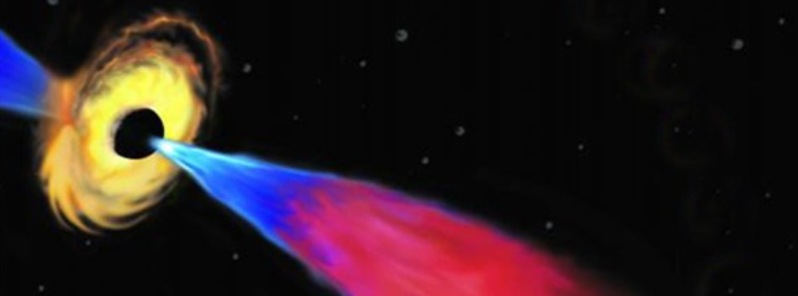
    A team of astrophysics led by a Johns Hopkins University (JHU) scientist has for the first time witnessed a black hole swallowing a star and ejecting a flare of matter moving nearly the speed of light (about 300,000 km/s). The finding tracks the star, which is…