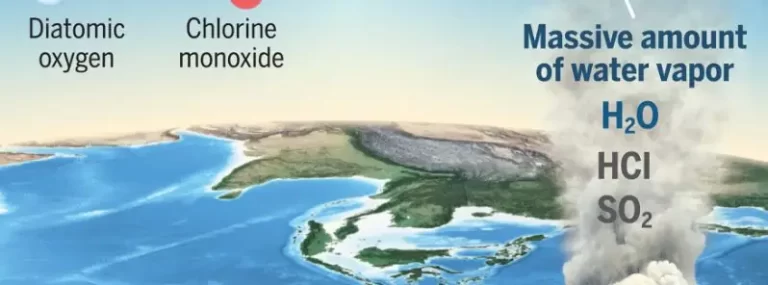
• Ozone hole over Antarctica soars to one of its largest sizes on record, Hunga Tonga eruption possible cause

    On September 16, 2023, a significantly large ozone hole stretched over Antarctica, covering an area of 26 million km3 (10.04 million mi3), prompting a deeper look into the possible causes. The fluctuating size of the ozone hole is a yearly phenomenon, with a notable increase from August to October, and a decrease as temperatures in the southern hemisphere’s stratosphere rise towards the year’s end.

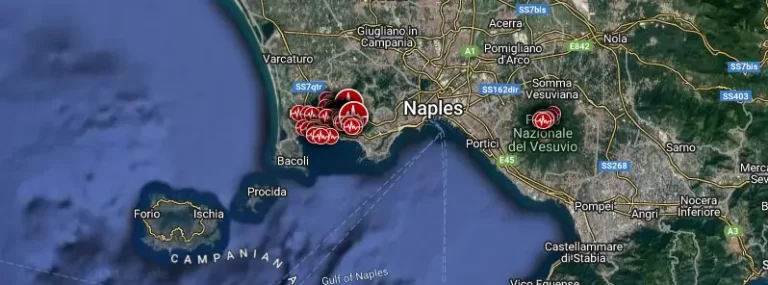
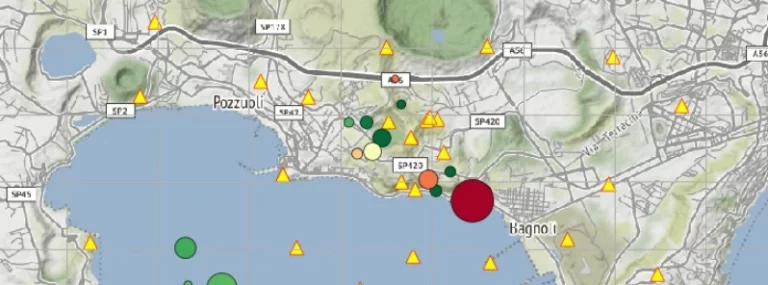
  • Officials discuss evacuation scheme around Campi Flegrei supervolcano following recent earthquakes, Italy

    The Italian government is exploring the potential evacuation of tens of thousands of residents living near the Campi Flegrei supervolcano, 20 km (12.5 miles) from Naples, following over 1 100 earthquakes in the area within a month. The announcement was made on Thursday, October 5, 2023, and further measures are set to be discussed in a cabinet meeting.

  • Data confirms robust weakening of the Gulf Stream

    A recently published study in the journal Geophysical Research Letters has revealed that the Gulf Stream transport of water through the Florida Straits has weakened by approximately 4% over the past 40 years. Researchers state with 99% certainty that this is more than what would be expected from random variations, marking the first definitive evidence of significant change in the current.

  • Rare red auroras seen as far south as France

    The Coronal Mass Ejection (CME) that was launched on September 22, 2023, hit Earth’s magnetic field on September 24 at 20:43 UTC, sparking a moderate G2 – Moderate geomagnetic storm and rare red auroras. Initially detected in Canada where magnetometer readings spiked by 129 nT, the event later became visible across Europe, reaching as far south as France.

  • Unprecedented rainfall causes catastrophic flooding in Greece, leaving massive damage and at least 10 dead

    A powerful storm dubbed Daniel dropped exceptionally high amounts of rain over parts of central Greece on September 4 and 5, 2023, resulting in widespread flooding, destruction, and the tragic loss of at least 10 lives. Experts label this as the country’s worst storm since records began in 1930. The worst affected was the Thessaly Region, particularly its Magnesia prefecture.