I am an Assistant Editor and Severe Weather & Science Journalist at The Watchers, specializing in real-time severe weather coverage, geophysical event reporting, and research-driven scientific analysis. You can reach me at rishav(at)watchers(.)news.

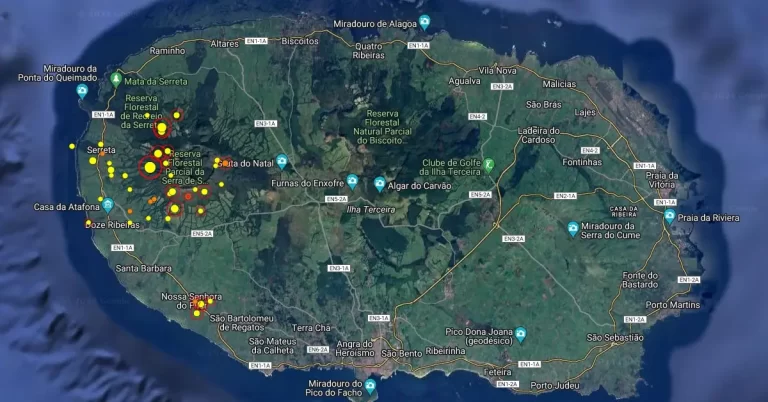
  • Increased seismicity at Santa Barbara volcano, alert level raised to V3, Azores

    On June 26, 2024, the Institute of Volcanology of the University of the Azores (IVAR) increased the volcanic alert level for the Santa Barbara volcano on Terceira Island to V3, and the Third Fissural Volcanic System to V1, on a scale ranging from V0 (green, normal) to V6 (red, erupting), due to seismic crisis that has been affecting the western part of the island since June 24, 2022, which continues to increase.

  • Russian RESURS-P1 satellite breaks in orbit, releasing over 180 pieces of trackable debris and forcing ISS astronauts to take shelter

    Russian decommissioned satellite Resurs-P1 broke up in orbit on June 26, 2024, releasing roughly 100 pieces of trackable debris. The number rose to 180 by the end of June 27 and is expected to keep rising, according to Leo Labs. Following the breakup, NASA instructed the 9 astronauts aboard the International Space Station (ISS) to take shelter in their respective spacecraft as a standard precautionary measure.

  • Historic floods in Midwest cause severe damage to farmlands

    Flooding has affected millions of acres of farmland in Minnesota, South Dakota, and Iowa, causing severe damage to the farmlands and farming communities of the most crucial regions of U.S. crop production. Experts estimate a reduction of almost 1 214 100 ha (3 million acres) worth of soybean and corn crops.

  • Massive Saharan dust plume making its way over the Atlantic

    The largest outbreak of Saharan dust this summer is currently making its way across the Atlantic Ocean, potentially impacting air quality and weather patterns throughout the Caribbean and parts of the United States. This marks a significant shift in the season’s weather patterns, influenced by the Saharan Air Layer (SAL), which is known for its ability to suppress tropical cyclone formation.